



Key Highlights
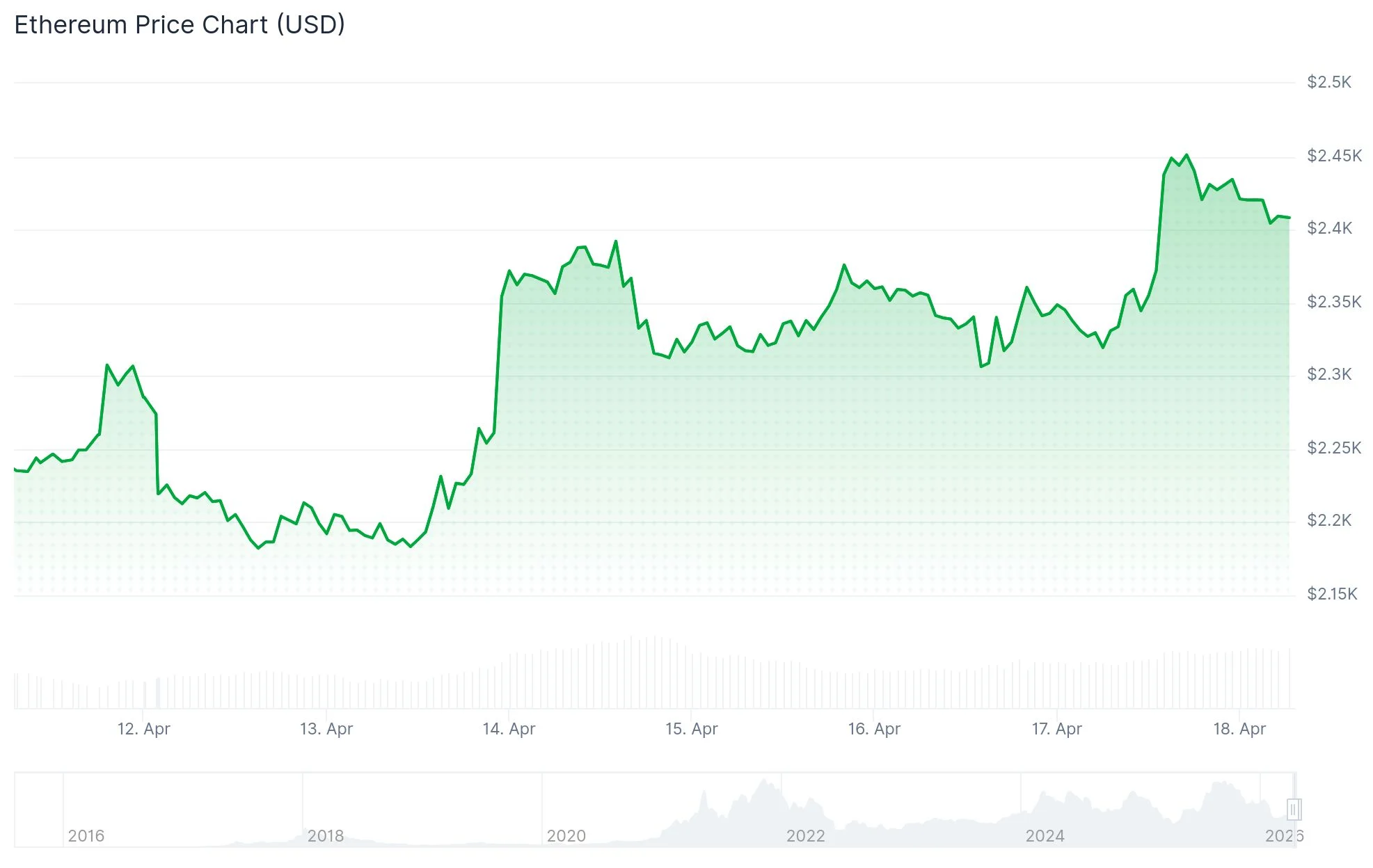
- ETH has surged past $2,400, marking a 38% gain from its $1,750 swing low
- Accumulation addresses have grown their holdings by 33%, adding 6.5 million ETH since the start of the year
- Technical analysis reveals a cup-and-handle formation with upside targets between $2,960 and $3,150
- Spot Ethereum ETFs have recorded seven consecutive trading sessions of positive net inflows, accumulating $298.4 million
- Easing geopolitical tensions following Iran’s Strait of Hormuz reopening contributed to bullish momentum
Ethereum has broken through the $2,400 resistance level, extending a rally that began at the $1,750 local bottom. This upward movement represents approximately a 38% gain from that recent low point. Multiple on-chain indicators and technical formations are now capturing the attention of market participants.
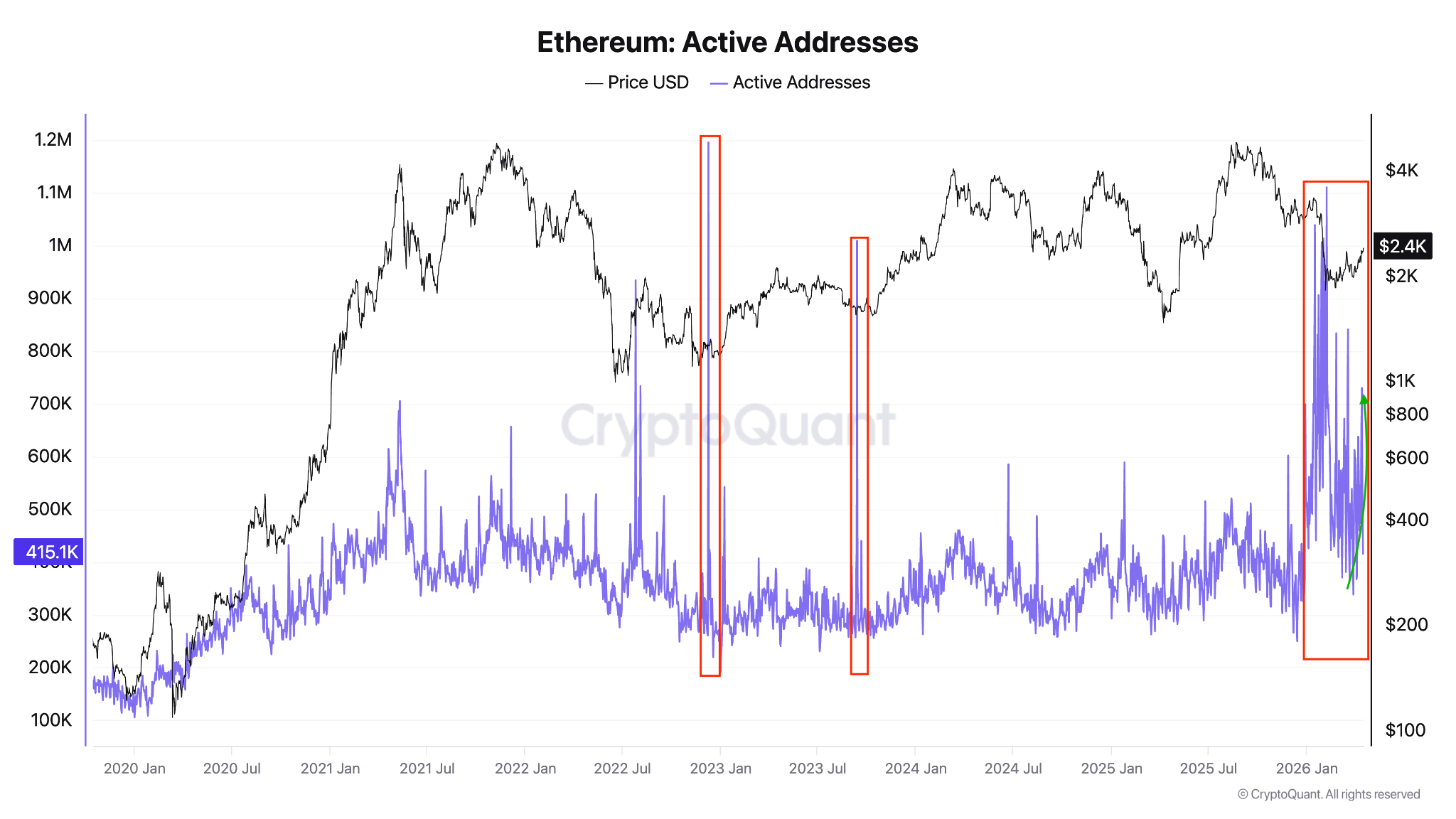
Daily active addresses on the Ethereum network experienced an 89% surge, climbing from 384,763 to 730,278 on April 5. Historical data suggests such spikes in network activity have often coincided with market cycle bottoms, notably during 2022, which preceded significant price recoveries.
Accumulation addresses recorded their highest-ever daily inflow of 1.14 million ETH back in November 2025. Throughout 2026, these addresses have maintained an average daily intake of 200,000 ETH, with a notable surge reaching 358,000 ETH this past Thursday.
The cumulative ETH holdings in accumulation wallets—defined as addresses with zero selling history—have expanded from 19.64 million to 26.16 million ETH since the beginning of January. This represents a substantial 33% increase in just over three months.
Currently, 39.2 million ETH sits locked in staking contracts. Meanwhile, ETH balances held on centralized exchanges have declined to multi-year lows, significantly reducing the available sell-side liquidity.

Technical Formation Suggests $3,150 Upside Target
From a technical perspective, ETH has completed a breakout from a cup-and-handle pattern visible on the 12-hour chart. A confirmed closing price above the $2,400 neckline projects a measured move toward approximately $2,960. The 14-day Relative Strength Index currently reads between 65 and 68, indicating bullish momentum without reaching overbought conditions.
Crypto analyst TheSkayeth has highlighted an even larger cup-and-handle structure developing over a two-month period on the daily timeframe. The trader noted that ETH appears to be “setting up for a massive move,” suggesting that successful pattern completion could propel prices into the “golden zone.” The calculated target from this extended formation points to $3,150.
Sustained ETF Inflows Reflect Institutional Appetite
Spot Ethereum exchange-traded funds have maintained a streak of seven consecutive trading days with positive net inflows, accumulating a total of $298.4 million according to SoSoValue analytics. Specifically on April 17, spot ETH ETFs attracted $127 million in net capital, as reported by Wu Blockchain.
The cryptocurrency received additional support from diminishing geopolitical risks. Iran’s decision to reopen the Strait of Hormuz shipping lane, following ceasefire progress involving the United States and Lebanon, helped boost risk appetite across markets. ETH is currently trading above its on-chain realized price of $2,308, indicating profitability for the average holder.
The Moving Average Convergence Divergence (MACD) indicator on ETH’s weekly chart has formed a golden cross—a historically significant signal that previously marked cyclical bottoms in November 2024 and May 2025.
Open interest across Ethereum derivatives markets has expanded to 14.67 million ETH. Funding rates have shifted into negative territory, suggesting short sellers are establishing positions in anticipation of a potential consolidation. Over the last 24-hour period, $163.2 million worth of ETH positions were liquidated, with $140.9 million attributed to short contracts.
ETH’s nearest support level rests at the 100-day Exponential Moving Average around $2,378. Overhead resistance zones are located at $2,746, followed by a more significant barrier at $3,411.
Get 3 Free Stock Ebooks
Discover top-performing stocks in AI, Crypto, and Technology with expert analysis.
- Top 10 AI Stocks - Leading AI companies
- Top 10 Crypto Stocks - Blockchain leaders
- Top 10 Tech Stocks - Tech giants



