


TLDR
- Petrelintide achieved 10.7% weight reduction at 42 weeks in Zealand Pharma’s Phase 2 study — falling short of the 12–15% analyst benchmark
- Major financial institutions like JPMorgan, Jefferies, UBS, and Barclays expressed disappointment with the results
- Cantor Fitzgerald shifted its recommendation to Neutral after previously rating it Overweight
- Competing treatments from Eli Lilly (eloralintide) and Novo Nordisk (cagrilintide) appear more promising in efficacy
- Absence of dose-dependent response between highest dose cohorts raises uncertainty about Phase 3 improvement potential
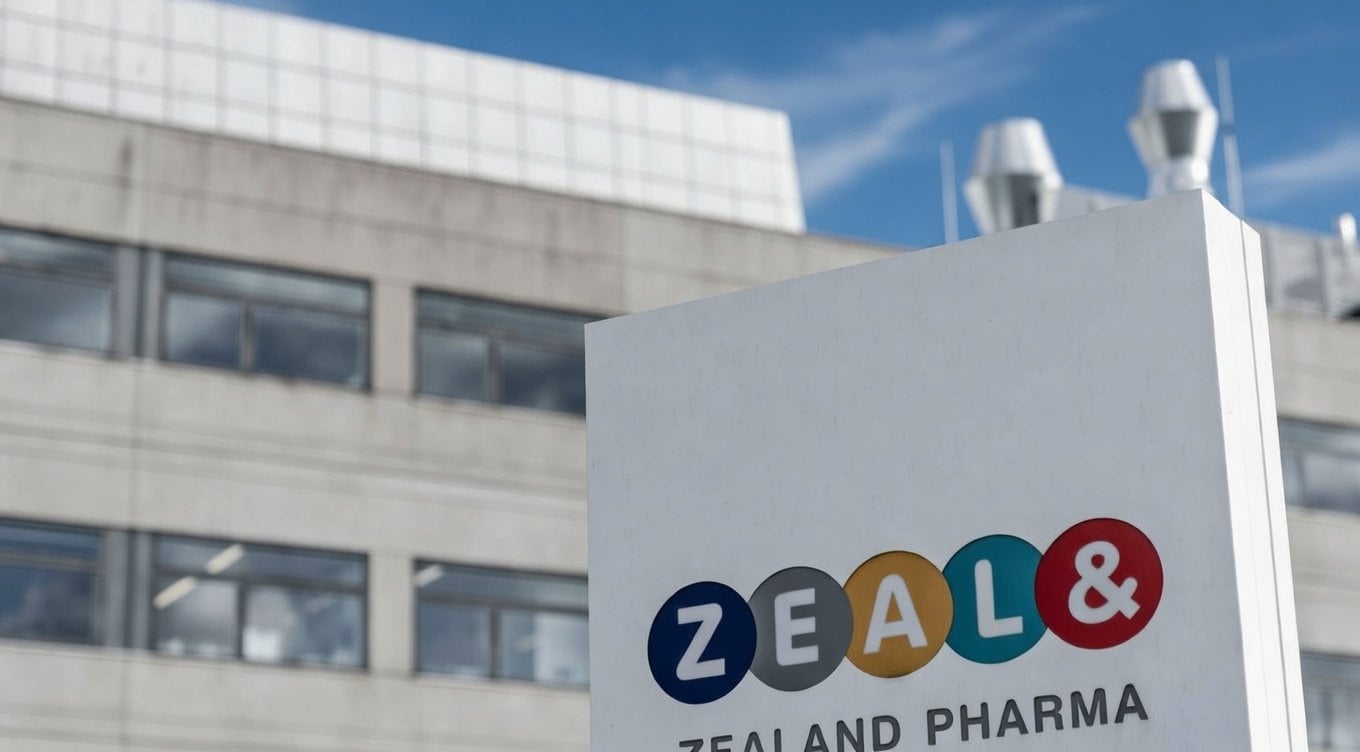
Shares of Zealand Pharma (ZEAL) plummeted over 32% on Friday following the release of Phase 2 clinical trial results for petrelintide, its experimental obesity medication, which underperformed Wall Street projections.
The ZUPREME-1 clinical study, conducted in collaboration with Roche, evaluated petrelintide’s effectiveness in overweight and obese individuals who don’t have type 2 diabetes. Participants receiving the maximum dosage experienced an average weight reduction of 10.7% by week 42 using an efficacy estimand measurement.
While the study successfully achieved its main objective by demonstrating statistically meaningful weight decreases across all dosing levels compared to placebo at 28 weeks, the topline figure failed to satisfy market expectations.
Financial analysts had projected weight loss results between approximately 12% and 15% as necessary to demonstrate competitive viability. The actual 10.7% outcome fell considerably below that threshold.

JPMorgan analyst Sophia Graeff Buhl Nielsen characterized the outcome as “falls slightly short of expectations,” though she noted the findings still “leaves scope for an attractive mid-teens weight loss profile to be achieved in Phase 3,” particularly if enrollment includes more female participants — who demonstrated superior responses.
Jefferies indicated the results would likely disappoint stakeholders and came in under both the firm’s internal projection of 13% to 15% and buy-side expectations exceeding 15%. Analyst Lucy Codrington characterized petrelintide as having “Wegovy-like efficacy, but with placebo-like tolerability,” describing the drug as “viable” though likely “2nd-best to LLY’s elora for now.”
The drug demonstrated notable success in safety and tolerability metrics. The highest-dose cohort reported zero vomiting incidents and minimal gastrointestinal adverse events — a safety profile Codrington described as “placebo-like.” While genuinely positive, this advantage alone proved insufficient to offset efficacy concerns.
Cantor Fitzgerald Downgrades to Neutral
Cantor Fitzgerald reduced its rating on Zealand Pharma from Overweight to Neutral, citing insufficient competitive differentiation. The investment bank noted that petrelintide’s placebo-adjusted weight reduction of approximately 9% at 42 weeks resembles Novo Nordisk’s cagrilintide performance — and trails significantly behind Eli Lilly’s eloralintide.
Cantor expressed concern about the absence of dose-dependent efficacy, which suggests no clear indication that weight loss outcomes will improve in advanced-stage trials. The firm now projects petrelintide achieving weight reduction in the low double-digit range, comparable to cagrilintide.
With Eli Lilly already advancing eloralintide through Phase 3 trials and Novo Nordisk progressing cagrilintide monotherapy into Phase 3, Cantor suggested petrelintide may enter the market as a third entrant with minimal differentiation. This represents a challenging commercial landscape.
What’s Left to Watch
UBS observed that trial outcomes landed “clearly at the lower end of expectations” and questioned petrelintide’s viability as a standalone treatment. Nevertheless, the bank highlighted a combination strategy — petrelintide combined with a reduced dose of Roche’s CT-388 — as a “still viable option,” considering the drug’s favorable tolerability characteristics.
The study also revealed minimal variation between the highest dose groups, with weight loss ranging from 10.2% to 10.7%. JPMorgan suggested this pattern may indicate limited additional benefit from dose escalation.
Comprehensive trial findings are scheduled for presentation at a scientific conference later in 2026.
The stock was last quoted at $38.22, representing approximately 51% below its 52-week peak of $112.63.
Get 3 Free Stock Ebooks
Discover top-performing stocks in AI, Crypto, and Technology with expert analysis.
- Top 10 AI Stocks - Leading AI companies
- Top 10 Crypto Stocks - Blockchain leaders
- Top 10 Tech Stocks - Tech giants



