


TLDR
- XRP reserves on Upbit and Bithumb fell by about 22M tokens in early January 2026.
- Whale transactions on the XRP Ledger reached 2,802, the highest level in three months.
- US spot XRP ETFs recorded a first net outflow of $40.8M on January 7, 2026.
- Despite the outflow, total XRP ETF inflows still stand near $1.2B since launch.
XRP has entered 2026 with signals moving in different directions. Data from South Korean exchanges shows steady reserve declines. At the same time, on-chain activity from large holders has increased. However, US-listed spot XRP exchange-traded funds have recorded their first net outflow since launch. These developments present a mixed market picture as regional retail trends contrast with recent institutional flows.
Korean Exchange Reserves Decline Early in 2026
XRP balances on major South Korean exchanges fell during the first week of January. Wallet data tracking large holders shows reserves on Upbit and Bithumb declined by about 22 million tokens since December 31, 2025. This represents roughly 0.14% of XRP’s total supply.
Upbit recorded the largest reduction, with an estimated 40 million XRP leaving the exchange. Bithumb saw an outflow of about 20 million tokens over the same period. In contrast, Binance recorded inflows ranging between 25 million and 30 million XRP. This pattern points to redistribution rather than broad selling pressure.
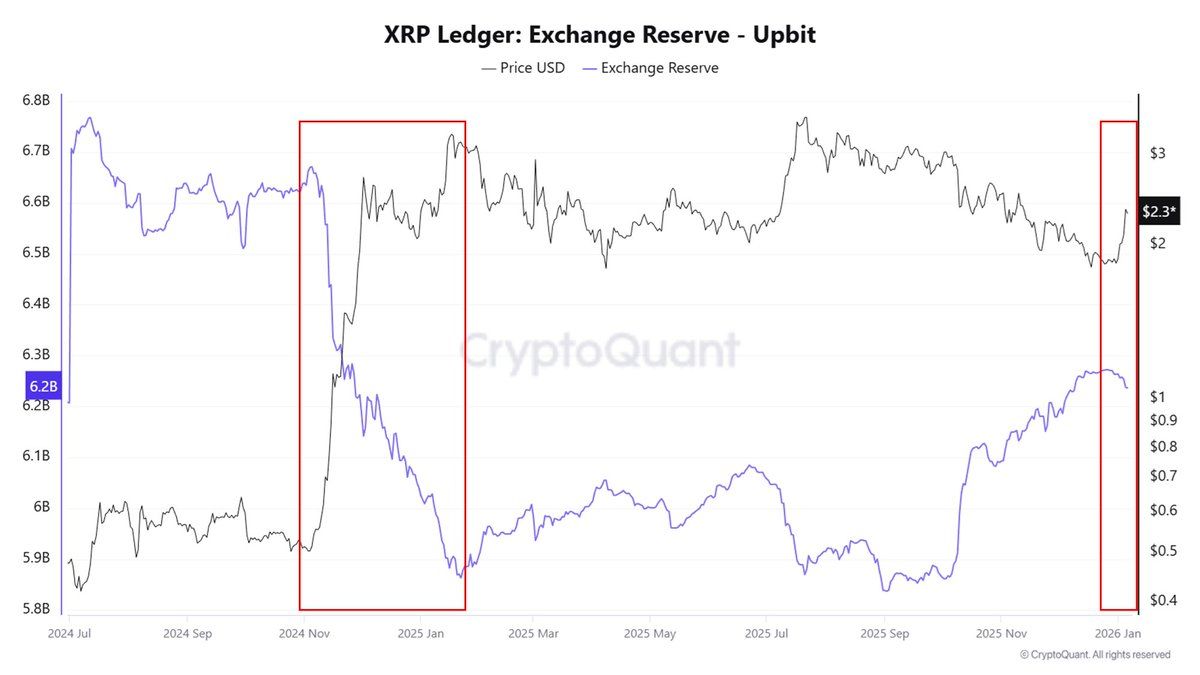
South Korea remains one of XRP’s most active trading regions. Reserve changes on local exchanges often influence global liquidity and price discovery. In past cycles, falling exchange balances have been linked to transfers into private wallets. Such moves usually reduce the amount of XRP immediately available for trading.
Historical Context Keeps Market Cautious
Similar reserve trends appeared before XRP’s late-2024 rally. During that period, XRP began leaving Korean exchanges in November. Prices later rose from around $0.50 to nearly $3 over the following months. Still, historical data shows that price reactions do not always follow reserve declines right away.
CryptoQuant data from mid-2024 shows XRP reserves on Binance reached low levels without a breakout. Prices stayed near $0.50 for several months. The rally that followed began only after reserves increased again, not during the period of lowest exchange supply.

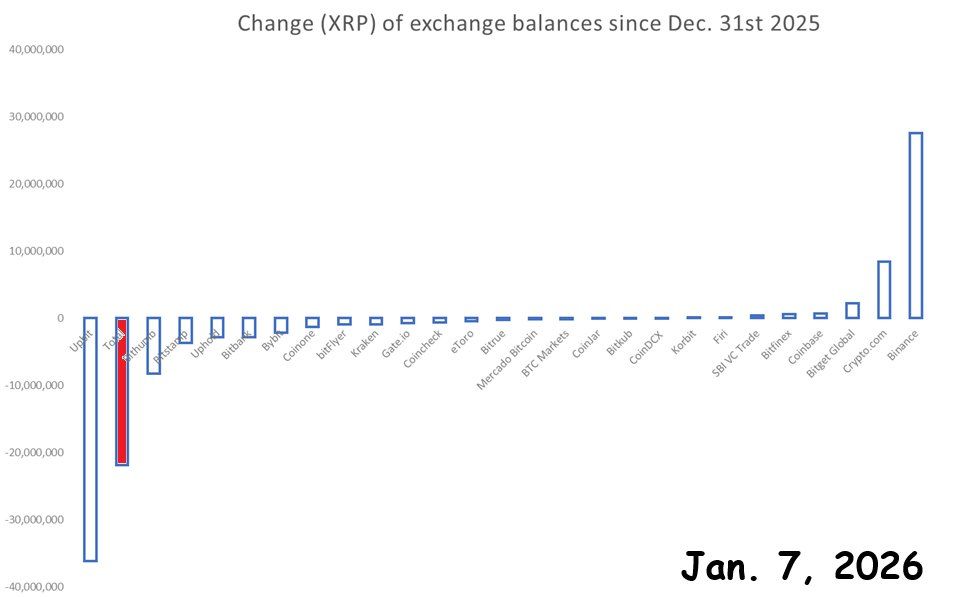
This pattern has kept market observers cautious. Exchange data also differs by source. Broader monitoring across more than 30 platforms suggests around 14 billion XRP remains on exchanges. That figure is higher than estimates from datasets covering fewer platforms.
Whale Activity Rises on the XRP Ledger
On-chain data shows increased activity from large XRP holders in early January. The XRP Ledger recorded 2,170 whale transactions on January 5. The next day, the count rose to 2,802 transactions valued at $100,000 or more.
This marked the highest daily whale activity in three months. The increase of nearly 29% within a day suggests active positioning by large holders. Such activity often appears ahead of periods of higher volatility.
Still, whale movements do not confirm price direction on their own. Large transfers can reflect accumulation, internal fund movements, or liquidity planning. Without strong price follow-through, the signal remains mixed.
XRP ETFs Post First Net Outflow Since Launch
US spot XRP ETFs recorded their first net outflow on January 7. Data shows $40.8 million exited the products in a single day. This ended a steady inflow streak that began when the ETFs launched in mid-November 2025.
The 21Shares XRP ETF led withdrawals with $47.25 million in outflows. Grayscale’s GXRP was the only product to post an inflow, adding $1.69 million. Despite the reversal, cumulative net inflows remain near $1.2 billion. Total assets under management stand at about $1.53 billion.
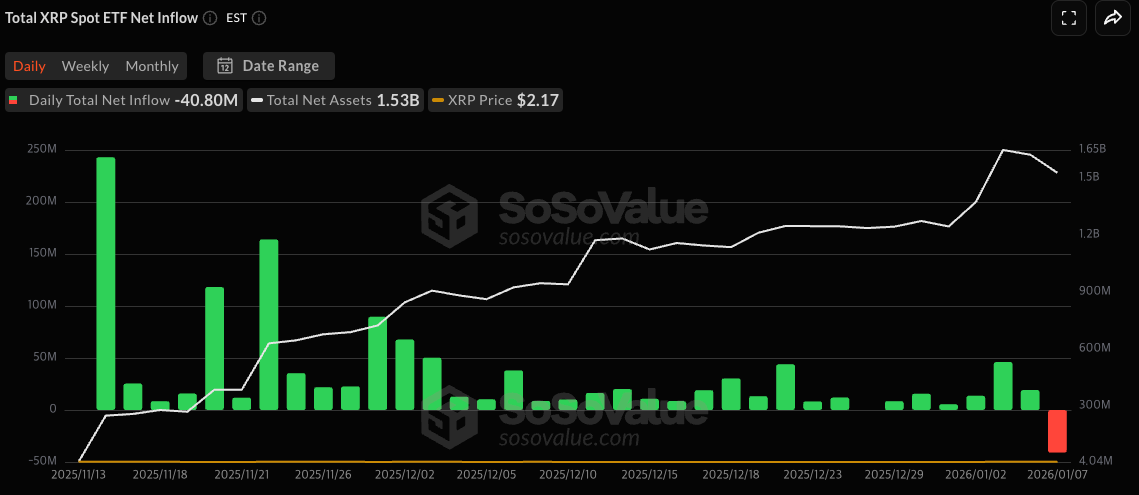
The outflow suggests a pause in institutional demand rather than a broad exit. The timing contrasts with exchange outflows in South Korea, adding to the mixed outlook.
XRP traded near $2.30 in early January 2026, below its July 2025 peak of $3.65. Whether Asian exchange activity can offset softer ETF flows remains a key focus as January progresses.
Get 3 Free Stock Ebooks
Discover top-performing stocks in AI, Crypto, and Technology with expert analysis.
- Top 10 AI Stocks - Leading AI companies
- Top 10 Crypto Stocks - Blockchain leaders
- Top 10 Tech Stocks - Tech giants



