


Key Points
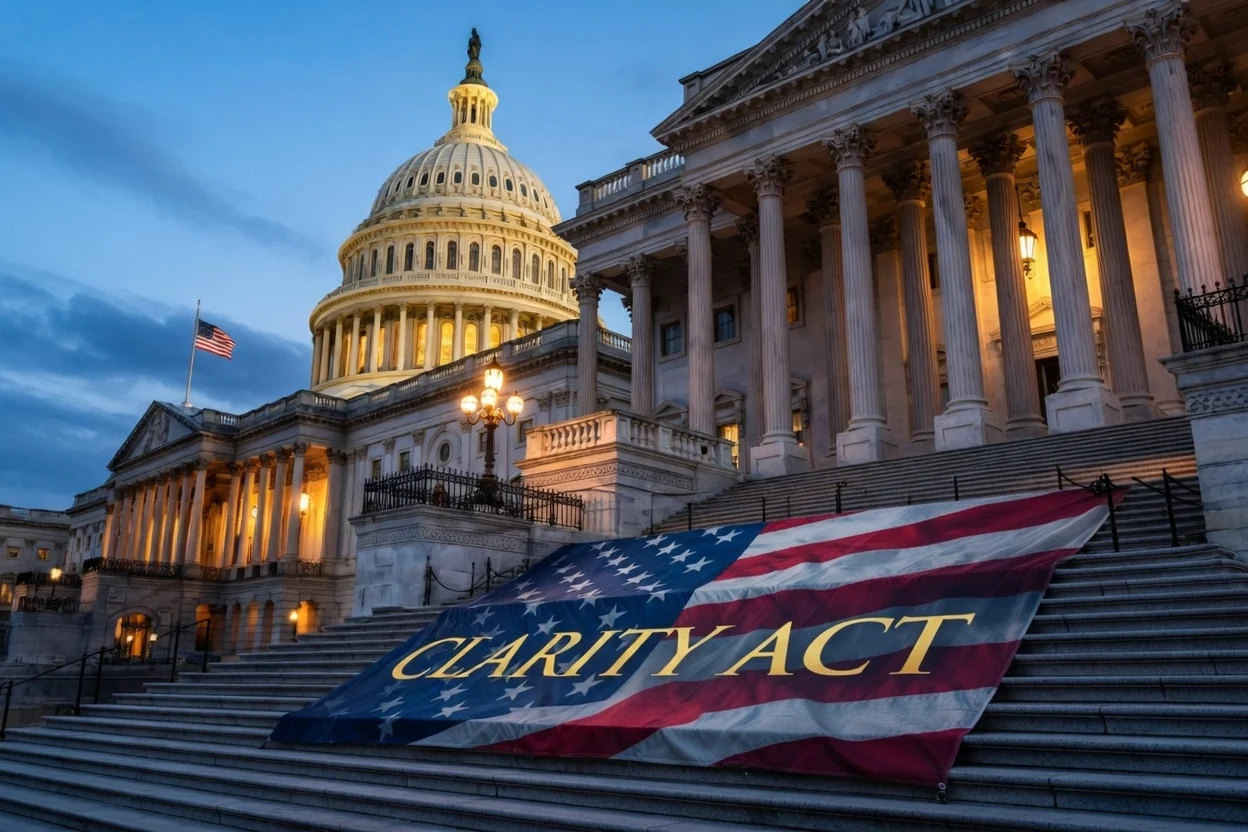
- White House officials have scheduled a Monday meeting with law enforcement representatives to address concerns about the CLARITY Act’s illicit finance provisions.
- Controversy surrounds Section 604’s language that would exempt software developers from money transmitter classifications.
- Law enforcement groups, including the National Sheriffs Association, argue the legislation provides excessive exemptions for DeFi platforms from anti-money laundering regulations.
- Senate leadership under Tim Scott and John Thune aims to secure a floor vote during July’s legislative session.
- Trump’s recent housing bill postponement sparks speculation about potential complications for the CLARITY Act’s passage.
A pivotal cryptocurrency regulation bill finds itself at a crossroads as the Senate approaches a crucial summer deadline. White House administrators are now intervening to resolve a contentious provision threatening the legislation’s advancement.
Sources familiar with the matter reveal that White House representatives have arranged a Monday conference with law enforcement organizations. The session aims to tackle pressing questions surrounding the bill’s approach to financial crimes.
Section 604 Sparks Heated Debate
The controversy centers on a provision called the Blockchain Regulatory Certainty Act, designated as Section 604 in the broader legislation. This clause would shield software creators from money transmitter designation when they lack control over their technological creations.
Proponents contend this provision safeguards developers who build decentralized financial systems without custody of user assets. Opponents maintain the language creates overly permissive loopholes.
In May correspondence, the National Sheriffs Association expressed concerns about the exemption’s scope. The organization maintained that certain developers maintain sufficient control over financial transactions to warrant Bank Secrecy Act oversight.
Conversely, some law enforcement representatives have endorsed the legislation. White House cryptocurrency policy advisor Patrick Witt has conducted numerous discussions with stakeholders throughout the year.

Witt maintains the bill equips law enforcement with enhanced capabilities to combat financial crimes. He contends that regulatory uncertainty creates vulnerabilities that malicious actors readily exploit.
Senator Elizabeth Warren, serving as ranking member on the Banking Committee, has expressed reservations about the bill’s financial crime framework. She has highlighted cryptocurrency’s documented use by organized crime networks and narcotics trafficking operations as justification for stringent oversight.
Limited Timeframe for Legislative Action
Senate Majority Leader John Thune has indicated plans to schedule floor debate within the upcoming weeks. Media reports suggest Thune may proceed with a vote despite incomplete Democratic consensus.
Banking Committee Chairman Tim Scott declared via social media that the Senate should advance the legislation in July. The upper chamber has approximately four weeks of scheduled session time remaining before the summer adjournment.
Passage requires 60 affirmative votes, necessitating bipartisan cooperation. Multiple legislators have stated their support remains contingent upon including conflict-of-interest provisions preventing government personnel from maintaining personal cryptocurrency holdings.
Senator Cynthia Lummis, a bill advocate, confirmed that negotiators continue refining provisions related to DeFi frameworks, illicit finance protocols, and ethics requirements. She indicated legislative text would be made available around Independence Day for final stakeholder review.
Beyond cryptocurrency legislation, Congress has been addressing separate housing policy measures. President Trump postponed signing that legislation, conditioning his approval on passage of voter identification requirements.
Uncertainty remains regarding whether Trump’s hesitation might affect the CLARITY Act. A TD Cowen policy strategist anticipates the housing measure will become law by mid-July regardless of presidential signature, citing constitutional provisions governing unsigned legislation.
Should Republicans fail to secure 60 votes before the August break, observers anticipate significant delays. Such circumstances could postpone the legislation until the subsequent congressional session beginning in 2027.
Get 3 Free Stock Ebooks
Discover top-performing stocks in AI, Crypto, and Technology with expert analysis.
- Top 10 AI Stocks - Leading AI companies
- Top 10 Crypto Stocks - Blockchain leaders
- Top 10 Tech Stocks - Tech giants



