


Quick Overview
- Virgin Galactic has temporarily halted all commercial spaceflight operations while developing its advanced Delta Class spacecraft.
- Initial test flights are scheduled to commence in Q3 2026, followed by a planned commercial service resumption in Q4 2026.
- Q4 2025 revenue stood at a minimal $0.31 million as operations remain suspended.
- The company burned through $438 million in free cash flow during 2025, though this marked progress compared to 2024 figures.
- Analyst sentiment remains bearish with a Reduce rating and a consensus price target of $3.45 over the next 12 months.
SPCE shares are trading at significantly discounted levels, with the Street’s consensus 12-month projection hovering around $3.45.
Virgin Galactic Holdings, Inc., SPCE
The space tourism company posted merely $0.31 million in quarterly revenue for Q4 2025. Flight operations remain suspended while engineering teams work on completing the Delta Class vehicle platform.
For the full 2025 fiscal year, Virgin Galactic recorded negative $438 million in free cash flow. This figure comprises $240 million in operational cash burn combined with $198 million allocated to capital investments.
The latest earnings report showed the company exceeded analyst projections on a loss-per-share basis. However, with revenues barely registering, this achievement offers limited reassurance to shareholders.

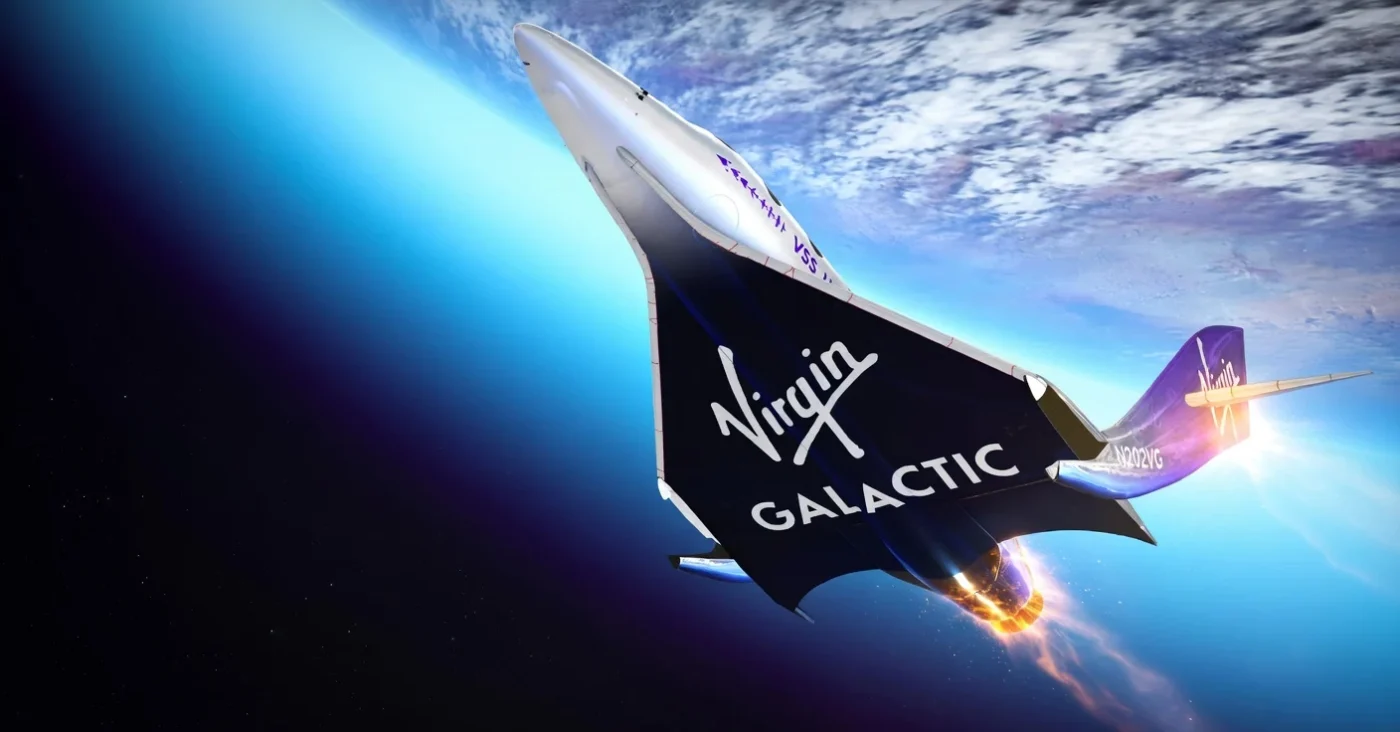
The Delta Class system represents a fundamental redesign intended to enable more frequent launches while dramatically reducing per-flight operational expenses compared to Virgin Galactic’s legacy platform. While the original spacecraft generated considerable public interest, it never evolved into a financially sustainable operation.
Executive leadership has established definitive milestones. Test flight operations are targeted for Q3 2026. The return to commercial service, beginning with a research-focused mission, is projected for Q4 2026.
For shareholders in SPCE, this development timeline represents the critical factor. Any delays could trigger further stock depreciation. Successful execution, however, could restore investor confidence and provide a foundation for future growth.
The Cash Consumption Challenge
With zero flight revenue currently being generated, the company continues depleting its cash reserves at an alarming pace. Each passing quarter without Delta Class operational capability extends this financial pressure.
While the year-over-year improvement in cash consumption from 2024 to 2025 shows positive momentum, the absolute figures remain substantial. Virgin Galactic must achieve a flight cadence that generates sufficient revenue to materially reduce this cash outflow.
Current financial disclosures don’t indicate immediate liquidity concerns, but capital management will remain a focal point for investors as the 2026 deadlines draw closer.
Analyst Perspectives on SPCE
Wall Street’s collective stance on SPCE is Reduce, comprising 1 buy rating, 3 hold ratings, and 2 sell ratings, per MarketBeat data.
The mean price target across covering analysts sits at $3.45 over the next twelve months. This suggests modest appreciation potential from current trading levels while reflecting widespread analyst skepticism.
The Virgin Galactic brand retains significant recognition value. The high-profile founder narrative continues generating media coverage. However, neither brand equity nor publicity can fund Delta Class engineering and production.
Absent tangible flight performance metrics and meaningful revenue generation, analyst community sentiment is unlikely to shift meaningfully upward.
Bottom Line
Virgin Galactic represents an all-or-nothing proposition as the second half of 2026 approaches. The company will either successfully deploy Delta Class and resume commercial operations as planned, or face mounting delays that make the financial situation increasingly untenable.
A concrete catalyst exists on the near-term horizon. The Q3 2026 test flight program and Q4 2026 commercial resumption offer a legitimate opportunity to transform the company’s trajectory.
Analyst consensus remains pessimistic with a Reduce recommendation and $3.45 mean price target, while SPCE continues reporting virtually no revenue.
Get 3 Free Stock Ebooks
Discover top-performing stocks in AI, Crypto, and Technology with expert analysis.
- Top 10 AI Stocks - Leading AI companies
- Top 10 Crypto Stocks - Blockchain leaders
- Top 10 Tech Stocks - Tech giants



