


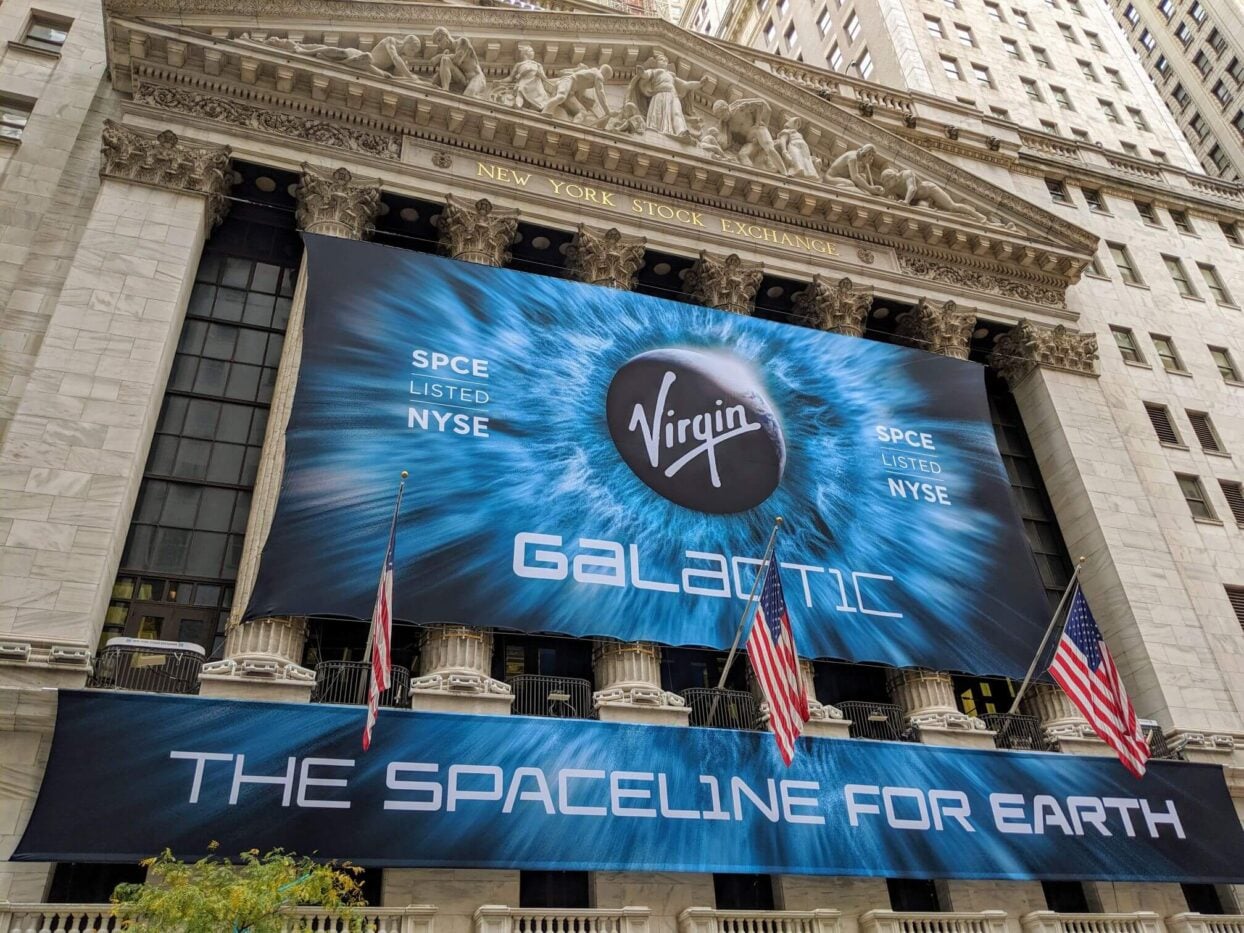
Key Highlights
- SPCE shares climbed nearly 10% during Friday’s premarket session after Thursday’s 19.53% rally
- The VSS Unity spacecraft successfully completed its maiden glide flight at Spaceport America, marking a return to active operations
- Federal court provided preliminary approval for a $2.75 million insurance-funded settlement ending two shareholder derivative suits
- The company anticipates conducting glide testing with its next-generation Spaceship during Q3 2026, with powered space flights planned for Q4 2026
- Wall Street analysts maintain a collective “Hold” stance with a mean price objective of $3.43
Shares of Virgin Galactic (SPCE) climbed approximately 10% during Friday’s premarket session, extending Thursday’s impressive 19.53% advance. The stock traded near $4.98 as investors digested two favorable developments announced simultaneously.
Virgin Galactic Holdings, Inc., SPCE
The commercial spaceflight company revealed that its VSS Unity spacecraft has resumed operational activities at Spaceport America in New Mexico. Unity successfully completed the initial glide flight in a series of planned tests aimed at preparing flight crews and ground personnel for upcoming next-generation spacecraft operations.
Spaceline President Mike Moses explained that Unity’s glide dynamics provide an authentic training platform for the upcoming vehicle generation. The flight trajectory, landing procedures, and pilot visibility closely replicate the new spacecraft’s characteristics, delivering crews hands-on training under authentic flight conditions before the advanced Spaceship launches.
Flight Operations Resume
Virgin Galactic has outlined plans to conduct glide testing with its inaugural next-generation Spaceship during the third quarter of 2026. Rocket-powered test missions reaching space are scheduled for the fourth quarter of 2026.

The advanced fleet is engineered to operate twice weekly, with each vehicle projected to complete over 500 missions during its operational lifespan. This represents a substantial improvement over Unity’s flight frequency.
The resumption of flight activities follows an extended grounding period that had dampened investor confidence. The sight of a spacecraft returning to active flight provided momentum traders with concrete evidence of operational progress.
Litigation Uncertainty Resolved
On May 19, 2026, the U.S. District Court for the Eastern District of New York provided preliminary approval for a resolution in two long-running shareholder derivative lawsuits.
Virgin Galactic’s insurance carriers will contribute $2.75 million to the company, with SPCE retaining half of the settlement proceeds once final court approval is secured. All legal claims are anticipated to be dismissed or rendered moot upon final approval.
The company’s present and former directors and officers rejected all allegations and claims of misconduct. The settlement eliminates legal uncertainty that had been shadowing the stock.
Chart Analysis
SPCE is currently trading substantially above its trend indicators. The shares sit 63.1% above the 20-day moving average and 48.8% above the 200-day moving average — the type of extension that follows a sharp advance.
The Relative Strength Index registers 78.65, squarely within overbought parameters. The 20-day SMA has crossed above the 50-day SMA, representing a bullish short-term signal, though the 50-day continues below the 200-day following January’s bearish death cross.
Critical resistance appears at the $5.00 level, with the 52-week peak zone located near $5.23. Psychological price barriers like these typically require persistent trading volume to breach decisively.
Analyst consensus stands at Hold, with a mean price objective of $3.43 — significantly beneath current market prices. Jefferies maintains a Buy recommendation with a $5.00 price target, while Morgan Stanley holds an Underweight rating with a $2.30 target.
Virgin Galactic’s upcoming earnings report is projected for August 5, 2026. The current earnings per share forecast indicates a loss of 68 cents, representing progress from the prior year’s $1.47 loss.
Get 3 Free Stock Ebooks
Discover top-performing stocks in AI, Crypto, and Technology with expert analysis.
- Top 10 AI Stocks - Leading AI companies
- Top 10 Crypto Stocks - Blockchain leaders
- Top 10 Tech Stocks - Tech giants



