


Key Takeaways
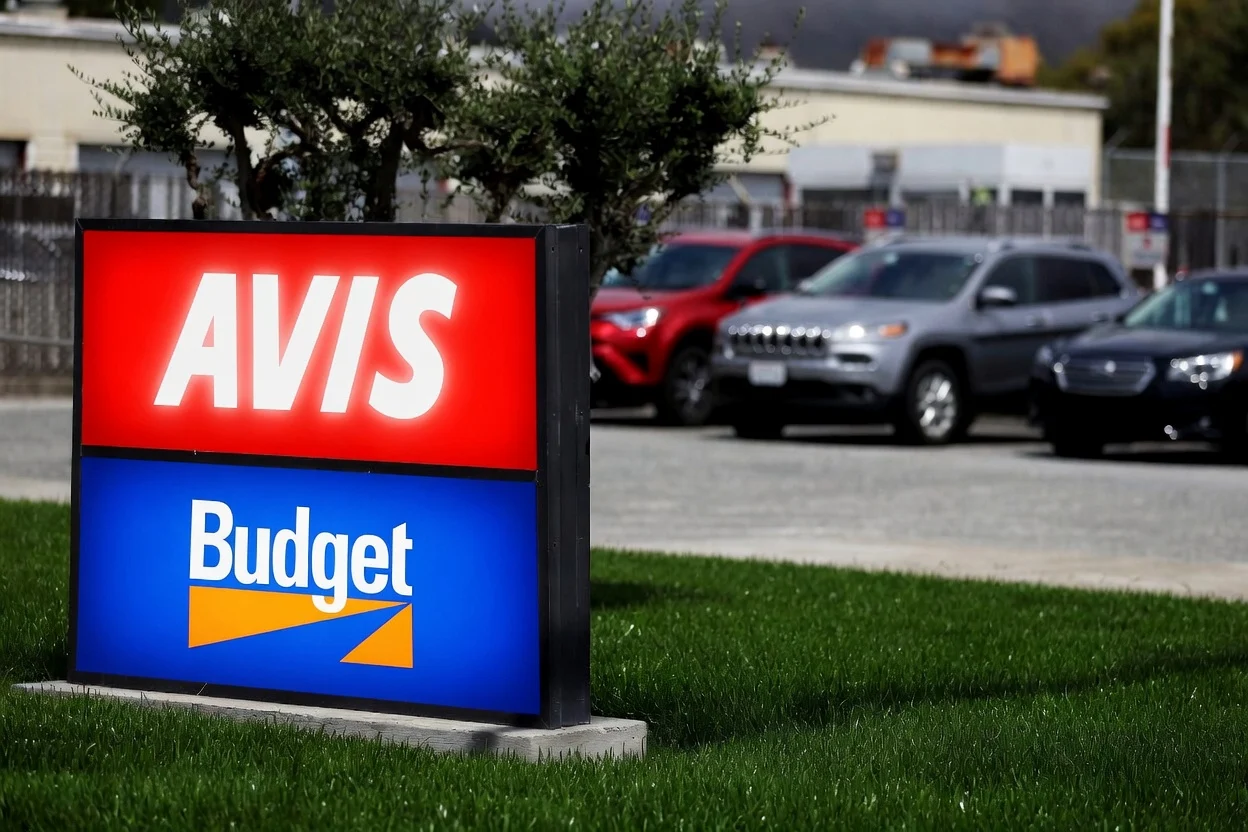
- Verra Mobility (VRRM) shares nosedived more than 46% during Wednesday’s premarket session following Avis Budget Group’s decision to end their partnership, with termination set for September 2026.
- The partnership’s end will eliminate $135M–$145M in annual commercial services revenue and reduce segment profit by $120M–$125M.
- The company slashed its 2026 revenue forecast to $985M–$995M from a previously projected $1.02B–$1.03B.
- CEO David Roberts expressed that leadership was “surprised and disappointed” upon receiving the termination notification.
- Investment firm Baird responded by downgrading VRRM from Outperform to Neutral while reducing its price objective from $20 to $8.
Shares of Verra Mobility were changing hands at approximately $13.08 during Wednesday’s premarket hours, representing a decline exceeding 46% after the firm disclosed late Tuesday that Avis Budget Group had decided to terminate their business arrangement. The separation becomes effective in September 2026.
Verra Mobility Corporation, VRRM
The Avis partnership represents approximately 13.5% of Verra Mobility’s anticipated 2025 revenue — making this a substantial financial blow. Management indicated the partnership’s conclusion will decrease commercial services annual revenue by between $135 million and $145 million, while segment profitability will suffer an annual reduction of $120 million to $125 million prior to implementing any operational cost reductions.
CEO David Roberts spoke candidly about the development. “We were surprised and disappointed to receive this notice from Avis Budget Group given our longstanding partnership and the significant time invested by both parties in ongoing extension negotiations,” he stated.
Roberts further explained that management is now pursuing cost reduction initiatives, operational adjustments, and strategic repositioning for future expansion.
Avis Budget Group had not issued a public statement regarding the termination at publication time.

Financial Outlook Revised Downward
Verra Mobility significantly adjusted its 2026 full-year projections following the contract loss. Total revenue expectations now fall within a $985 million to $995 million range, representing a decline from the $1.02 billion to $1.03 billion guidance provided just weeks earlier.
Adjusted EBITDA projections were reduced to $380 million–$385 million, down from the previous $405 million–$415 million estimate.
Adjusted earnings per share guidance decreased to $1.19–$1.25 from $1.32–$1.38, while free cash flow expectations were lowered to $140 million–$150 million from $150 million–$160 million.
The comprehensive revision represents a substantial deterioration in financial prospects for a company already experiencing headwinds in its commercial operations.
Wall Street Responds
Baird wasted no time adjusting its position. Analyst David Koning downgraded his VRRM rating from Outperform to Neutral while dramatically cutting the firm’s price target from $20 down to $8.
Koning highlighted that the company’s leverage ratio now climbs to approximately 3.5 times on a pro forma calculation. He additionally cautioned that should Verra lose either Enterprise or Hertz — both facing contract renewals in 2027 — the commercial segment’s entire sustainability would be questionable. FISV, FIS, and GPN currently trade between 4–7 times their 2027 projected EPS at comparable leverage levels, which Baird suggests would value VRRM somewhere in the $4 to $8 per share range using similar multiples.
Six analysts have adjusted their earnings projections downward for the coming period, based on InvestingPro information.
Before this announcement, Verra Mobility had posted Q1 2026 revenue totaling $223.6 million, slightly exceeding consensus estimates, with adjusted EPS reaching $0.25 compared to the anticipated $0.24. However, commercial services revenue had already declined 4% year-over-year during that quarter to $97.8 million, a cautionary signal that was overlooked by many observers.
The stock had already surrendered 41.6% of its value year-to-date through Tuesday’s closing bell and had fallen 44% over the previous 12 months. Wednesday’s dramatic selloff pushed shares closer to their 52-week low of $12.83.
Get 3 Free Stock Ebooks
Discover top-performing stocks in AI, Crypto, and Technology with expert analysis.
- Top 10 AI Stocks - Leading AI companies
- Top 10 Crypto Stocks - Blockchain leaders
- Top 10 Tech Stocks - Tech giants



