


Key Takeaways
- Shares of UnitedHealth declined more than 5% during Monday’s premarket session following Berkshire Hathaway’s disclosure of a complete divestiture of its approximately 5 million-share holding
- The exit came as part of CEO Greg Abel’s strategic portfolio reorganization following his January 1 succession of Warren Buffett
- Additional headwinds include a federal freeze on new Medicare home healthcare provider enrollments
- UnitedHealth has announced plans to reduce its Medicare Advantage enrollment by 1.3 million members to safeguard profitability amid escalating medical expenses
- The health insurer exceeded first-quarter profit expectations and upgraded its annual earnings forecast in recent results
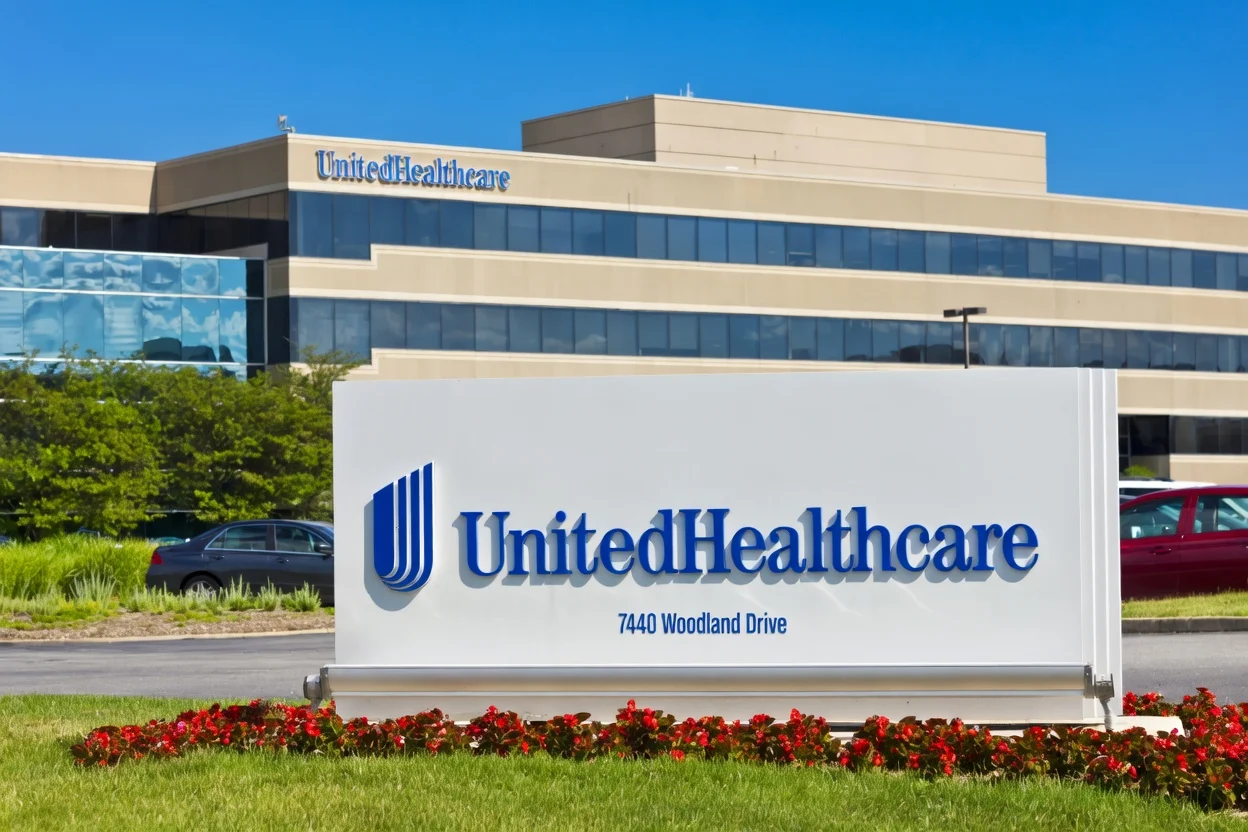
Shares of UnitedHealth (UNH) tumbled more than 5% during Monday’s premarket session, sliding to approximately $380.35, following Berkshire Hathaway’s disclosure that it had liquidated its entire investment in the healthcare giant.
UnitedHealth Group Incorporated, UNH
The conglomerate’s most recent 13F regulatory filing, which reflects portfolio positions through March 31, indicated that Berkshire disposed of its complete holding of roughly 5 million UNH shares. The exit stands out considering Berkshire initially established the position just in Q2 2025 — representing a holding period of less than 12 months.
This divestiture represents one element of a comprehensive portfolio transformation being executed by Greg Abel, who assumed the role of Berkshire’s chief executive on January 1 following his succession of Warren Buffett.
When a firm with Berkshire’s reputation exits an investment so rapidly, market participants pay attention. The announcement triggered immediate selling pressure among traders and investors.

UnitedHealth wasn’t the only casualty of Berkshire’s restructuring. The investment powerhouse also completely eliminated holdings in Amazon, Domino’s, Pool Corp, Mastercard, and Visa throughout the opening quarter. These stocks experienced modest declines in early Monday trading as well.
Conversely, Berkshire initiated positions in Delta Air Lines and Macy’s during the period, while expanding existing stakes in Alphabet and the New York Times.
Regulatory Challenges and Strategic Adjustments Compound Investor Concerns
The Berkshire divestiture isn’t the only obstacle confronting the stock. UnitedHealth is simultaneously contending with a federal moratorium that suspends new Medicare enrollments for home healthcare service providers, creating additional regulatory complications.
Compounding matters, the corporation has disclosed intentions to reduce its Medicare Advantage membership rolls by 1.3 million individuals. This decision represents a calculated approach to maintain profitability while medical cost inflation continues accelerating.
This convergence — a prominent institutional investor departure, mounting regulatory obstacles, and deliberate membership contraction — has prompted market participants to recalibrate their short-term expectations for the healthcare stock.
Justice Department Investigation Remains an Overhang
UnitedHealth continues operating under Justice Department investigation regarding its billing methodologies, an issue that persists as a concern for investors.
Heading into this trading week, the stock has surrendered approximately 20% of its value year-to-date, making Monday’s decline another setback in what has proven to be a challenging period for the managed-care leader.
However, the situation isn’t uniformly negative. UnitedHealth’s first-quarter financial results demonstrated encouraging signs of operational stability.
The corporation surpassed Q1 earnings projections and elevated its full-year profitability guidance, developments that had offered some investor confidence before Monday’s Berkshire disclosure emerged.
Technical indicators currently categorize UNH as a Buy, with average daily trading volume hovering around 8.49 million shares. The company’s market capitalization stands at roughly $357.7 billion.
For the immediate future, the stock is processing the implications of Berkshire’s departure alongside broader anxieties surrounding Medicare expenses and enrollment modifications.
Get 3 Free Stock Ebooks
Discover top-performing stocks in AI, Crypto, and Technology with expert analysis.
- Top 10 AI Stocks - Leading AI companies
- Top 10 Crypto Stocks - Blockchain leaders
- Top 10 Tech Stocks - Tech giants



