


Quick Summary
- UBS has revised its S&P 500 year-end 2026 projection downward from 7,700 to 7,500
- Rising crude oil prices stemming from Middle East geopolitical tensions drove the adjustment
- The benchmark index has declined 3.9% following the outbreak of conflict with Iran on February 28
- Federal Reserve rate reduction expectations have been pushed to September and December from June and September
- Despite the cut, UBS maintains roughly 13% potential upside with earnings projections holding at $310 per share for 2026
UBS Global Wealth Management has revised downward its forecast for the S&P 500 index through 2026. The adjustment comes as escalating energy prices and economic headwinds stemming from intensifying Middle East hostilities weigh on market sentiment.
According to a research note released on April 6, the Swiss banking institution lowered its year-end projection to 7,500 from a previous estimate of 7,700. The firm also reduced its mid-year forecast to 7,000 from 7,300.
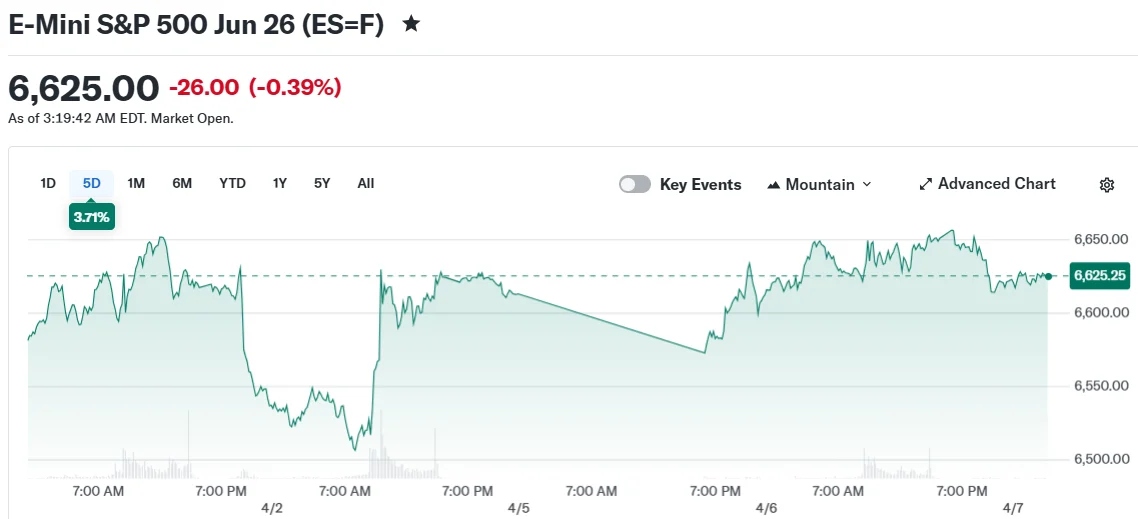
Since hostilities involving Iran commenced on February 28, the S&P 500 has retreated approximately 3.9%. Surging petroleum prices coupled with heightened geopolitical risk have triggered a flight from equities among investors.
UBS analysts indicated their central scenario anticipates the regional conflict subsiding within the next several weeks. Such a development would enable energy supply chains to progressively normalize.
Nevertheless, the financial institution cautioned that returning oil production capacity to pre-conflict levels will require an extended timeline. Widespread damage to critical infrastructure throughout the affected region means full restoration of output capabilities will be a gradual process.

This extended recovery period could sustain elevated petroleum prices longer than current market expectations suggest.
Economic Impact of Elevated Energy Costs
Increased energy expenditures typically constrain economic expansion while simultaneously fueling inflationary pressures. UBS analysts noted this combination will likely maintain stickier inflation readings while exerting modest downward pressure on U.S. economic activity.
Consequently, the bank has recalibrated its Federal Reserve policy outlook, anticipating delayed monetary easing. Where UBS previously projected rate reductions in June and September, the firm now anticipates two 25-basis-point cuts occurring in September and December.
This revision illustrates how international geopolitical developments can significantly influence domestic central bank decision-making.
Notwithstanding the reduced targets, UBS calculates approximately 13.43% appreciation potential from the S&P 500’s most recent closing level of 6,611.83.
UBS Maintains Constructive Stance on American Equities
UBS left its 2026 earnings projection for the S&P 500 unaltered at $310 per share. The institution characterized U.S. equity markets as “attractive” notwithstanding current short-term challenges.
Analysts emphasized that corporate profit expansion remains robust. They also highlighted ongoing artificial intelligence implementation and commercialization as supportive factors for equity valuations once conflict-related disruptions diminish.
UBS noted that even with postponed policy accommodation, the Federal Reserve maintains a broadly market-friendly posture.
The banking firm did not alter its fundamentally optimistic outlook on American stocks. The modifications solely reflect tactical adjustments to price target levels and timeframes to accommodate ongoing war-related market effects.
UBS currently projects two Federal Reserve rate reductions before 2026 concludes, with both anticipated during the year’s latter half.
Get 3 Free Stock Ebooks
Discover top-performing stocks in AI, Crypto, and Technology with expert analysis.
- Top 10 AI Stocks - Leading AI companies
- Top 10 Crypto Stocks - Blockchain leaders
- Top 10 Tech Stocks - Tech giants



