



Key Takeaways
- Stock index futures advanced Monday following a diplomatic agreement between Washington and Tehran to cease military operations and restart negotiations
- Nasdaq 100 contracts surged more than 1%, bouncing back after five consecutive days of losses
- The Magnificent Seven technology giants have shed approximately $2.8 trillion in valuation during the current month
- Crude oil markets saw modest increases before retreating as traders assessed potential threats to Strait of Hormuz shipping lanes
- This week’s calendar features Thursday’s employment report and Federal Reserve Chair Warsh’s debut on the global stage
Equity index futures posted strong gains Monday morning following news that the United States and Iran reached an understanding to suspend military operations and return to diplomatic discussions.
Nasdaq 100 contracts paced the rally, advancing more than 1%. S&P 500 futures increased approximately 0.8%, while Dow Jones futures registered gains of about 0.4%.
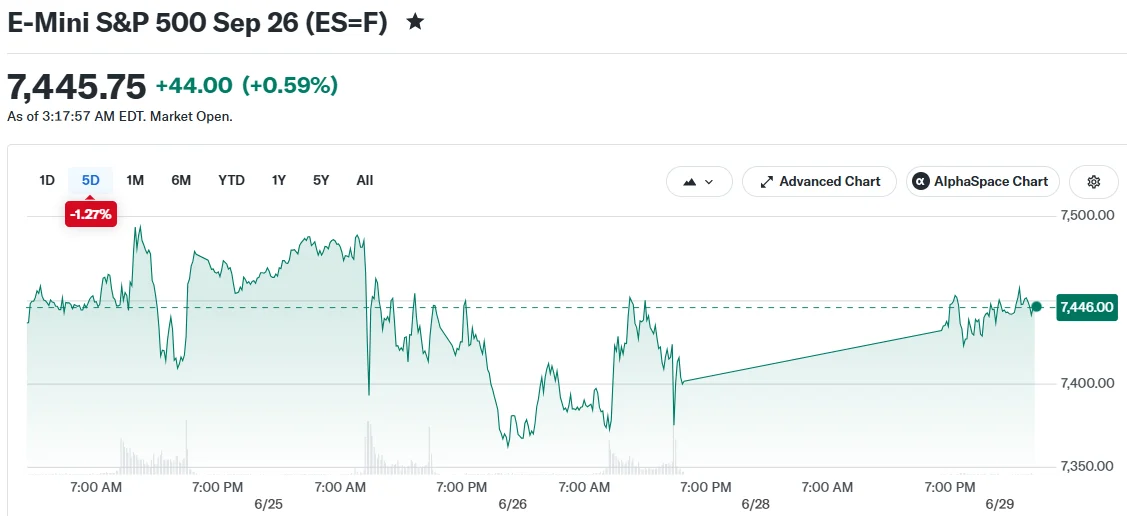
The breakthrough followed a tense weekend period. U.S. forces conducted military operations targeting Iranian installations after Washington attributed attacks near the Strait of Hormuz to Tehran. President Trump indicated additional responses remained under consideration.
Both nations have now committed to suspending military activities and advancing diplomatic discussions that originated with a memorandum of understanding executed on June 17.
Oil prices initially climbed but subsequently surrendered most early advances. Brent crude traded 0.6% higher at $73 per barrel. West Texas Intermediate increased 0.9% to approach $70.

ING analysts observed that petroleum markets haven’t experienced significant rallies despite recent military confrontations. They emphasized that the primary concern centers on potential interruptions to crude shipments through the Strait of Hormuz.
Technology Sector Faces Headwinds
Technology equities endured a challenging week preceding Monday’s session. The Nasdaq Composite registered losses across five consecutive trading days — marking its most extended decline since January.
Nvidia and Alphabet both retreated over 8% during the previous week. The collective Magnificent Seven group has erased roughly $2.8 trillion in total market capitalization throughout this month, potentially establishing a new monthly record according to FactSet data.
Monday’s futures market strength in technology sectors indicates certain market participants are capitalizing on reduced valuations. The sustainability of this recovery depends on forthcoming economic indicators.
Critical Events This Week
The trading week is abbreviated due to the holiday, with exchanges shuttered Friday for Independence Day observance.
Thursday’s June employment situation report from the Bureau of Labor Statistics represents the week’s centerpiece. The nonfarm payrolls figures remain critical for Federal Reserve policymakers evaluating monetary policy adjustments.
Preceding that release, the Job Openings and Labor Turnover Survey arrives Tuesday. The ISM Manufacturing PMI report publishes Wednesday.
Federal Reserve Chair Kevin Warsh will participate in his inaugural international engagement at the European Central Bank’s yearly symposium in Sintra, Portugal, scheduled from June 29 through July 1. Market participants will scrutinize his perspectives on monetary policy direction.
The 10-year U.S. Treasury yield registered 4.382% during early Monday trading, showing slight elevation from the previous week’s close.
Investors maintain a cautious posture entering a week where geopolitical developments and labor market statistics could generate significant market volatility.
Get 3 Free Stock Ebooks
Discover top-performing stocks in AI, Crypto, and Technology with expert analysis.
- Top 10 AI Stocks - Leading AI companies
- Top 10 Crypto Stocks - Blockchain leaders
- Top 10 Tech Stocks - Tech giants



