



Key Takeaways
- Wall Street experienced a sharp sell-off following President Trump’s national address, with the Dow plummeting over 600 points as investors found no resolution to the US-Israel conflict with Iran
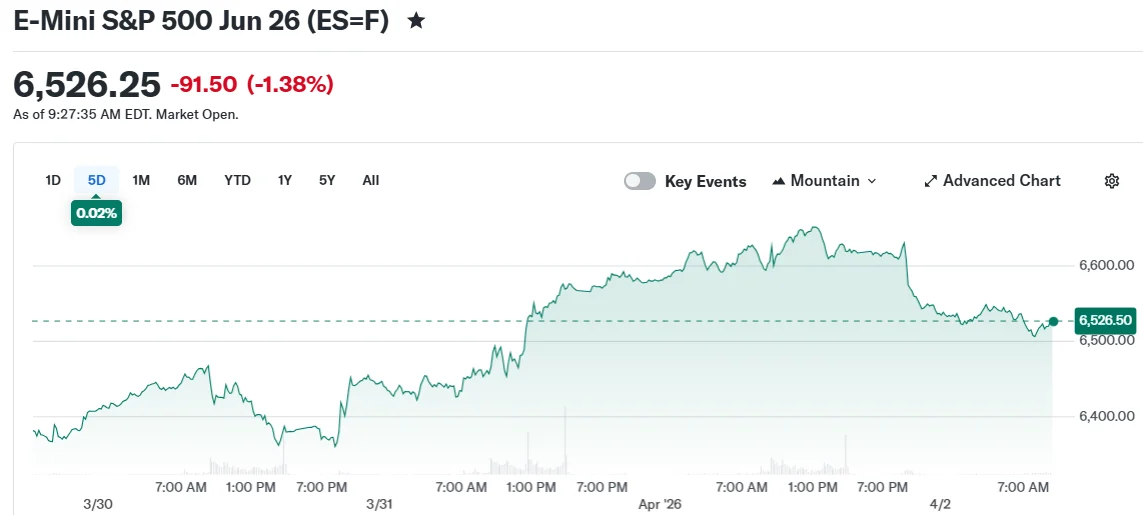
- Major indexes took significant losses: the S&P 500 declined 1.2% while the Nasdaq tumbled 1.7% during Thursday trading
- WTI crude oil prices skyrocketed 13%, breaking through $113 per barrel—marking the sharpest daily increase since May 2020
- Cryptocurrency markets and other high-risk investments mirrored the stock market downturn
- Market volatility intensified as the VIX index climbed to 27.66, signaling heightened investor concern
Investors had anticipated that President Trump’s Wednesday evening national address would outline a clear strategy for de-escalating the US-Israeli military operations in Iran. Instead, the speech left markets disappointed and anxious.
Thursday’s trading session witnessed a dramatic downturn in US equities after the President’s remarks failed to meet Wall Street’s expectations. The Dow Jones Industrial Average plummeted more than 600 points, representing approximately a 1.3% decline. Meanwhile, the S&P 500 shed 1.2% and the Nasdaq Composite tumbled nearly 2%.
Energy markets told a different story entirely. West Texas Intermediate crude soared 13%, pushing prices beyond $113 per barrel. This surge represents the most significant single-day percentage jump recorded since May 5, 2020. Similarly, Brent crude climbed 8%, exceeding $109 per barrel.
Since the conflict’s inception in late February, Brent crude has surged approximately 50%. While a temporary decline earlier in the week had sparked optimism among market participants, Thursday’s presidential address swiftly reversed that positive sentiment.
In his address, Trump declared his intention to “hit Iran hard” and “send them back to the Stone Age.” The President indicated that US military operations would intensify before any withdrawal, expected within two to three weeks. However, markets had been anticipating a more immediate resolution.

Paul Hickey, co-founder of Bespoke Investment Group, captured the market’s disappointment perfectly. “Leading up to last night’s address, there was some optimism that he would lay out a path of ending the hostilities,” he explained. “We got neither.”
The Strait of Hormuz continues to serve as a critical focal point. This vital shipping corridor for international oil transport has been under intense scrutiny since the conflict’s outbreak.
Technology Sector and Digital Assets Face Steep Declines
The semiconductor industry bore the brunt of Thursday’s sell-off. Major players including Nvidia and Broadcom experienced significant declines as the technology sector broadly retreated. Memory chip manufacturers and growth-oriented stocks that had posted gains on Tuesday and Wednesday, buoyed by hopes of conflict resolution, surrendered those advances.
Bitcoin declined in tandem with other speculative investments. Digital currency markets have been responding to the same war-related volatility that has pressured stock markets for several weeks.
The CBOE Volatility Index, commonly referred to as the VIX, increased by 3.12 points, reaching 27.66. This elevated reading indicates heightened anxiety and uncertainty among investors regarding near-term market prospects.
David Rosenberg of Rosenberg Research observed that Thursday’s market turmoil coincided with the one-year anniversary of President Trump’s “Liberation Day” tariff declarations, which similarly disrupted financial markets.
“Hopes for a quick wind-down of the Iran war faded,” Rosenberg observed. “Trump did not provide any off-ramp from the escalation path. Rhetoric has become harsher.”
Bond Yields Climb Amid Renewed Stagflation Concerns
Government bond yields advanced during Thursday’s session. The 2-year Treasury note yield increased to 3.83%, while the benchmark 10-year yield rose to 4.35%. The surge in energy prices has revived fears of stagflation—a challenging economic scenario characterized by rising inflation coupled with stagnant growth.
Rosenberg noted that “worries about oil prices and stagflation are partly being balanced by lingering hopes that the war will not drag too far into the year.”
Thursday marked the final trading day of an abbreviated week due to the holiday. Financial markets will remain shuttered on Good Friday. Market participants are eagerly awaiting the March employment report, scheduled for release Friday, which should provide additional insight into the resilience of the US economy.
Weekly unemployment claims figures published Thursday morning revealed an unexpected decrease, indicating the labor market has maintained its strength despite the ongoing international conflict.
Get 3 Free Stock Ebooks
Discover top-performing stocks in AI, Crypto, and Technology with expert analysis.
- Top 10 AI Stocks - Leading AI companies
- Top 10 Crypto Stocks - Blockchain leaders
- Top 10 Tech Stocks - Tech giants



