



Key Takeaways
- President Trump issued an 8 p.m. ET Tuesday ultimatum demanding Iran reopen the Strait of Hormuz or face military action
- Oil markets showed minimal reaction with Brent crude declining 0.3% while WTI rose just marginally
- The President warned of strikes on Iranian infrastructure including bridges and power facilities within hours
- Tehran countered with threats to target Persian Gulf energy installations if attacked
- Trader skepticism may stem from Trump’s pattern of repeatedly postponing previous deadlines
Global crude markets displayed remarkable composure on Tuesday as traders monitored President Donald Trump’s ultimatum to Iran regarding the Strait of Hormuz. The standoff has entered its sixth week, already triggering significant disruptions to worldwide oil supplies.
The President established an 8 p.m. Eastern Time Tuesday threshold for Iran to reach an agreement. Trump stated American forces could eliminate “every bridge in Iran by 12 o’clock tomorrow night” should Tehran refuse. He added that power facilities would be “burning, exploding and never to be used again.”
Yet these aggressive warnings failed to generate significant movement in oil prices s. Brent crude contracts dropped a modest 0.3% to approximately $109.40 per barrel. West Texas Intermediate climbed a mere 0.2% to reach $112.59. Trading on Monday had similarly shown limited volatility.
July Brent crude contracts temporarily slipped under the $100 per barrel threshold. WTI futures for July settlement traded at $90.43, marking a decline from the previous week’s levels.
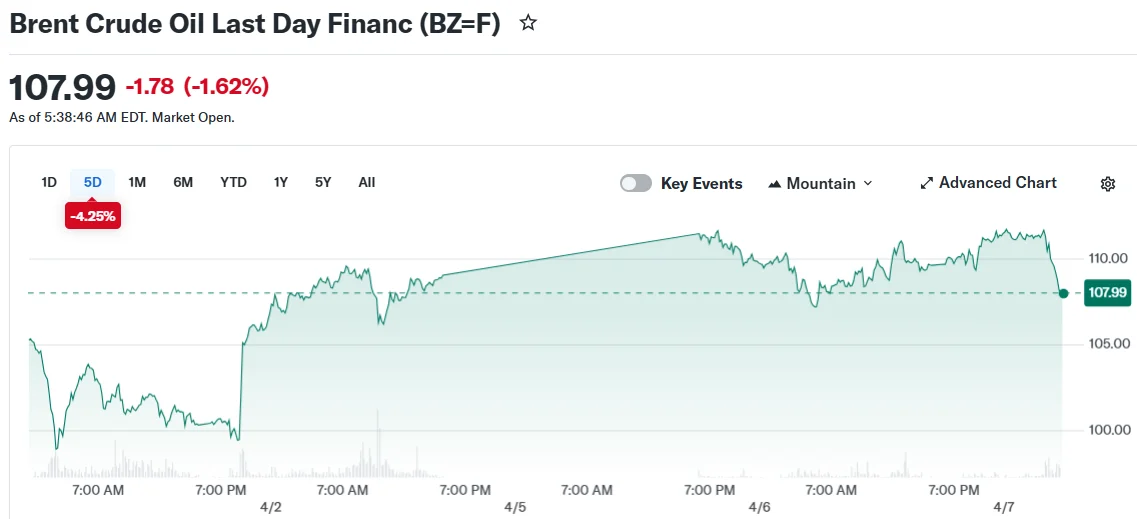
Market participants may be displaying calm because Trump has previously shifted such deadlines on multiple occasions. Energy traders appear doubtful he will execute this particular threat.
Dan Coatsworth, an analyst at AJ Bell, outlined several potential scenarios. Either Washington or Tehran could retreat, potentially triggering equity market gains and energy price declines. Alternatively, major escalation could occur with broader implications across financial markets.

Coatsworth identified a third scenario — another deadline extension that would leave markets suspended in continued uncertainty.
Tehran’s Warning on Gulf Energy Assets
Iran has signaled it will retaliate against any American military action by striking energy infrastructure throughout the Persian Gulf region. Such countermeasures could further constrict global fuel availability and increase economic pressure worldwide.
Negotiation sources express pessimism regarding Iran’s willingness to satisfy Trump’s conditions, the Wall Street Journal reports. The Strait of Hormuz represents one of the planet’s most critical petroleum shipping corridors.
Societe Generale analysts outlined two primary scenarios confronting markets. The first involves a tenuous ceasefire without ground operations and gradual supply normalization. The second scenario features extended military engagement with ground forces and permanently elevated energy market risk premiums.
Supply Constraints Already Emerging in Oil Markets
Evidence suggests traders are already factoring in tighter immediate-term supplies. The WTI prompt spread — representing the price differential between its two closest futures contracts — reached nearly $15.50 per barrel on Monday, approaching record territory.
This development coincided with international buyers accelerating purchases of American crude oil. Supply projections for US petroleum have grown increasingly tight as the confrontation continues.
Trump commented Monday that negotiations with Iran were “going well,” while emphasizing the severe repercussions should no agreement materialize before his stated deadline.
Get 3 Free Stock Ebooks
Discover top-performing stocks in AI, Crypto, and Technology with expert analysis.
- Top 10 AI Stocks - Leading AI companies
- Top 10 Crypto Stocks - Blockchain leaders
- Top 10 Tech Stocks - Tech giants



