


TLDR
- Financial disclosures reveal Trump earned approximately $1.4 billion from cryptocurrency ventures, sparking ethics concerns in the Senate
- Senate Democrats refuse to advance the Clarity Act without provisions barring government officials and relatives from crypto ownership and profits
- The GOP Senate advantage has narrowed to 51-47 after Senator Graham’s passing and Senator McConnell’s medical emergency
- Majority Leader Thune seeks a vote before month’s end, though critical provisions remain incomplete
- The administration referenced Senator Graham’s death to advocate for swift passage, though Graham had minimal involvement in the legislation
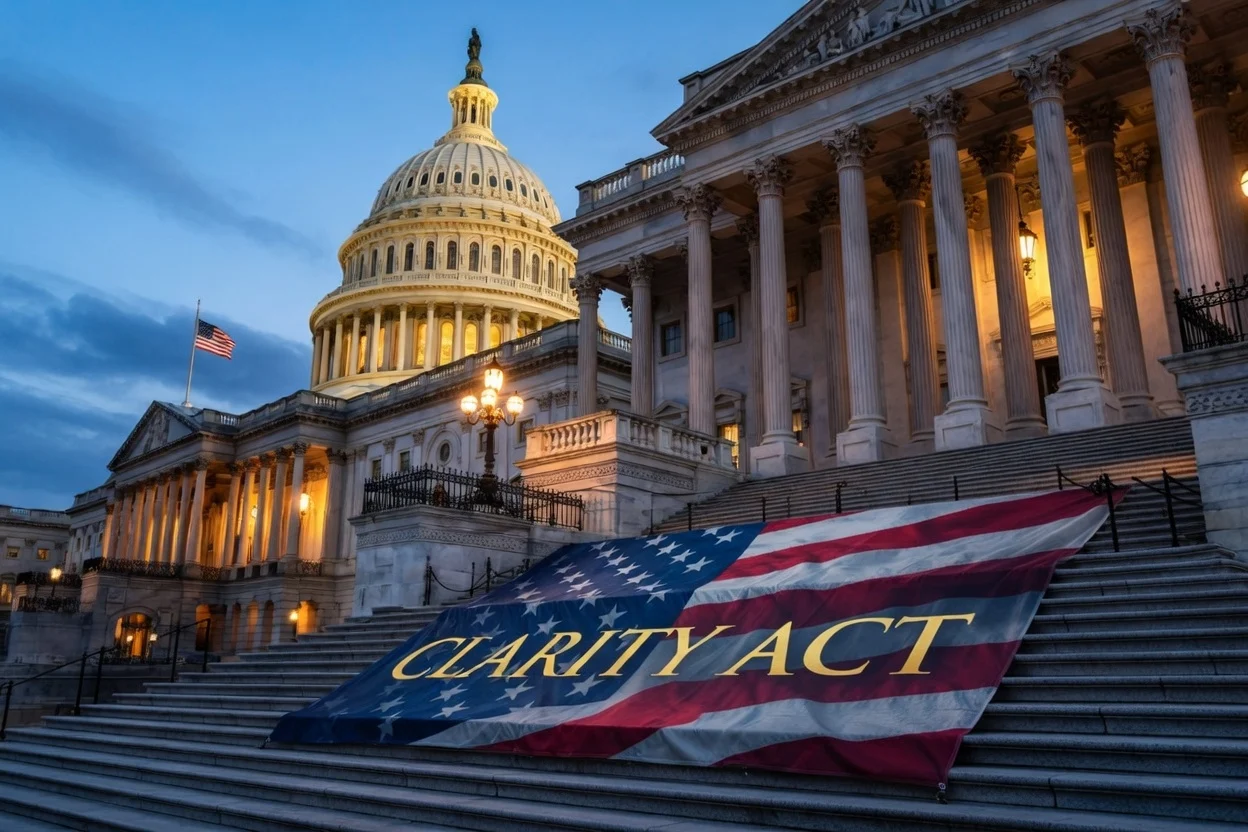
The path forward for the Digital Asset Market Clarity Act has become increasingly uncertain in the upper chamber. Democratic senators have drawn a firm line, insisting they’ll block the legislation without robust conflict-of-interest provisions specifically designed to address officials profiting from cryptocurrency markets — a clear reference to the current administration.
According to Trump’s latest financial filing for 2025, his crypto-related income reached approximately $1.4 billion. The single largest component came from his personal memecoin project, which generated $636 million. Democratic lawmakers point to this figure as precisely the type of ethical dilemma the legislation must confront.
Senator Kirsten Gillibrand stated that she and Democratic colleagues have been advocating for explicit prohibitions preventing sitting presidents from launching or endorsing any form of digital currency. Meanwhile, Senator Chris Murphy coordinated a briefing session last week for Democratic Senate staff, featuring ethics experts who emphasized the necessity of extending restrictions to family members while mandating both ownership prohibitions and transparency requirements.
Multiple Democratic senators plan to hold a media event this week to formally announce their opposition to the Clarity Act in its present form, characterizing it as inadequate to prevent what they described as the administration’s “fraudulent cryptocurrency operations.”
Republican Vote Count Shrinks Following Graham’s Passing
The legislation already faced significant procedural obstacles. Senate passage requires 60 affirmative votes, obligating Republicans to secure bipartisan cooperation from multiple Democratic members. Recent developments have complicated this calculus considerably.
Senator Lindsey Graham passed away this past weekend at 71 years old. Simultaneously, Senator Mitch McConnell remains under hospital care. These circumstances have trimmed the Republican conference to a 51-47 advantage, elevating the importance of Democratic collaboration.

The administration responded by calling on the Senate to approve the Clarity Act as a tribute to Graham. However, Graham held no position on the committees overseeing this legislation, cast no votes regarding the Clarity Act, and issued no recorded statements explicitly endorsing the measure. His voting record does show support for the GENIUS Act stablecoin legislation passed in 2025.
Senator Cynthia Lummis defended the administration’s position, asserting that Graham “championed American dominance across all sectors, including emerging digital asset markets.”
White House digital currency advisor Patrick Witt characterized the current week as “pivotal” for the legislation during Monday remarks, highlighting its timing with the one-year milestone of the GENIUS Act’s enactment.
Major Provisions Remain Under Negotiation
The Senate calendar shows roughly four weeks remaining before legislators depart for the traditional August break. Majority Leader John Thune has indicated his intention to schedule a floor vote this month irrespective of whether all provisions have been finalized.
A revised version of the Clarity Act is anticipated within the coming days, though insiders expect the ethics section and several other contentious components to remain incomplete.
The proposed legislation would transfer primary cryptocurrency regulatory authority from the Securities and Exchange Commission to the Commodity Futures Trading Commission. However, absent Democratic agreement on conflict-of-interest safeguards, the bill faces an uphill battle to achieve the 60-vote supermajority required for Senate passage.
Get 3 Free Stock Ebooks
Discover top-performing stocks in AI, Crypto, and Technology with expert analysis.
- Top 10 AI Stocks - Leading AI companies
- Top 10 Crypto Stocks - Blockchain leaders
- Top 10 Tech Stocks - Tech giants



