


TLDR
- A new executive order from President Trump requires the Federal Reserve to assess whether cryptocurrency and fintech companies should receive direct payment account access.
- Financial regulators including the SEC, CFTC, OCC, and FDIC must review existing policies that might prevent fintech partnerships with federally regulated banks, with a 90-day deadline.
- Digital asset firms could potentially obtain “master accounts,” enabling direct connection to U.S. payment infrastructure without traditional banking intermediaries.
- In March 2026, Kraken’s parent company became the first cryptocurrency exchange to secure a limited-purpose master account from the Kansas City Federal Reserve, triggering controversy among conventional banking institutions.
- Coinciding with the executive order, Trump’s Truth Social pulled SEC registration documents for several cryptocurrency ETFs, including Bitcoin and Bitcoin-Ethereum funds.
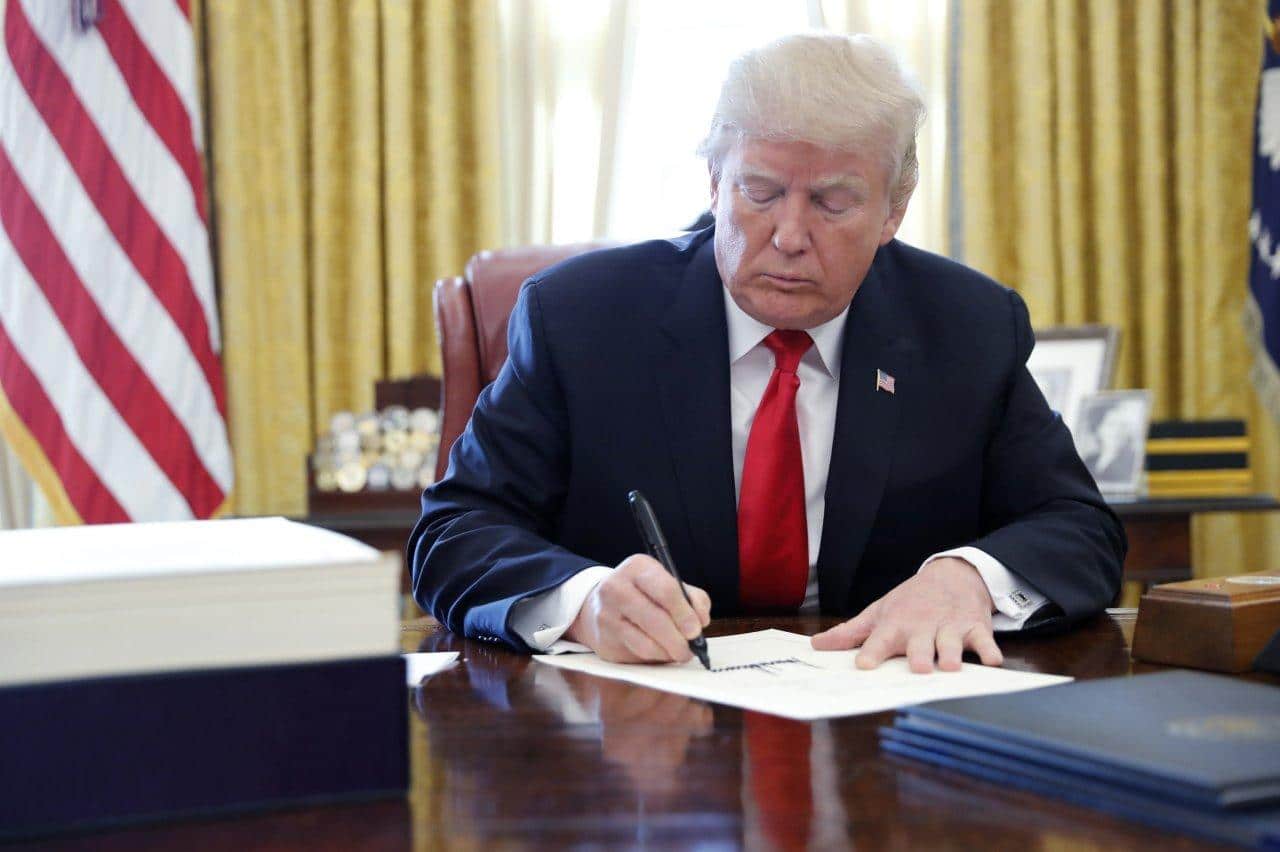
On Tuesday, President Trump issued an executive order mandating that federal financial regulators assess whether cryptocurrency and fintech organizations should receive direct access to the Federal Reserve’s payment infrastructure. The directive, officially named “Integrating Financial Technology Innovation into Regulatory Frameworks,” instructs several government agencies to scrutinize existing policies that could be preventing these enterprises from integrating into the traditional financial ecosystem.
The executive order provides an expansive definition of fintech enterprises. It encompasses organizations providing digital asset solutions, blockchain technology, payment facilitation, custody services, credit products, investment services, and securities trading platforms.
Federal Reserve’s Mandate Under the Order
The executive order places significant emphasis on the Federal Reserve’s role. Trump instructed the Fed’s Board of Governors to conduct an evaluation determining whether non-banking entities and uninsured depository institutions involved with digital assets should receive authorization to access Reserve Bank payment accounts and related services.
These specialized accounts are referred to as “master accounts.” Obtaining such an account would enable a cryptocurrency company to link directly into the fundamental U.S. payment infrastructure—the essential framework for dollar transactions throughout the nation—eliminating the need for traditional banking intermediaries.
Additionally, the directive requests the Fed to determine whether the dozen regional Federal Reserve banks possess independent legal jurisdiction to grant or refuse such access. The Federal Reserve must deliver its findings to the president within 120 days.
The order further instructs the SEC, CFTC, Office of the Comptroller of the Currency, and FDIC to conduct comprehensive reviews of their existing procedures within 90 days. These regulatory bodies must pinpoint policies that could be obstructing fintech companies from establishing partnerships with federally supervised financial entities. The administration is also pushing for simplified procedures for obtaining bank charters and deposit insurance coverage.

Kraken’s Master Account Ignited the Controversy
The question of cryptocurrency companies obtaining Fed master accounts became a contentious subject in March 2026. The Kansas City Federal Reserve granted limited-purpose account approval to Payward, the corporate entity behind cryptocurrency exchange Kraken. This arrangement provided Kraken with access to high-value dollar settlement systems, potentially accelerating transaction processing for institutional customers.
Kraken Co-CEO Arjun Sethi described it as the “convergence of crypto infrastructure and sovereign financial rails.” However, the decision generated substantial opposition from established banking organizations.
The Bank Policy Institute, representing leading U.S. financial institutions, expressed being “deeply concerned” that the approval proceeded before the Fed had completed its policy framework for such accounts.
In December 2025, the Fed released a proposal addressing “skinny” master accounts—a limited variant of central bank accounts that provides payment system access while excluding interest earnings on reserves and discount window borrowing privileges.
Congressional Initiatives Are Also Underway
In April 2026, California Representatives Sam Liccardo and Young Kim proposed the Payments Access and Consumer Efficiency Act, abbreviated as PACE. This legislation seeks to grant specific providers access to Federal Reserve payment infrastructure and has garnered endorsement from cryptocurrency industry organizations, although it’s still in preliminary legislative phases.
The executive order could also significantly affect Wyoming special purpose depository institutions—entities that focus on digital currency operations and have pursued Fed master account authorization.
An interesting development: concurrent with the executive order’s signing, Trump’s Truth Social retracted SEC registration documents for a Bitcoin ETF, a combined Bitcoin-Ethereum ETF, and a crypto blue chip ETF—a decision that appeared inconsistent with the administration’s otherwise pro-cryptocurrency position.
Get 3 Free Stock Ebooks
Discover top-performing stocks in AI, Crypto, and Technology with expert analysis.
- Top 10 AI Stocks - Leading AI companies
- Top 10 Crypto Stocks - Blockchain leaders
- Top 10 Tech Stocks - Tech giants



