



TLDR
- Bitcoin (BTC) has evolved into a mainstream macro asset with approved spot ETFs and growing sovereign fund interest
- Ethereum (ETH) serves as the foundation for DeFi, stablecoins, and tokenized assets, featuring deflationary token economics during peak usage
- Solana (SOL) commands the highest daily active user count and transaction throughput among all Layer 1 networks following its post-FTX recovery
- Chainlink (LINK) maintains oracle network supremacy, providing essential real-world data bridges for smart contracts and asset tokenization infrastructure
- Avalanche (AVAX) draws institutional collaborators like Amazon Web Services and Deloitte through its customizable subnet framework
The cryptocurrency landscape entering 2025 bears little resemblance to previous cycles. Traditional financial institutions have committed capital, regulatory frameworks are solidifying, and applications once dismissed as theoretical now operate at commercial scale.
Bitcoin exchange-traded funds have accumulated billions in assets under management. Blockchain networks are hosting tokenized real-world assets. Decentralized financial protocols handle trillions in aggregate transaction volume. The critical question for investors centers on which digital assets will accrue the greatest value throughout the next three-to-five-year horizon.
This analysis examines five cryptocurrencies organized into two categories: three established large-capitalization tokens enjoying institutional support, alongside two mid-capitalization projects offering elevated growth trajectories.
Bitcoin
Bitcoin has transcended its origins as purely a cryptocurrency. Financial professionals increasingly categorize it as a macro asset class comparable to gold.
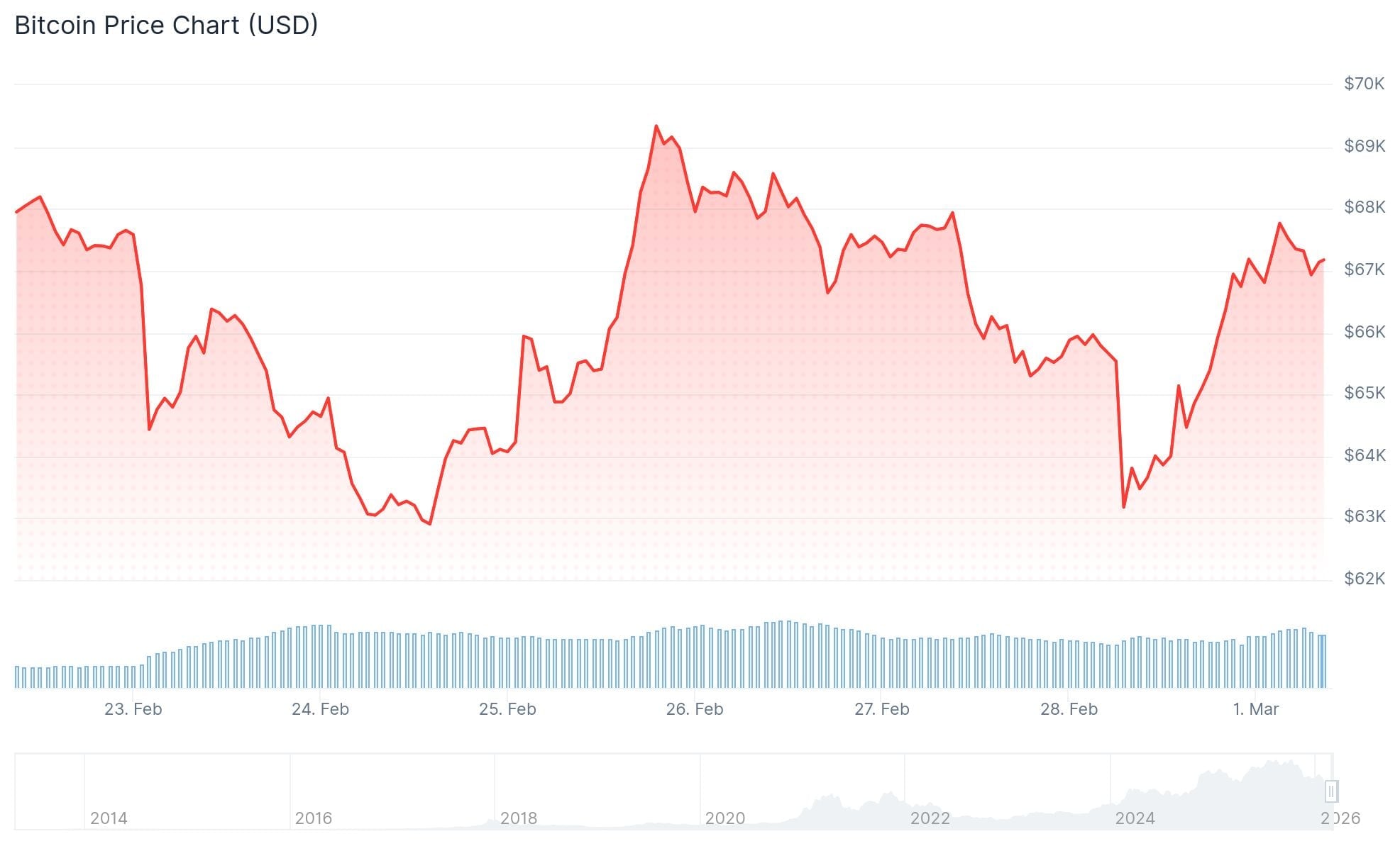
Regulatory approval of spot Bitcoin ETFs in the United States has incorporated the asset into conventional investment vehicles. The protocol’s hard cap of 21 million coins ensures no centralized entity possesses the authority to expand supply.

The 2024 halving event diminished the issuance rate of new Bitcoin entering market circulation. Several sovereign wealth funds have initiated exploration of Bitcoin allocation, establishing an additional tier of institutional demand dynamics.
Ethereum
Ethereum functions as the foundational infrastructure supporting substantial portions of the cryptocurrency ecosystem. The network enables decentralized finance protocols, stablecoin operations, NFT marketplaces, and tokenization of tangible assets.
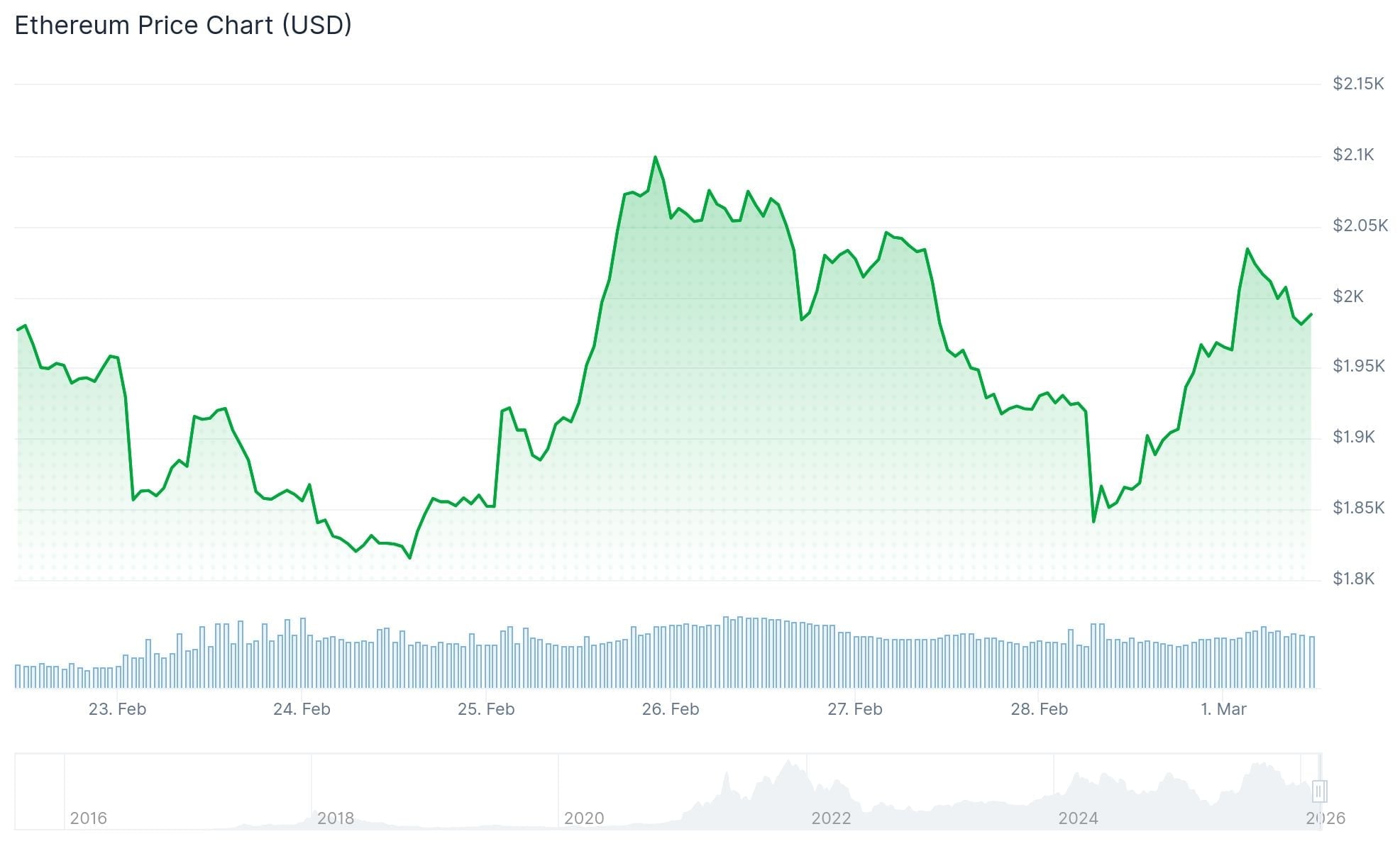
Following its transition to Proof-of-Stake consensus, Ethereum exhibits deflationary characteristics when network utilization intensifies. Layer 2 scaling solutions including Base, Arbitrum, and Optimism leverage Ethereum as their settlement layer while experiencing accelerating user adoption metrics.
Solana
Solana faced existential threats following the revelation of its deep connections to FTX during that exchange’s 2022 collapse. The network has executed a remarkable turnaround, now commanding the highest count of daily active addresses and transaction throughput among all Layer 1 blockchain platforms.
The Solana ecosystem accommodates consumer payment applications, decentralized physical infrastructure projects, and substantial token trading activity. Developer engagement with the platform continues at an accelerated rate.
Mid-Cap Picks
Chainlink
Chainlink has established dominance as the leading oracle network infrastructure provider. The protocol bridges smart contracts with external real-world information including asset prices, benchmark interest rates, and additional data streams.
Integration spans virtually every significant DeFi protocol in operation. As the tokenization movement for physical and financial assets expands, demand intensifies for dependable data infrastructure solutions that Chainlink provides.
Avalanche
Avalanche enables institutions to launch proprietary blockchain networks utilizing its subnet architecture. These customized chains maintain interoperability with the wider Avalanche ecosystem while offering tailored functionality.
Amazon Web Services and Deloitte have formalized partnership arrangements with Avalanche. The native token currently trades significantly below its historical peak valuation while the project advances institutional adoption initiatives.
Avalanche’s development trajectory emphasizes enterprise applications requiring regulatory compliance and high-performance blockchain infrastructure isolated from public network congestion.
Get 3 Free Stock Ebooks
Discover top-performing stocks in AI, Crypto, and Technology with expert analysis.
- Top 10 AI Stocks - Leading AI companies
- Top 10 Crypto Stocks - Blockchain leaders
- Top 10 Tech Stocks - Tech giants



