


Key Takeaways
- In June 2026, SpaceX intends to launch its public offering with a $2 trillion price tag, potentially becoming history’s biggest market debut.
- The aerospace firm’s artificial intelligence division hemorrhaged $6.36 billion throughout 2025, with the xAI purchase in early 2026 threatening to accelerate capital depletion.
- Sources indicate Anthropic commits $1.25 billion monthly to lease unused infrastructure from xAI’s Colossus computing facilities.
- The upcoming stock market entrance may compel portfolio managers to liquidate current positions, creating downward momentum for shares in Nvidia, Apple, and Microsoft.
- Market analysts caution the offering might intensify unprecedented concentration within the S&P 500, with artificial intelligence behemoths potentially controlling approximately 50% of the benchmark.
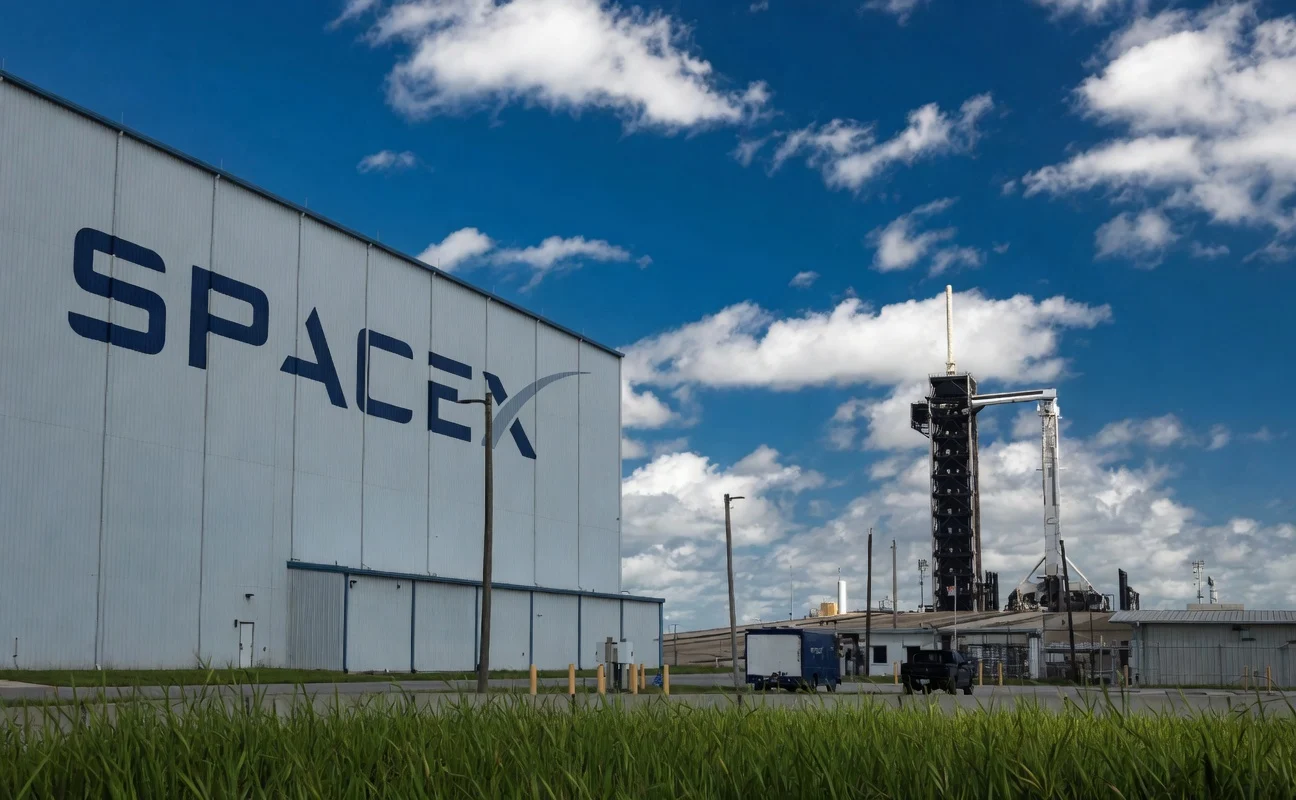
The aerospace manufacturer founded by Elon Musk is gearing up for its June 12, 2026 stock market entrance, targeting a staggering $2 trillion market capitalization. Such a valuation would shatter all previous IPO records.
With this price tag, the company would rank among just seven publicly listed entities globally by market worth.
Earlier this month, the firm submitted its S-1 registration statement to the Securities and Exchange Commission, providing the first comprehensive glimpse into SpaceX’s financial performance.
Top-Line Growth Masks Deepening Financial Drain
For the full year 2025, SpaceX generated $18.7 billion in revenue, representing a 33% year-over-year increase. By traditional metrics, this expansion appears robust.
However, costs escalated at an even faster clip. The company’s operating performance deteriorated from a $466 million profit to a $2.6 billion deficit during this timeframe.
A substantial portion of this red ink originates from the firm’s artificial intelligence operations. The AI division alone accumulated $6.36 billion in operating losses throughout 2025.

This figure predates the February 2026 acquisition of xAI. Industry observers anticipate this transaction will amplify cash consumption as SpaceX battles OpenAI and Anthropic for specialized talent and computing resources.
Evidence suggests xAI faces challenges maximizing data center utilization. Reports indicate Anthropic currently commits $1.25 billion monthly to lease capacity at xAI’s Colossus infrastructure. While this arrangement generates near-term income for SpaceX, it simultaneously prevents the company from deploying this capacity for its proprietary Grok AI model.
Anthropic maintains early termination rights on this agreement, which extends through 2029.
Implications for Established Technology Equities
The aerospace company targets $75 billion in proceeds from its public debut. These funds must originate from existing capital pools.
Bank of America research reveals private wealth management clients maintain historically minimal cash reserves — merely 9.9% of total allocations. Equity positions comprise 66% of their portfolios.
This positioning suggests prospective SpaceX investors will need to divest existing holdings to fund new purchases.
Bob Doll, who leads Crossmark Global Investments and previously oversaw equity strategies at BlackRock, anticipates selling pressure on comparable technology stocks. “Logically, you would think if I’m going to buy a stock in that space, I’ll probably sell a stock in that space,” he explained.
MSCI’s analysis projects that Nvidia, Apple, and Microsoft will experience the heaviest outflows as SpaceX and additional new listings gain inclusion in major benchmarks such as the Nasdaq 100.
Market Concentration Reaches Alarming Levels
Following the anticipated portfolio rebalancing, market strategists warn of significant structural shifts.
Artificial intelligence giants may command approximately half of the S&P 500’s total weight. Asher Regovy, serving as chief investment officer at Magnifina, highlighted this creates vulnerability to isolated negative developments — such as underwhelming quarterly results — cascading throughout the entire benchmark.
Doll indicated current conditions don’t trigger excessive alarm, citing reasonable technology sector valuations. His portfolio maintains balance between defensive positions and AI-linked holdings, emphasizing companies demonstrating superior return on equity metrics.
Last week, UBS counseled clients to decrease reliance on dominant American technology corporations. The Swiss bank recommended increasing allocations to Japanese, Chinese, and Swiss markets, alongside European consumer discretionary and global healthcare sectors.
Musk has floated the concept of orbital data centers to minimize cooling expenses. Industry analysts generally characterize this as a distant possibility rather than an actionable near-term initiative.
Get 3 Free Stock Ebooks
Discover top-performing stocks in AI, Crypto, and Technology with expert analysis.
- Top 10 AI Stocks - Leading AI companies
- Top 10 Crypto Stocks - Blockchain leaders
- Top 10 Tech Stocks - Tech giants



