


Executive Summary
- Samsung Group is preparing to reveal a massive 1,000 trillion won ($648 billion) investment strategy spanning ten years
- Investment targets include artificial intelligence infrastructure, energy storage solutions, display technology, and approximately $194 billion for semiconductor manufacturing facilities in southwestern South Korea
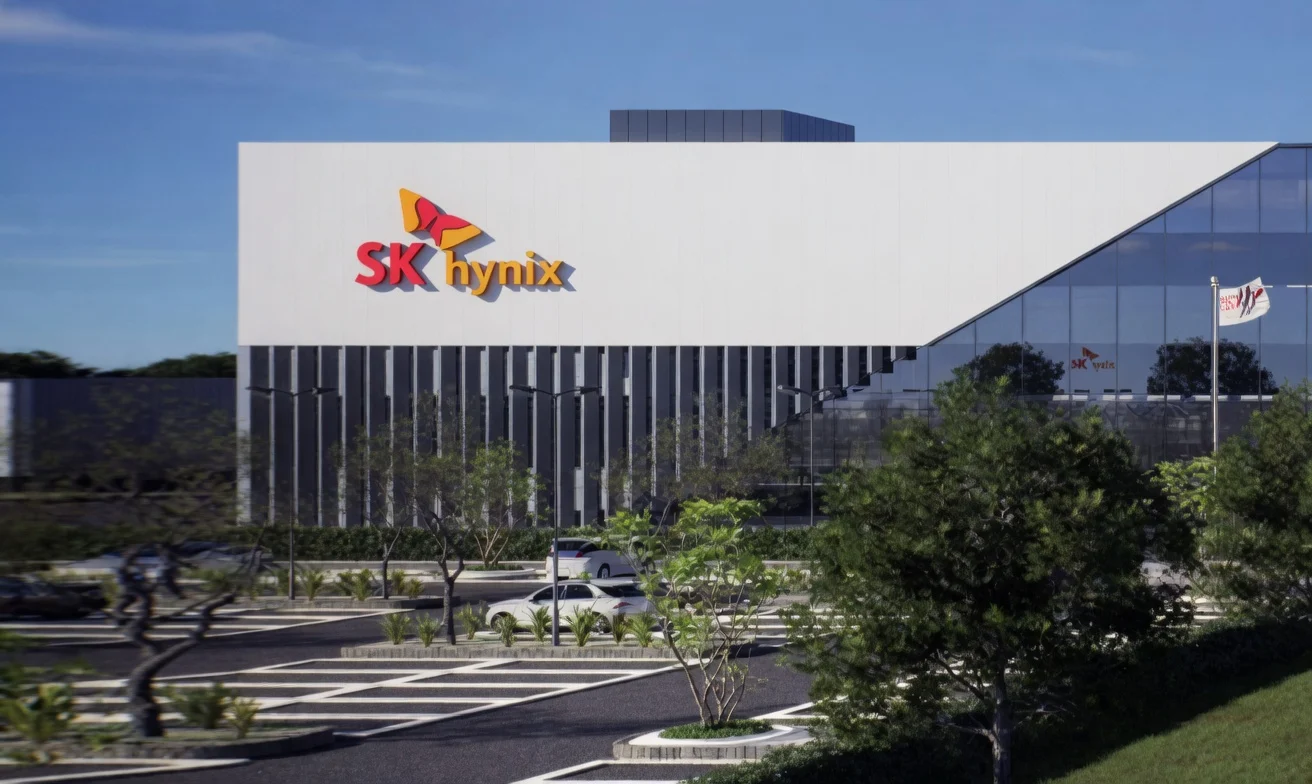
- SK Hynix has recently surpassed Samsung to become South Korea’s highest-valued public company, achieving a market valuation of roughly $1.35 trillion
- Manufacturing facilities are now scheduled for operational status by 2034–2035, significantly ahead of the previous 2044 projection
- The South Korean government is actively promoting semiconductor development in regions outside the capital to stimulate nationwide economic growth
Samsung Group is poised to reveal what could become one of the most significant corporate capital allocation strategies in global history this Monday. The massive South Korean business empire will commit 1,000 trillion won — approximately $648 billion — throughout the coming decade, as reported by Maeil Business Newspaper.
The formal declaration is scheduled during a high-level discussion with President Lee Jae Myung at the nation’s executive offices. Senior leadership from Samsung Electronics alongside competing chipmaker SK Hynix will participate in the proceedings.
This comprehensive investment strategy encompasses multiple technology sectors, ranging from AI-focused data infrastructure and battery production to advanced display fabrication. A significant portion may allocate approximately 300 trillion won ($194 billion) toward establishing semiconductor production plants in South Korea’s southwestern territories.
Government Initiatives Drive Geographic Diversification of Chip Manufacturing
Historically, South Korea’s semiconductor production has remained heavily centralized within the Seoul metropolitan area. President Lee has prioritized geographic economic development as a fundamental policy objective, making the placement of future chip manufacturing sites a matter of considerable political importance.
Prior to South Korea’s June 3 regional elections, multiple provinces actively competed to secure Samsung and SK Hynix capital investment. Competing proposals included everything from a 500 trillion won manufacturing complex in the southwest to additional production hubs in Gyeonggi, Chungcheong, and Gangwon territories.
A senior presidential advisor verified this week that government representatives are conducting negotiations with both semiconductor manufacturers regarding the acceleration of major production initiatives. Manufacturing sites initially scheduled for the 2040s could now become operational during the mid-2030s.

The driving force behind this timeline acceleration is unprecedented demand. South Korean government officials have characterized AI-fueled requirements for memory semiconductors as “exponential and explosive,” noting that current infrastructure surrounding the capital region has already exhausted available space, electrical capacity, and water resources.
SK Hynix Claims Top Position in Corporate Valuation Rankings
SK Hynix has recently displaced Samsung Electronics as the nation’s most valuable publicly traded corporation. Current market capitalization figures place the company at approximately $1.35 trillion.
This transformation reflects SK Hynix’s commanding position in high-bandwidth memory technology, commonly known as HBM — the specialized chip architecture essential for AI computational systems. Nvidia along with other artificial intelligence processor manufacturers rely extensively on HBM availability, with SK Hynix currently commanding market leadership in this segment.
SK Hynix had previously disclosed a $15 billion commitment toward new semiconductor infrastructure development in February 2026. The newly announced joint initiative with Samsung substantially increases the aggregate investment commitment.
Previous iterations of South Korea’s semiconductor development roadmap had projected total long-range expenditures around $471 billion extending through 2047. The revised $648 billion commitment demonstrates the rapid escalation of AI-related demand forecasts.
Samsung Group represents South Korea’s largest corporate conglomerate. Beyond Samsung Electronics, the organization encompasses battery manufacturer Samsung SDI and information technology services provider Samsung SDS.
President Lee’s public approval numbers have declined to 51%, representing the lowest level since assuming office last June, according to polling from Gallup Korea. Monday’s announcement is broadly interpreted as a cornerstone element of his economic policy framework.
The planned semiconductor production facilities are scheduled to achieve operational completion between 2034 and 2035.
Get 3 Free Stock Ebooks
Discover top-performing stocks in AI, Crypto, and Technology with expert analysis.
- Top 10 AI Stocks - Leading AI companies
- Top 10 Crypto Stocks - Blockchain leaders
- Top 10 Tech Stocks - Tech giants



