


Key Takeaways
- Samsung and SK Hynix stocks surged between 10% and 13% during Wednesday’s trading session following significant March declines
- South Korea’s KOSPI benchmark index rallied more than 8%, bouncing back from a 19%-plus decline in the previous month
- Optimism surrounding a potential rapid resolution to Middle Eastern tensions lifted market sentiment
- The semiconductor manufacturers had both plummeted 23-24% during March amid geopolitical concerns and questions about AI chip demand
- President Trump’s statements regarding Iran sparked an overnight U.S. market rally that extended into Asian trading
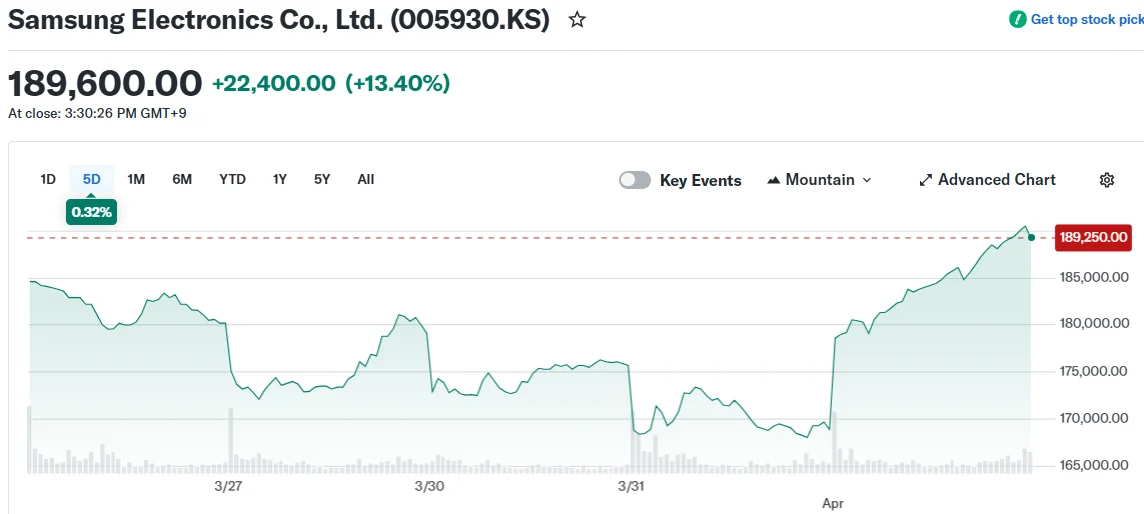
Shares of Samsung Electronics surged 13% to reach 189,600 won during Wednesday’s session, while competitor SK Hynix posted approximately 11% gains, closing at 893,000 won. The impressive rallies followed a punishing month-long selloff for both semiconductor manufacturers.
South Korea’s main stock benchmark, the KOSPI, jumped 8.4% to settle at 5,478.70, with the two chip giants playing a central role in the index’s recovery. The benchmark had tumbled more than 19% throughout March.
Both semiconductor firms experienced devastating 23-24% losses over the prior month. A primary driver was mounting anxiety about escalating Middle Eastern tensions, which fueled concerns about rising manufacturing expenses and potential disruptions to global supply networks.
Investors also grew increasingly worried about the sustainability of demand for memory chips powering artificial intelligence applications. Google announced a breakthrough algorithm purportedly capable of significantly reducing AI memory requirements, putting additional pressure on the memory chip sector.
Speculation intensified that memory chip pricing could soften after OpenAI implemented budget reductions. The artificial intelligence company discontinued its video creation platform, Sora, as part of broader cost-cutting initiatives.

OpenAI Partnership Remains Strategic Priority
Toward the end of 2025, OpenAI entered into an agreement with Samsung and SK Hynix to procure 900,000 DRAM wafers from the South Korean manufacturers. This partnership had previously served as a significant catalyst for bullish sentiment surrounding both companies.
Both semiconductor producers had enjoyed substantial benefits from escalating memory chip valuations throughout late 2025, fueled by market expectations that robust AI demand would significantly exceed available supply. The recent market correction erased a portion of those earlier advances.
According to Han Ji-young, an analyst at Kiwoom Securities, opportunistic value-seeking behavior powered Wednesday’s strong recovery, as blue-chip technology stocks had declined sufficiently to entice buyers back into the market.
“The stock market is highly likely to enter a recovery phase rather than experience further decline,” Han explained in research commentary distributed to institutional clients.
De-escalation Prospects Boost Market Confidence
Investor confidence improved substantially following President Trump’s Tuesday statement that U.S. forces would withdraw from Iran within a two to three-week timeframe. The president delivered these remarks during an exchange with journalists at the White House.
Iranian President Masoud Pezeshkian similarly indicated Tehran’s willingness to pursue an end to hostilities, although he stipulated that certain unidentified assurances would be required.
These diplomatic developments triggered a strong rally across U.S. equity markets overnight, with positive momentum extending into Asian trading sessions Wednesday morning.
Samsung’s stock price concluded the trading day at 189,600 won, translating to approximately $125.83. SK Hynix finished at 893,000 won.
The KOSPI index settled at 5,478.70, representing an 8.4% single-day advance.
Despite Wednesday’s impressive gains, both Samsung and SK Hynix continue trading substantially below their valuations prior to March’s market turbulence.
Get 3 Free Stock Ebooks
Discover top-performing stocks in AI, Crypto, and Technology with expert analysis.
- Top 10 AI Stocks - Leading AI companies
- Top 10 Crypto Stocks - Blockchain leaders
- Top 10 Tech Stocks - Tech giants



