


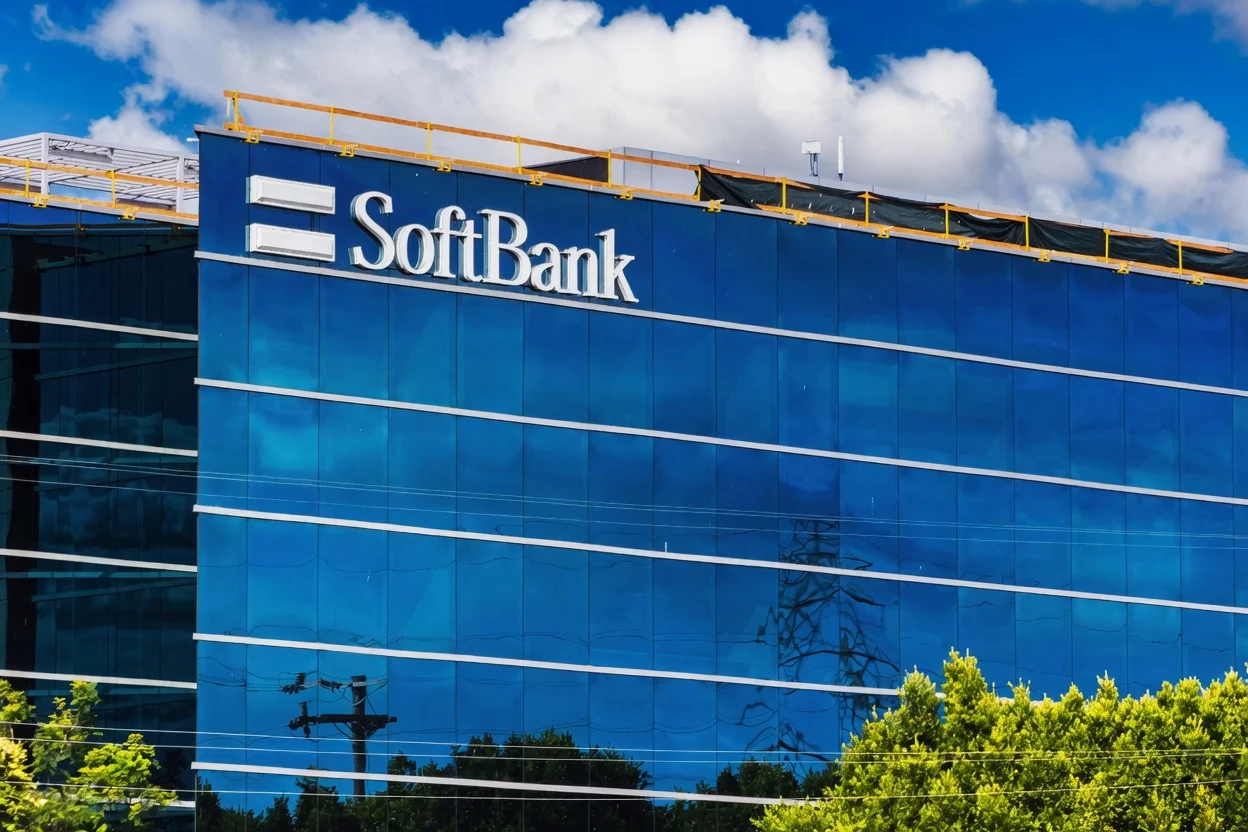
Key Highlights
- SoftBank shares jumped nearly 13% during Tuesday’s trading, reaching an unprecedented intraday peak of 8,000 yen
- The Japanese conglomerate extended its winning streak to four consecutive sessions, outperforming the broader Nikkei 225 index
- Analysts at SMBC Nikko upgraded their price target to 8,500 yen from 5,200 yen, citing enhanced ARM Holdings exposure
- The company’s OpenAI investment has ballooned to approximately $80 billion in value, representing roughly $45 billion in unrealized profits
- Despite the rally, S&P Global shifted its SoftBank outlook to negative in March due to debt exposure and competitive pressures facing OpenAI
Shares of SoftBank Group reached unprecedented territory on Tuesday, climbing nearly 13% during intraday trading to touch 8,000 yen and topping performance across the Nikkei 225.
The Japanese technology investment powerhouse notched its fourth consecutive day of advances, creating a rally that’s captured significant market attention.
Rather than a singular catalyst, the momentum stems from two core holdings delivering exceptional value: Arm Holdings and OpenAI.
SoftBank maintains approximately 90% ownership of Arm, the UK-based semiconductor design company whose technology underpins smartphones, data centers, and an expanding segment of AI computing infrastructure.
This controlling interest represents one of SoftBank’s most tangible connections to the artificial intelligence hardware expansion.
Analyst Upgrade Points to ARM Value
SMBC Nikko analysts significantly increased their valuation target for SoftBank on Tuesday, raising it to 8,500 yen from the previous 5,200 yen mark, with the firm’s strengthened position in Arm cited as the primary driver.

Based on Tuesday’s 8,000 yen intraday high, this revised target suggests potential for an additional 6% appreciation.
The upgrade’s timing is noteworthy. Nvidia’s exceptional quarterly performance last week bolstered market conviction that artificial intelligence chip demand maintains robust momentum — positioning Arm directly at the center of this investment theme.
When Nvidia demonstrates sustained demand strength, financial markets typically reassess valuations for companies throughout the semiconductor ecosystem. SoftBank, via its Arm ownership, benefits from this dynamic.
OpenAI Investment Delivers Substantial Gains
SoftBank’s second major artificial intelligence wager centers on OpenAI. The conglomerate’s holdings in the company behind ChatGPT now carry a valuation approaching $80 billion, including approximately $45 billion in paper gains.
Unrealized profits of this magnitude fundamentally alter investor perception of the enterprise.
SoftBank has disclosed that its total OpenAI commitment could ultimately reach $64.6 billion for a 13% ownership stake. CEO Masayoshi Son has openly expressed his intention to continue expanding this position.
The company’s March quarter financial results reflected this strategy — SoftBank reported robust profitability, substantially supported by OpenAI’s rising valuation.
However, this concentration hasn’t escaped scrutiny. S&P Global adjusted its SoftBank outlook to negative in March, highlighting concerns about portfolio liquidity constraints and intensifying competition confronting OpenAI in the artificial intelligence sector.
Market participants largely overlooked these warnings. The share price continued its ascent.
While debt-related concerns surrounding the OpenAI investment surface periodically, the underlying artificial intelligence investment thesis has demonstrated greater resilience than skepticism.
The central question now revolves around whether this represents a permanent revaluation — the market assigning lasting premium value to SoftBank’s AI-focused assets — or a momentum-driven rally vulnerable to cooling sentiment.
What’s undeniable is that SoftBank’s market positioning has fundamentally transformed. The company is no longer perceived solely as a diversified technology investment vehicle with inconsistent results.
At current valuation levels, the market increasingly treats it as a concentrated artificial intelligence investment vehicle.
S&P’s negative outlook revision and ongoing debt concerns related to the OpenAI position represent the most recent cautionary signals investors should monitor.
Get 3 Free Stock Ebooks
Discover top-performing stocks in AI, Crypto, and Technology with expert analysis.
- Top 10 AI Stocks - Leading AI companies
- Top 10 Crypto Stocks - Blockchain leaders
- Top 10 Tech Stocks - Tech giants



