


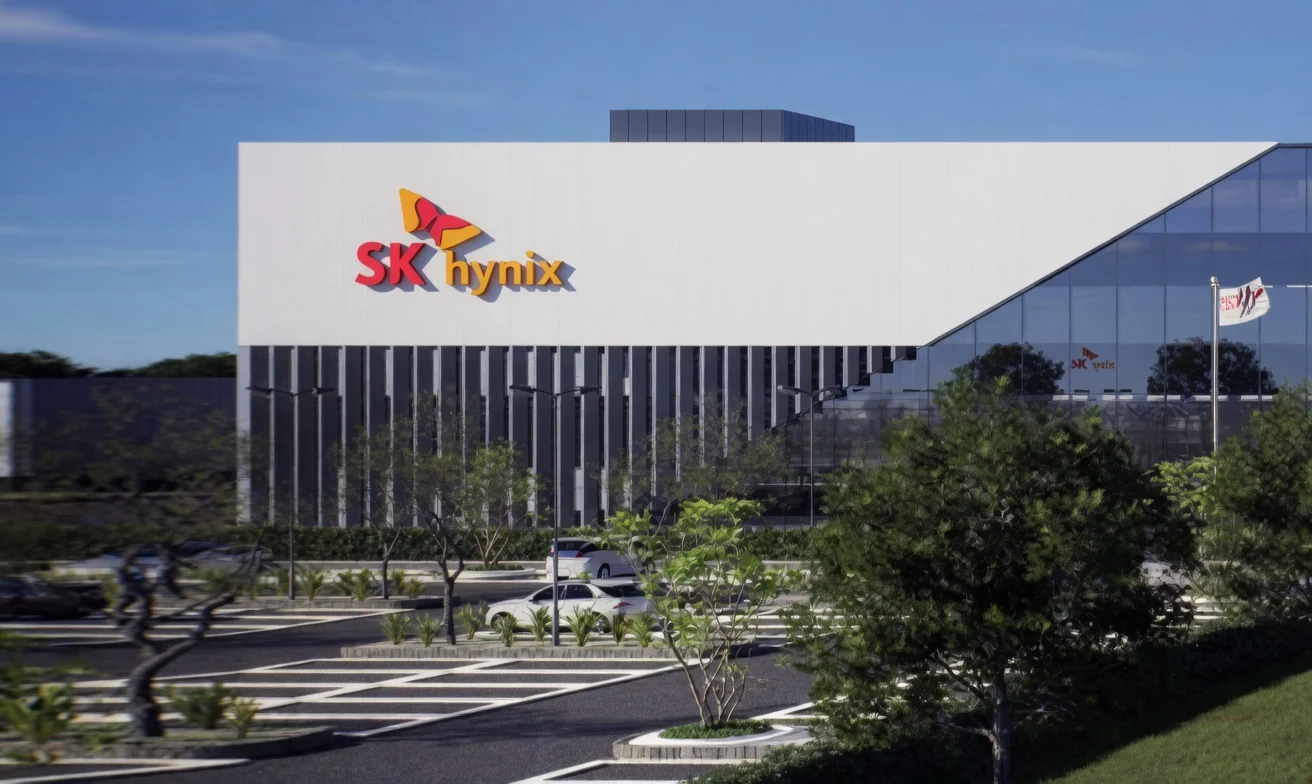
Key Highlights
- SK Hynix shares climbed 13% during their inaugural Nasdaq trading session, finishing at $168.01 following an ADR pricing of $149.
- The company’s public offering generated $26.5 billion, securing its position as the second-largest global IPO in history, surpassed only by SpaceX.
- Chief Executive Kwak Noh-jung issued a stark warning that 2027 will represent the memory sector’s most severe supply shortage ever recorded.
- Chairman Chey Tae-won revealed that client requirements are so extreme that plans to expand production twofold over five years remain insufficient.
- The chipmaker anticipates customer requirements will surpass manufacturing capacity well into the next decade.
SK Hynix launched its Nasdaq trading Friday with an impressive performance, ending the session 13% higher at $168.01 after initially opening at $170. The shares currently trade using the ticker SKHYV before transitioning to SKHY on Tuesday.
The semiconductor manufacturer set its American depositary receipt price at $149, generating proceeds of $26.5 billion — establishing it as history’s second-biggest public offering, exceeded only by SpaceX’s recent market entry.
Chairman Chey Tae-won characterized the achievement modestly: “It’s a kind of dream, and now it’s a dream come true.”
SK Hynix’s market capitalization has expanded more than seven times within the last twelve months. This extraordinary growth stems from its dominant role as the primary provider of high-bandwidth memory, or HBM, which powers Nvidia’s artificial intelligence processors.
Different from conventional RAM, HBM is manufactured through a sophisticated process that vertically stacks numerous memory layers. This production method demands substantial capital investment, and current global output falls dramatically short of market needs.

Leadership Identifies 2027 as Critical Supply Bottleneck
CEO Kwak Noh-jung delivered a blunt assessment of future conditions. Speaking Friday, he declared that 2027 will mark “the worst year in the industry’s history from the supply perspective.”
While the organization is rapidly expanding production capabilities, Kwak emphasized that consumer requirements will continue exceeding available supply past 2030. “We are doing our best to solve the problem,” he stated.
Chairman Tae-won reinforced this perspective with a revealing story. Following the announcement of plans to double manufacturing capacity over the next five years, major clients responded negatively — insisting the expansion remains inadequate. “All my customers said, ‘Well, that’s not enough, man.'”
Large-Scale Infrastructure Investment Underway
SK Hynix is rapidly deploying capital raised through its public offering. The organization is channeling funds toward new manufacturing facilities and advanced equipment as part of a comprehensive expansion strategy.
An advanced packaging facility carrying a $4 billion price tag is scheduled for construction in Indiana. However, the primary growth initiatives will unfold in South Korea — featuring a chip manufacturing complex in Yongin with an estimated investment of $390 billion.
Tae-won identified AI agents and robotic systems as critical growth catalysts. “The AI agent, physical AI robot — that actually needs a lot of memory chips,” he explained.
Historically, the memory semiconductor sector has experienced cyclical patterns characterized by rapid expansion followed by steep pricing declines. However, SK Hynix executives believe the current situation represents a fundamental shift. Tae-won stated he observes no indication of weakening HBM demand.
SK Hynix ranks as South Korea’s second-largest company by market capitalization, positioned directly behind Samsung. Its client roster features industry leaders including Nvidia and Apple.
Shares concluded Friday trading at $168.01, approximately 12.8% above the $149 initial public offering price.
Get 3 Free Stock Ebooks
Discover top-performing stocks in AI, Crypto, and Technology with expert analysis.
- Top 10 AI Stocks - Leading AI companies
- Top 10 Crypto Stocks - Blockchain leaders
- Top 10 Tech Stocks - Tech giants



