


TLDR
- SK Hynix commenced large-scale manufacturing of its 192GB SOCAMM2 memory module, specifically engineered for Nvidia’s next-generation Vera Rubin AI system.
- HXSCL shares climbed 3.4% during the Korean trading session following the announcement; Nvidia (NVDA) declined approximately 1.4% in pre-market activity.
- The SOCAMM2 module aims to reduce energy consumption and address memory performance constraints in AI training and inference operations.
- Vera Rubin is positioned to replace Nvidia’s Blackwell series, with anticipated first deliveries during the latter half of 2026.
- Bernstein’s David Dai described Vera Rubin as “a monster,” forecasting inference performance improvements up to 5x and training speed enhancements of 3.5x versus existing models.
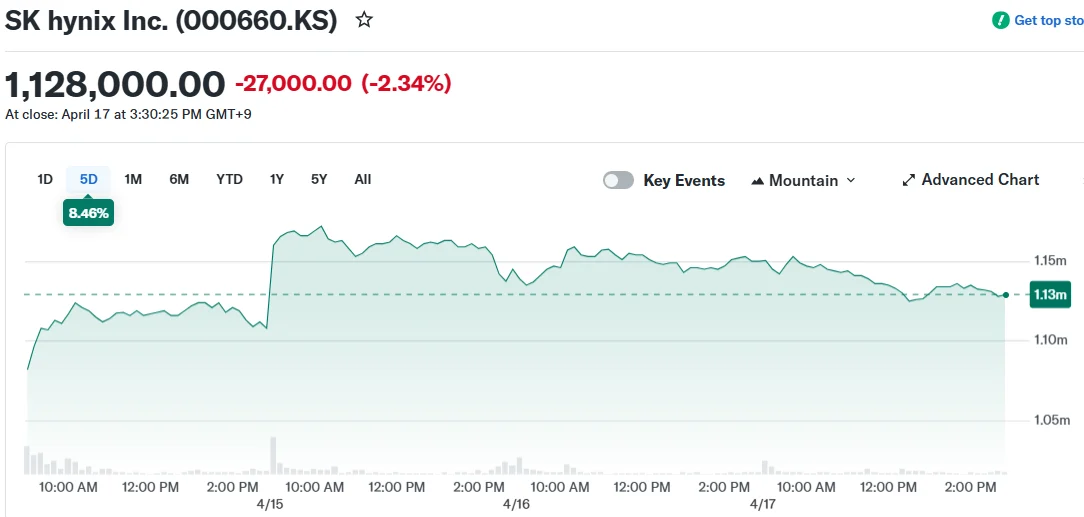
SK Hynix, ranking among the globe’s premier memory chip manufacturers, announced Monday that it has initiated mass manufacturing of the 192GB SOCAMM2 — an advanced memory module created exclusively for Nvidia’s Vera Rubin AI infrastructure.
The disclosure propelled SK Hynix shares upward by 3.4% during Seoul market activity. Competitor Samsung experienced a 1% decline the same session. NVDA traded approximately 1.4% down during pre-market hours, though this movement seemed disconnected from the SK Hynix news.
The SOCAMM2 represents more than an incremental upgrade. SK Hynix indicates the module is designed to operate AI servers with reduced electrical consumption while addressing the memory performance barriers that decelerate both training processes and inference operations for large language models.
This positioning directly targets Nvidia’s primary data center customer base, where energy efficiency has emerged as an increasingly critical factor for organizations expanding AI infrastructure capabilities.
What Is Vera Rubin?
Nvidia introduced its Vera Rubin platform earlier this year as the successor to its Blackwell processor family. Initial deliveries are scheduled to commence in the second half of 2026, although recent industry reports have indicated possible delays related to capacity limitations at critical suppliers.

Bernstein analyst David Dai characterized Vera Rubin as “a monster,” estimating inference performance gains up to 5x and training acceleration of 3.5x relative to current-generation architectures. These performance metrics represent the scale of improvements that capture data center procurement attention.
SK Hynix initiating volume production at this stage sends an important signal that the supply ecosystem is progressing favorably toward a timely product introduction.
The KOSPI index advanced approximately 1% on Monday, partially supported by the SK Hynix performance.
SK Hynix’s Position in the AI Supply Chain
SK Hynix serves as a critical supplier of sophisticated memory solutions to Nvidia. Its portfolio — including high-bandwidth memory (HBM) deployed in AI accelerators — has positioned the company as one of the primary beneficiaries of the AI infrastructure expansion.
The semiconductor manufacturer also provides memory components to Apple and other major technology companies, establishing diversified exposure throughout the tech sector.
Samsung, its primary rival in the advanced memory segment, has been pursuing progress in HBM manufacturing but has encountered validation challenges with Nvidia. Monday’s 1% decline for Samsung contrasts sharply with the Hynix momentum.
According to TipRanks, NVDA stock holds a Strong Buy consensus rating derived from 41 Buy recommendations, one Hold, and one Sell across the past three months. The average price target of $237.57 suggests approximately 35.6% upside potential from present levels.
SK Hynix advanced 2.1% in one measurement and 3.4% in another referenced by various sources — the variance likely reflects intraday fluctuation versus the final closing price.
Get 3 Free Stock Ebooks
Discover top-performing stocks in AI, Crypto, and Technology with expert analysis.
- Top 10 AI Stocks - Leading AI companies
- Top 10 Crypto Stocks - Blockchain leaders
- Top 10 Tech Stocks - Tech giants



