


Key Points
- Major AI chip manufacturers including Nvidia, AMD, and Micron experienced significant stock declines.
- Market sentiment turned cautious after Federal Reserve officials made hawkish policy statements.
- Nvidia’s shares decreased approximately 3%, with AMD and Micron suffering steeper losses.
- Tech sector weakness continued following a period of historic market highs.
- Despite market turbulence, Nvidia introduced a new AI platform targeting scientific applications.
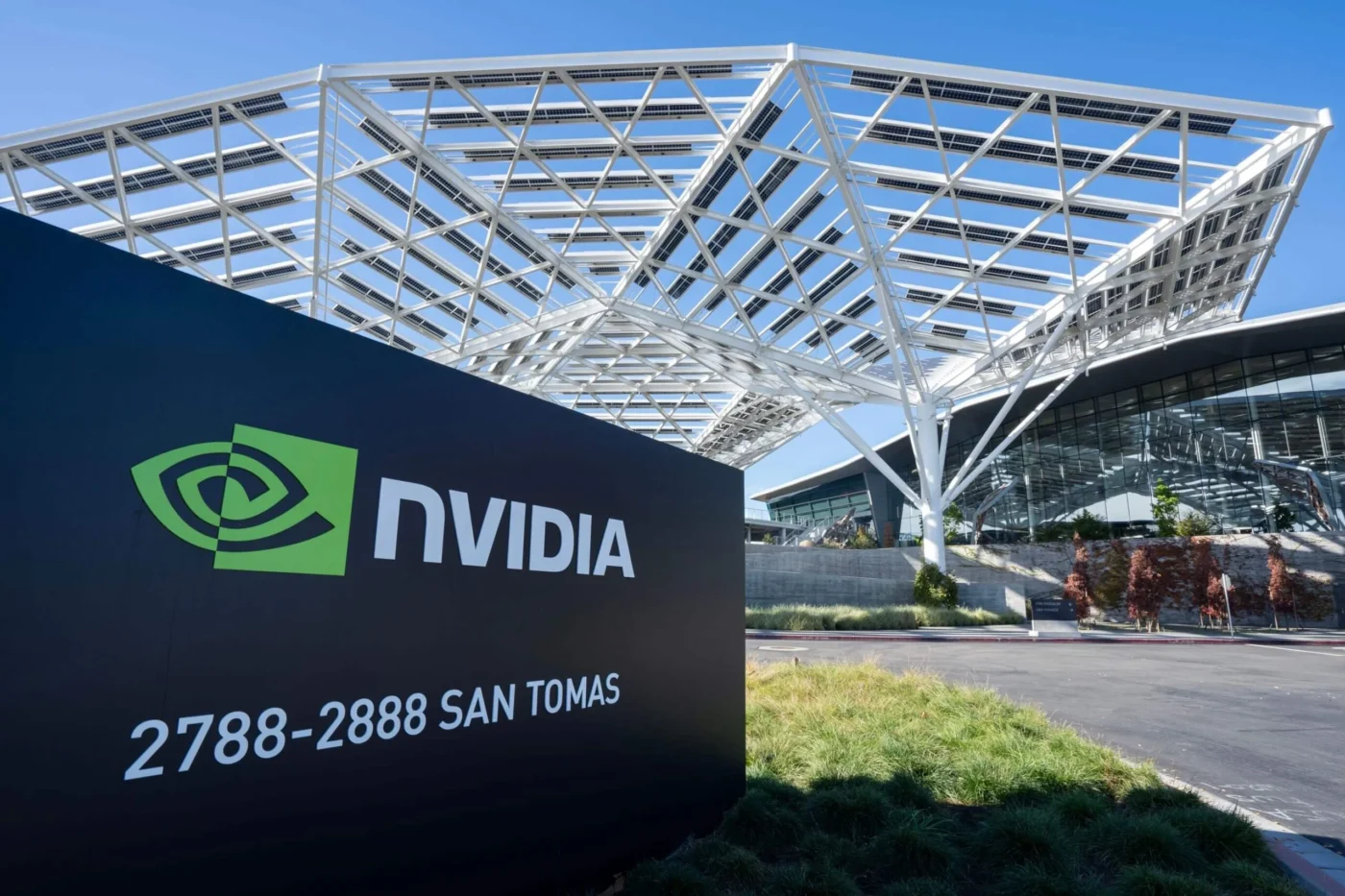
Shares of Nvidia experienced a notable downturn Tuesday as market participants reduced their positions in leading technology equities.
The selloff wasn’t isolated to Nvidia, as semiconductor manufacturers and artificial intelligence-focused companies broadly retreated.
Nvidia’s stock price declined close to 3% throughout the trading session, with AMD experiencing losses exceeding 5%.
Micron faced the most dramatic losses among major chipmakers, plunging up to 11% before staging a partial recovery as the session progressed.

Technology shares ranked among the poorest-performing market segments, contributing to the Nasdaq’s second consecutive day of declines.
Market participants adopted a more defensive posture following Federal Reserve policymakers’ statements highlighting persistent inflationary pressures.
These remarks dampened market expectations for imminent interest rate reductions and heightened worries about prolonged elevated borrowing costs.
The technology sector has delivered exceptional returns throughout the current year, driven predominantly by robust investment in artificial intelligence computing infrastructure.
Market Leaders Experience Pullback
Nvidia continues to be a primary beneficiary of AI-related capital deployment, notwithstanding Tuesday’s downturn.
The company’s shares maintain approximately 12% year-to-date gains despite the recent retreat.
Nonetheless, Nvidia’s performance has lagged behind numerous other chip manufacturers in 2026.
Data from Dow Jones Market Data reveals that Nvidia has posted the most modest gains among PHLX Semiconductor Index constituents year-to-date.
Market observers indicate that investor focus has diversified beyond graphics processing units to encompass additional AI infrastructure components, such as memory technology and central processing architectures.
Micron has emerged as a standout performer throughout the AI revolution, benefiting from accelerating demand for high-bandwidth memory solutions.
Market attention remained concentrated on Micron as its quarterly earnings announcement approaches.
Asian semiconductor manufacturers also faced headwinds, with Samsung Electronics and SK Hynix posting declines in their respective trading sessions.
Nvidia Introduces Scientific AI Platform
Despite stock weakness, Nvidia advanced its product roadmap with new AI products.
The chipmaker unveiled its BioNeMo Agent Toolkit, a comprehensive platform enabling researchers to integrate AI agents into scientific processes.
Nvidia states the toolkit empowers AI systems to aggregate scientific knowledge, assess research outcomes, and execute complex research-oriented functions.
CEO Jensen Huang indicated the innovation could dramatically enhance research velocity across biological sciences, chemistry, genetic studies, and medical fields.
The product launch underscores Nvidia’s strategic push to diversify beyond chip manufacturing and strengthen its foothold in AI software and scientific computing.
Market participants are simultaneously tracking emerging competition for investment capital as numerous prominent AI-focused enterprises prepare initial public offerings.
Recent market debuts and anticipated IPOs from significant AI companies have prompted questions regarding appropriate sector valuations.
Currently, market participants maintain close attention on monetary policy developments, AI infrastructure spending patterns, and forthcoming quarterly results as they evaluate technology sector prospects.
Get 3 Free Stock Ebooks
Discover top-performing stocks in AI, Crypto, and Technology with expert analysis.
- Top 10 AI Stocks - Leading AI companies
- Top 10 Crypto Stocks - Blockchain leaders
- Top 10 Tech Stocks - Tech giants



