


Key Takeaways
- The flash memory manufacturer SanDisk (SNDK) receives Nasdaq 100 membership effective April 20, taking Atlassian’s (TEAM) place.
- Pre-market activity saw SNDK shares gain 1.8%, reaching $866.90 following the announcement.
- The company’s shares have surged 259% since January and an eye-popping 2,439% over the trailing twelve months.
- Benchmark additions often spark institutional buying as passive funds rebalance portfolios to mirror index composition.
- Meanwhile, Atlassian shares have plummeted 65% through 2026, prompting its removal from the prestigious index.
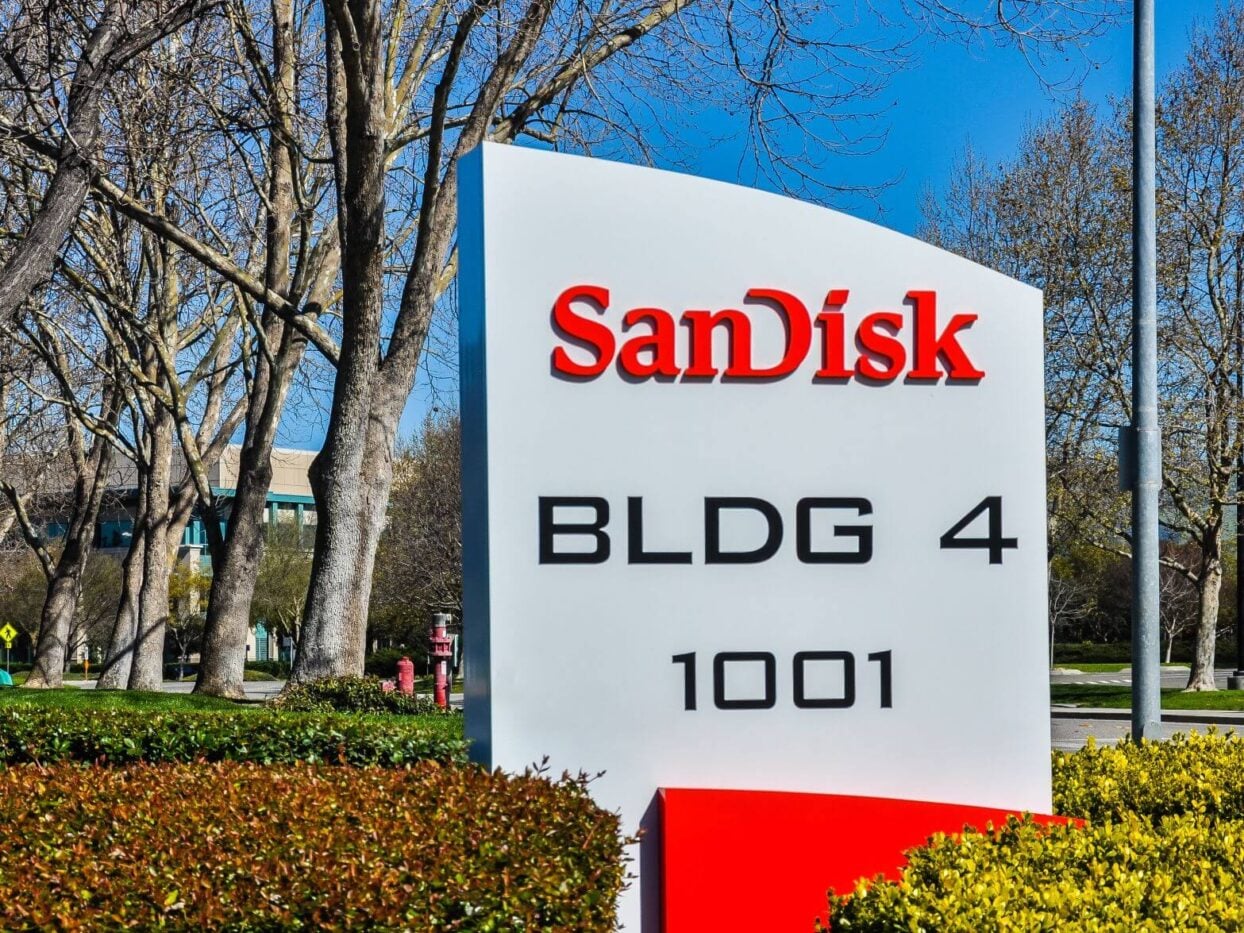
The memory storage specialist SanDisk is making its way into the elite Nasdaq 100, prompting immediate market enthusiasm. Shares of the flash memory manufacturer jumped 1.8% to $866.90 during Monday’s pre-market session after Nasdaq officially announced the inclusion, scheduled to become effective prior to market open on April 20.
This milestone crowns an extraordinary rally for SNDK shareholders. Year-to-date performance shows a remarkable 259% gain through 2026, while the trailing twelve-month period delivers an astounding 2,439% return. The catalyst: robust appetite for NAND flash storage products fueled by explosive AI data center expansion.
SanDisk claims the vacancy left by Atlassian (TEAM), a company experiencing drastically different momentum. TEAM has tumbled 65% in 2026, battered by investor anxiety that artificial intelligence applications are undermining traditional software platforms within its competitive landscape.
Understanding the Significance of Benchmark Membership
Securing a position in a flagship index such as the Nasdaq 100 triggers mandatory portfolio adjustments among index-tracking vehicles and exchange-traded funds. These funds must realign their holdings to mirror updated benchmark weights. This mechanical buying activity frequently generates upward price momentum, particularly surrounding official implementation dates.

Broader market sentiment turned cautious Monday, with S&P 500 futures declining 0.6% following President Trump’s announcement of a Strait of Hormuz blockade, unsettling investor confidence.
For SanDisk, gaining Nasdaq 100 membership validates what market participants have already recognized: the company has established itself as a fundamental technology sector holding. Additional institutional capital from passive investment strategies will flow toward the stock, potentially amplifying its sensitivity to broad technology sector trends rather than company-specific developments alone.
The company’s remarkable ascent stems from constrained NAND supply conditions coupled with accelerating AI infrastructure buildouts. Wall Street analysts have responded with elevated price targets. The benchmark inclusion positions SanDisk among America’s most significant technology enterprises.
Atlassian Bears the Consequences
Atlassian’s removal from the Nasdaq 100 illustrates the rapid reversals possible in equity markets. The Australia-based software developer has watched its valuation contract as market participants fear AI-powered alternatives will encroach on its team collaboration platform business.
TEAM declined an additional 3% Monday, compounding year-to-date destruction.
The official reconstitution takes effect April 20. Following that date, investment products benchmarked against the Nasdaq 100 will incorporate SanDisk as a mandatory portfolio component.
Sell-side researchers have identified potential headwinds for SanDisk as well. A reversal from supply constraints to oversupply conditions, combined with increasing negotiating leverage among hyperscale cloud customers, could compress profit margins. Nevertheless, current earnings growth projections remain robust.
SanDisk already vies for investor capital against memory industry competitors including Micron and Samsung. Nasdaq 100 membership elevates its profile to an entirely different tier. The company’s upcoming quarterly report—particularly commentary regarding NAND pricing dynamics and production capacity—will command heightened scrutiny from a substantially expanded institutional audience.
Get 3 Free Stock Ebooks
Discover top-performing stocks in AI, Crypto, and Technology with expert analysis.
- Top 10 AI Stocks - Leading AI companies
- Top 10 Crypto Stocks - Blockchain leaders
- Top 10 Tech Stocks - Tech giants



