


Key Takeaways
- Samsung delivered unprecedented Q1 2026 revenue of KRW 133.9 trillion alongside operating profit of KRW 57.2 trillion
- SK Hynix achieved record-breaking quarterly performance with KRW 37.6 trillion in operating profit and KRW 40.3 trillion in net profit
- SK Hynix dominates the high-bandwidth memory sector and maintains the strongest connection to AI chip growth
- Samsung provides greater business diversification spanning foundry operations, smartphones, and home electronics
- Wall Street consensus favors both companies strongly, though SK Hynix holds a marginal advantage
The first quarter of 2026 marked a historic milestone for South Korea’s dominant memory chip manufacturers. Both Samsung and SK Hynix capitalized on surging AI demand, though their strategic approaches diverge considerably.
Samsung achieved Q1 2026 revenue reaching KRW 133.9 trillion, marking an all-time high. The company’s operating profit hit KRW 57.2 trillion, establishing another company milestone.
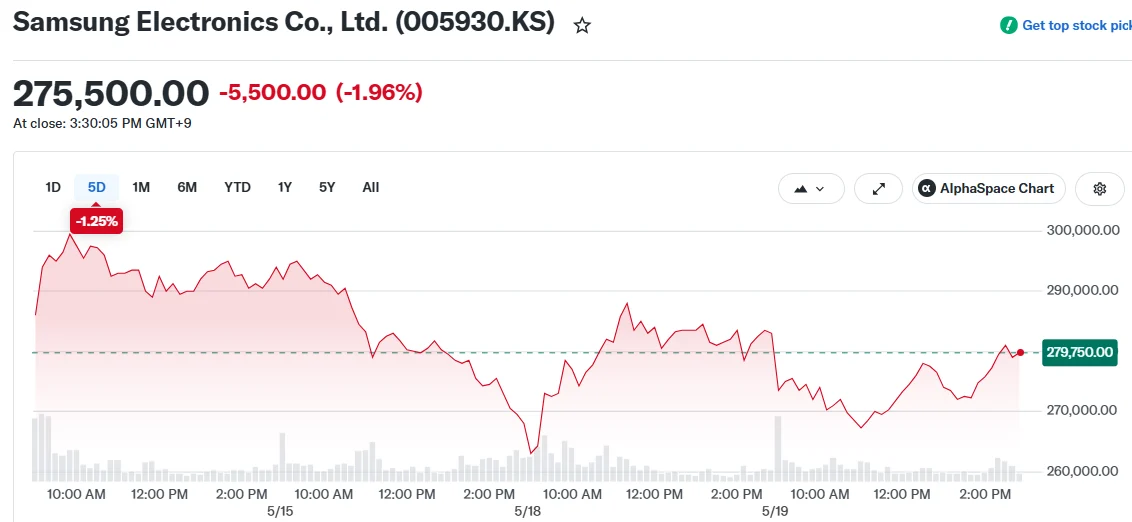
The semiconductor division accounted for the lion’s share of these impressive results. Looking ahead, Samsung committed to deploying over KRW 110 trillion throughout 2026 for research initiatives and manufacturing infrastructure.
Unlike its competitor, Samsung maintains a sprawling portfolio beyond memory chips. The conglomerate spans foundry manufacturing, smartphone production, home appliances, and display technology.
This broad operational footprint provides insulation against downturns in specific chip segments. However, managing such complexity introduces additional operational challenges.

Reuters coverage has highlighted workforce friction and possible strike scenarios at Samsung’s semiconductor facilities. Additionally, the company continues pursuing parity with SK Hynix in the critical high-bandwidth memory segment.
SK Hynix: Pure-Play Exposure to AI Memory Demand
SK Hynix generated Q1 2026 revenue of KRW 52.5 trillion, accompanied by operating profit of KRW 37.6 trillion. Net income reached KRW 40.3 trillion. Each metric represented a company record.
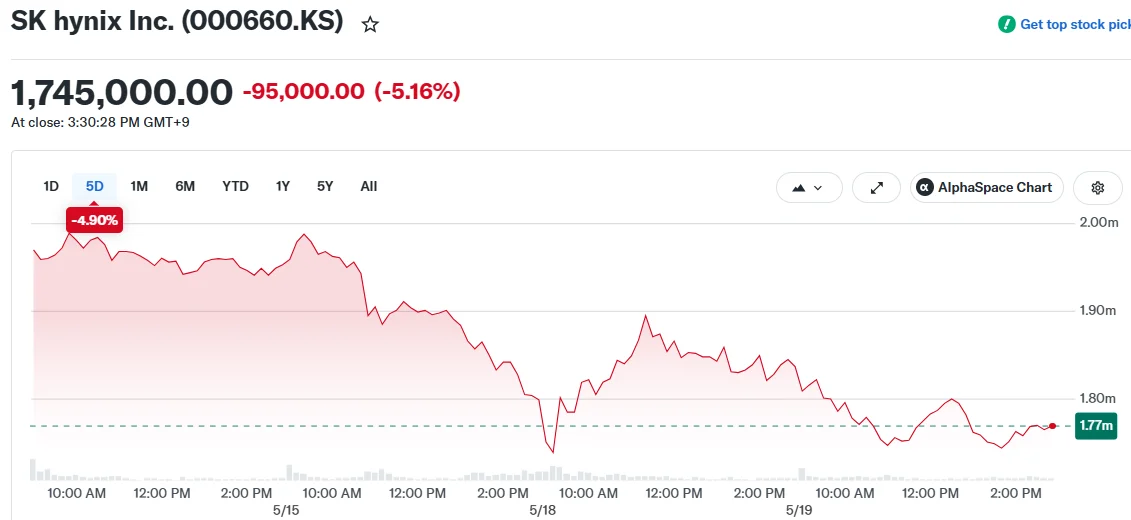
Management indicated that demand for AI chips will outstrip available production capacity in upcoming quarters. This supply-demand imbalance suggests sustained pricing advantages for high-bandwidth memory products.
SK Hynix has become synonymous with the current HBM market surge. Share prices jumped following announcements from major American technology firms confirming ongoing AI infrastructure investment commitments.
The company is evaluating potential listing options on American exchanges. Such a move would broaden its shareholder base and enhance capital-raising opportunities.
The downside involves business concentration. SK Hynix lacks Samsung’s operational breadth. Its financial performance correlates more directly with memory chip pricing cycles and sustained AI sector growth.
Wall Street’s Perspective on Both Stocks
Analyst sentiment remains overwhelmingly positive for both companies. Investing.com tracking reveals Samsung covered by 37 analysts, with 36 issuing buy recommendations. The consensus 12-month target stands at KRW 274,603.
SK Hynix receives coverage from 38 analysts, including 36 buy ratings and 2 hold positions. The average price objective sits near KRW 1,771,866.
SK Hynix maintains a slight consensus advantage. While the margin remains narrow, it signals market appetite for concentrated AI memory exposure currently.
Samsung appeals to investors seeking massive scale combined with semiconductor diversification. SK Hynix attracts those prioritizing focused HBM exposure and participation in the AI infrastructure expansion.
SK Hynix delivered superior Q1 2026 net profitability relative to company scale, while capacity limitations suggest maintained pricing leverage ahead.
Get 3 Free Stock Ebooks
Discover top-performing stocks in AI, Crypto, and Technology with expert analysis.
- Top 10 AI Stocks - Leading AI companies
- Top 10 Crypto Stocks - Blockchain leaders
- Top 10 Tech Stocks - Tech giants



