


TLDR
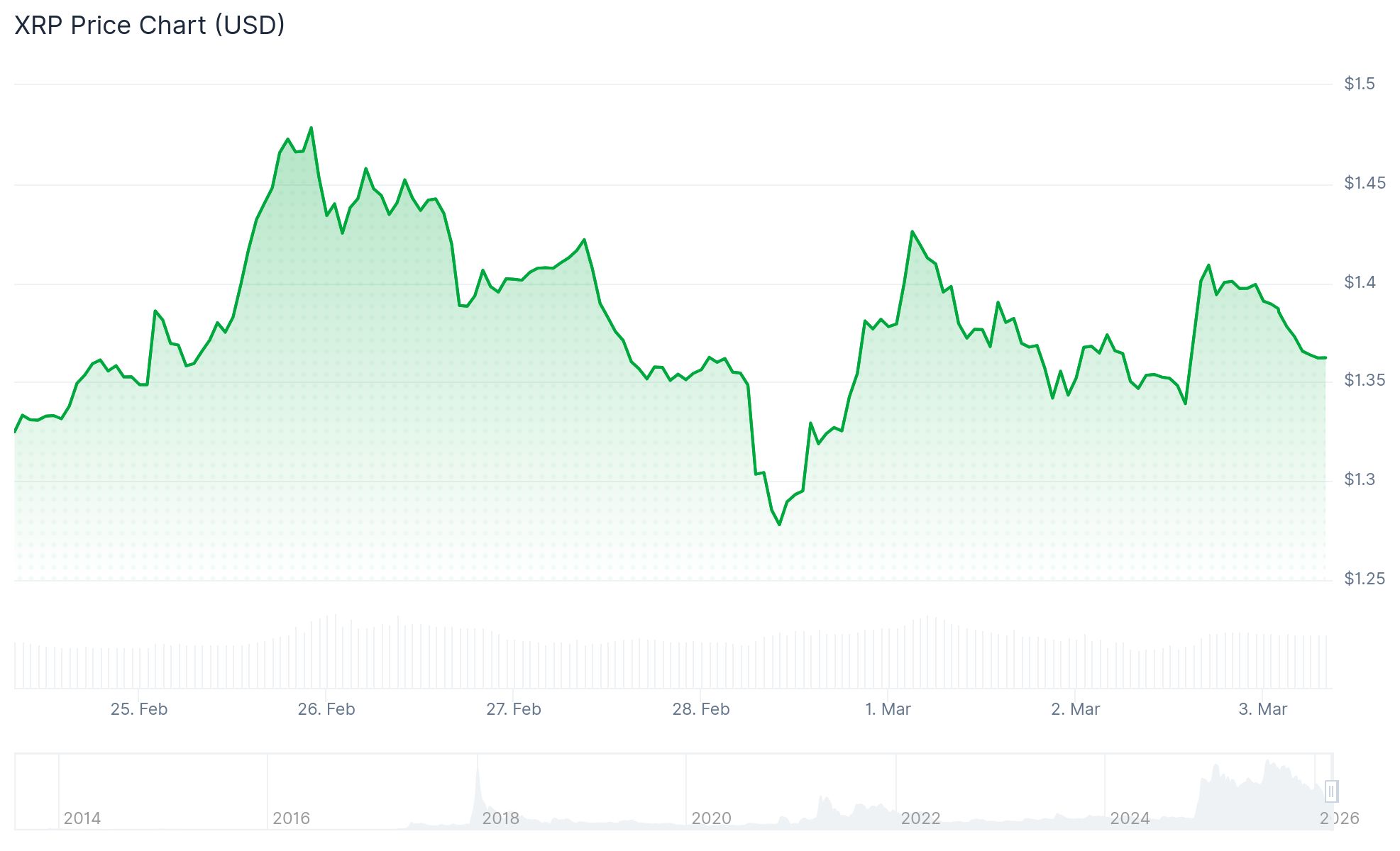
- Ripple’s XRP declined 1.90% to $1.36 amid geopolitical tensions and risk-off sentiment sweeping cryptocurrency and equity markets
- Spot XRP ETF products in the US attracted their largest single-day inflows in approximately 30 days, totaling $6.97 million
- Approximately 38.8% of alternative cryptocurrencies are hovering near historical lows, surpassing post-FTX crash levels
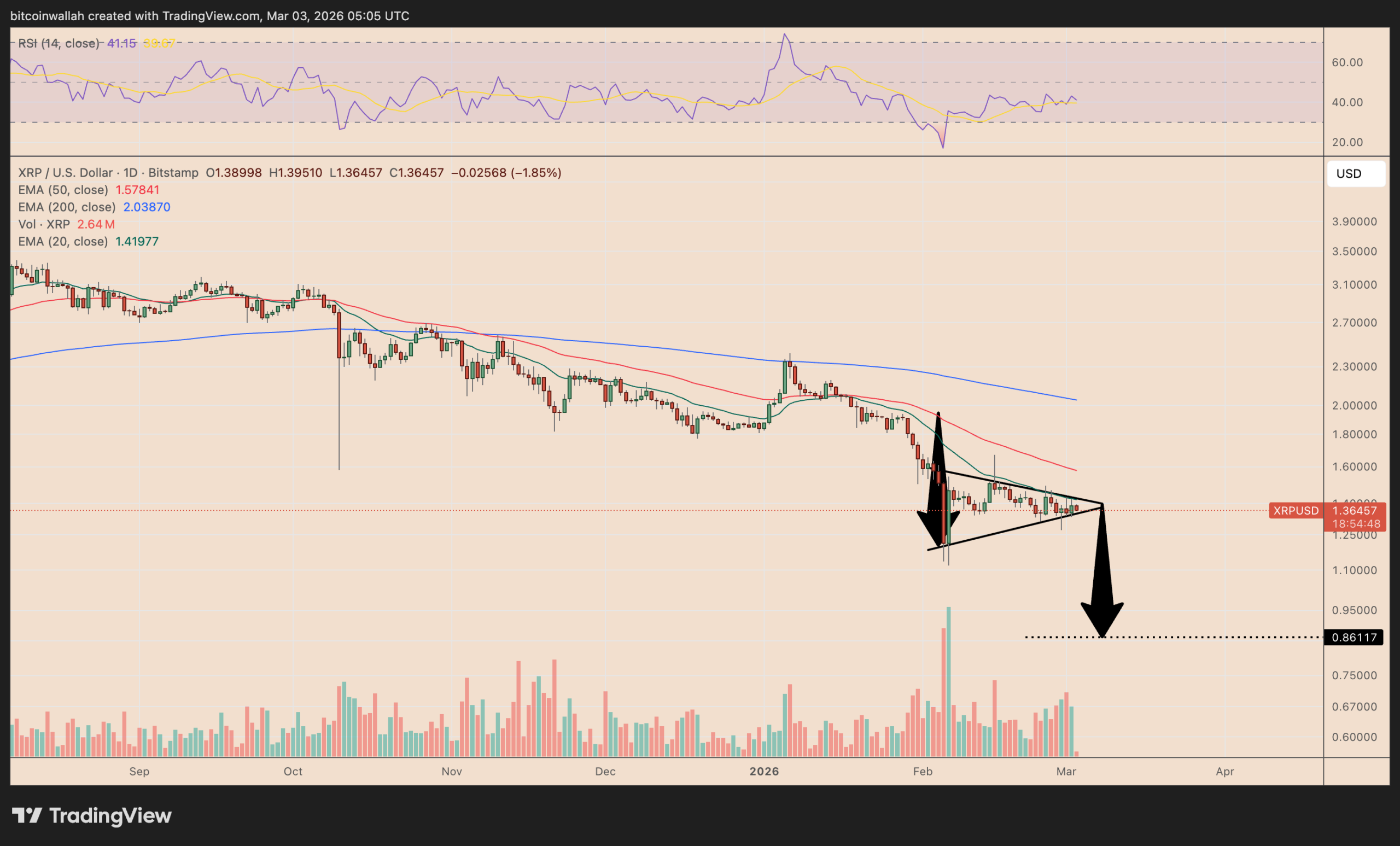
- Technical analysis reveals a bearish pennant formation suggesting a potential 35% correction toward $0.86
- Hidden Road’s March 2 inclusion on the NSCC directory enhances Ripple’s traditional finance integration
Ripple’s native token XRP experienced a 1.90% decline on March 3, settling near $1.36 as escalating geopolitical concerns surrounding Iran triggered widespread selling pressure across digital assets.
Energy markets experienced significant volatility. West Texas Intermediate crude surged 6.3% to reach $71.23 per barrel, while Brent crude climbed 7% to $77.74. European natural gas prices spiked between 40–50% following reports of interrupted tanker traffic through the Strait of Hormuz, Qatar’s liquefied natural gas production suspension, and operational disruptions at Saudi Arabia’s Ras Tanura refinery.
Elevated energy costs typically fuel inflation concerns. This dynamic often leads to higher bond yields and diminished expectations for monetary policy easing — creating headwinds for speculative assets including XRP.
Federal Reserve officials John C. Williams and Neel Kashkari had speeches scheduled for March 3. Market participants closely monitored their remarks regarding energy-linked inflation for insights into future interest rate decisions.
Despite the downward price movement, institutional interest showed resilience. US-based spot XRP exchange-traded funds recorded their strongest daily net inflow in approximately one month. According to SoSoValue analytics, $6.97 million entered these products, pushing cumulative net assets to approximately $1.02 billion. The data suggests some institutional participants viewed the pullback as a buying opportunity through regulated investment vehicles.

Altcoin Market Under Pressure
XRP’s struggles reflect broader weakness across alternative cryptocurrencies. CryptoQuant analytics indicate that roughly 38.8% of altcoins currently trade near their all-time low levels. This metric exceeds the approximately 37.8% reading observed immediately following the FTX exchange collapse in late 2022.
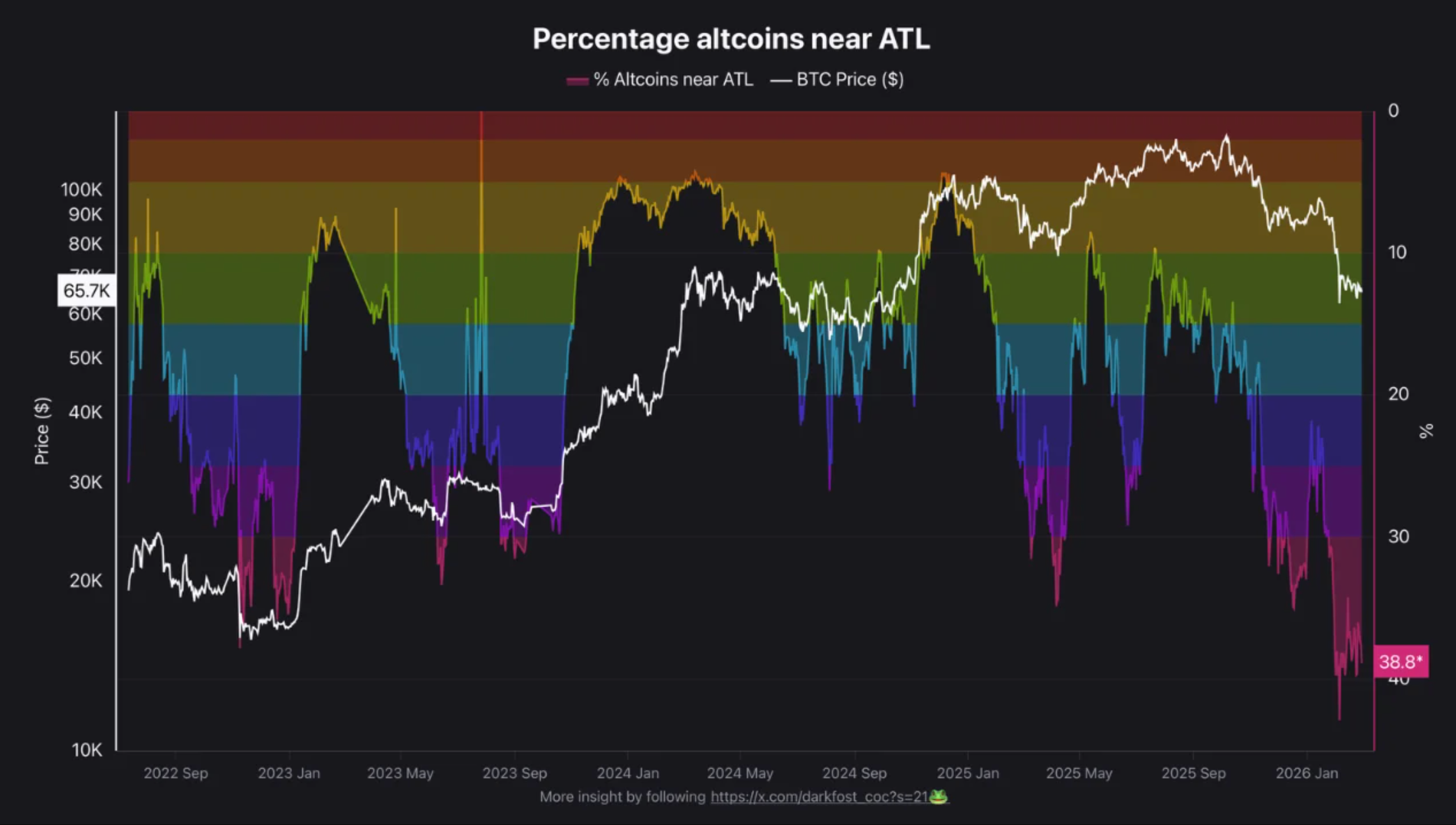
When such a significant portion of altcoins languishes near historical bottoms, capital typically rotates into Bitcoin or other assets perceived as less risky. This environment can restrict XRP’s recovery potential, even when buying interest materializes.
From a chart perspective, XRP has been range-bound following its retreat from approximately $2.40 earlier in the year. The token continues trading beneath its 50-day simple moving average positioned near $1.62. The Relative Strength Index hovers around 40, indicating subdued momentum without reaching oversold territory.
Critical support exists within the $1.30 to $1.32 zone, with a more substantial demand level around $1.20. Overhead resistance appears at $1.45, followed by the 50-day SMA at $1.62. A bearish pennant formation visible on the daily timeframe suggests a measured downside target near $0.86 if support levels fail to hold.
Ripple’s Institutional Push
On the infrastructure development front, Hidden Road officially appeared on the NSCC directory effective March 2, 2026, according to a DTCC announcement. The National Securities Clearing Corporation facilitates post-trade clearing and settlement operations for US equity markets.
Hidden Road’s inclusion reinforces Ripple Prime’s position as a bridge between conventional financial systems and distributed ledger technology.
While this development doesn’t immediately generate XRP buying pressure, industry observers typically interpret enhanced institutional infrastructure as a favorable indicator for XRPL ecosystem expansion over the long term.
JPMorgan analysts also suggested that comprehensive US cryptocurrency market structure legislation could receive approval by mid-year, which the financial institution characterizes as potentially beneficial for digital asset markets.
Get 3 Free Stock Ebooks
Discover top-performing stocks in AI, Crypto, and Technology with expert analysis.
- Top 10 AI Stocks - Leading AI companies
- Top 10 Crypto Stocks - Blockchain leaders
- Top 10 Tech Stocks - Tech giants



