


Key Points
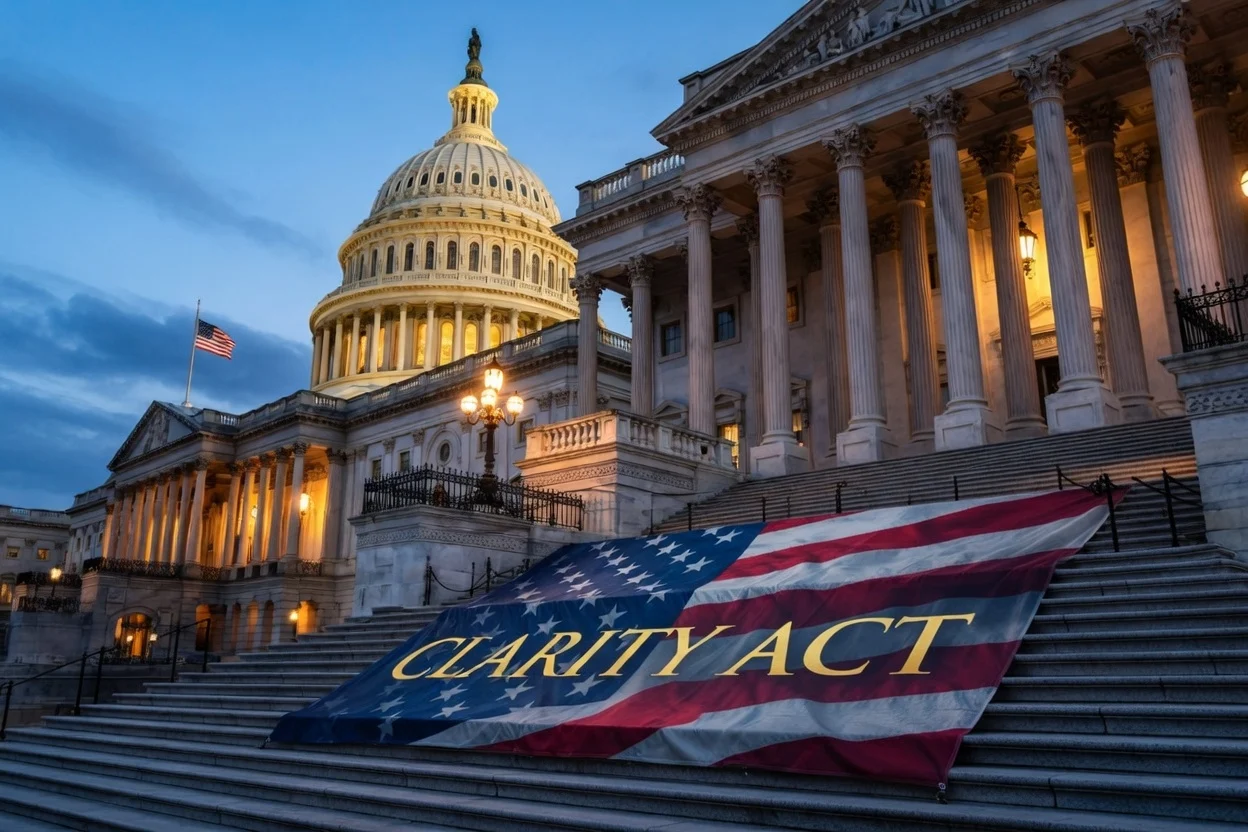
- Brad Garlinghouse endorsed congressional initiatives to pass the CLARITY Act.
- Scott Bessent, Treasury Secretary, called on legislators to complete crypto regulatory framework.
- Paul Atkins, SEC Chair, stated agencies stand prepared to execute the legislation.
- Disagreements regarding stablecoin yield provisions remain a roadblock to passage.
- White House analysis revealed minimal effects of yield restrictions on banking sector lending.
Federal authorities intensified their campaign to pass comprehensive digital asset regulation as prominent industry figures expressed endorsement. Brad Garlinghouse, CEO of Ripple, voiced support for advancing the CLARITY Act through Congress. Government officials pressed legislators to complete a nationwide regulatory structure and deliver the measure to President Donald Trump.
Legislative Push for CLARITY Act Strengthens
Brad Garlinghouse openly endorsed Treasury Secretary Scott Bessent’s appeal for legislative advancement on cryptocurrency policy. He amplified Bessent’s statement on X and declared, “Progress Perfection,” while championing the CLARITY Act.
Progress > Perfection https://t.co/4QvjNXJSoC
— Brad Garlinghouse (@bgarlinghouse) April 9, 2026
Bessent called on legislators to move forward following extended regulatory discussions. He noted the existing framework creates confusion and impedes domestic cryptocurrency growth.
He explained that establishing clear federal guidelines would preserve capital investment and technological advancement in American markets. He further highlighted the necessity for explicit compliance protocols.
SEC Chair Paul Atkins endorsed the congressional initiative and verified agencies’ preparedness to execute the proposed framework. He declared, “Project Crypto is designed so once Congress acts, agencies are ready.”
Atkins aligned with Bessent and requested Congress forward the legislation to President Donald Trump. He underscored the urgency of passing market infrastructure legislation promptly.

The House of Representatives approved its edition of the measure in July. Nevertheless, legislators continue negotiating critical components.
Conflicts concerning stablecoin provisions have hindered advancement in Congress. These disagreements have stalled additional legislative momentum.
Stablecoin Yield Provision Disagreements Persist
Congressional members remain divided on whether the CLARITY Act should impose limitations on stablecoin yield products. Traditional banking organizations advocate for tighter controls on returns associated with stablecoins.
They contend such provisions would safeguard conventional bank funding mechanisms. They seek constraints on trading platforms, intermediaries, and related entities.
Digital asset companies resist expansive limitations and favor restrictions consistent with present stablecoin legislation. They maintain new regulations should remain within current legal boundaries.
The discussion centers on a three-party arrangement where non-issuing entities provide reward-style returns. Opponents claim this framework generates compliance vulnerabilities.
A White House analysis contributed information to the conversation on April 8. The Council of Economic Advisers published the assessment.
The analysis indicated that comprehensive yield prohibitions would produce negligible effects on banking sector lending. It forecasted merely a $2.1 billion expansion, representing 0.02%.
Approximately 76% of anticipated benefits would flow to major banking institutions. Smaller community banks would obtain roughly $500 million in expanded lending capability.
The analysis additionally examined elevated projections favoring traditional banking interests. Under those scenarios, lending could expand by $531 billion.
This amount constitutes approximately 4.4% of anticipated loan activity for late 2025. Community banking institutions could experience increases reaching 6.7%.
The analysis determined that yield limitations would deliver marginal safeguards for banking sector lending. It indicated such regulations could diminish advantages for consumers.
Garlinghouse’s endorsement amplified attention for the legislative campaign. His declaration strengthened the sector’s emphasis on securing passage of the measure.
Get 3 Free Stock Ebooks
Discover top-performing stocks in AI, Crypto, and Technology with expert analysis.
- Top 10 AI Stocks - Leading AI companies
- Top 10 Crypto Stocks - Blockchain leaders
- Top 10 Tech Stocks - Tech giants



