


Key Takeaways
- Rambus declined approximately 18% in premarket sessions following Q1 results that matched but failed to exceed lofty expectations
- First quarter adjusted earnings per share reached $0.63, marginally surpassing the $0.61 Street estimate; revenue hit $180.19M versus $179.94M projected
- Second quarter revenue outlook with a midpoint of $199M barely exceeded Wall Street’s forecasts
- Robert W. Baird cut RMBS from Outperform to Neutral, establishing a $120 target price
- William Blair maintained its Outperform stance, highlighting future catalysts and AI memory opportunities
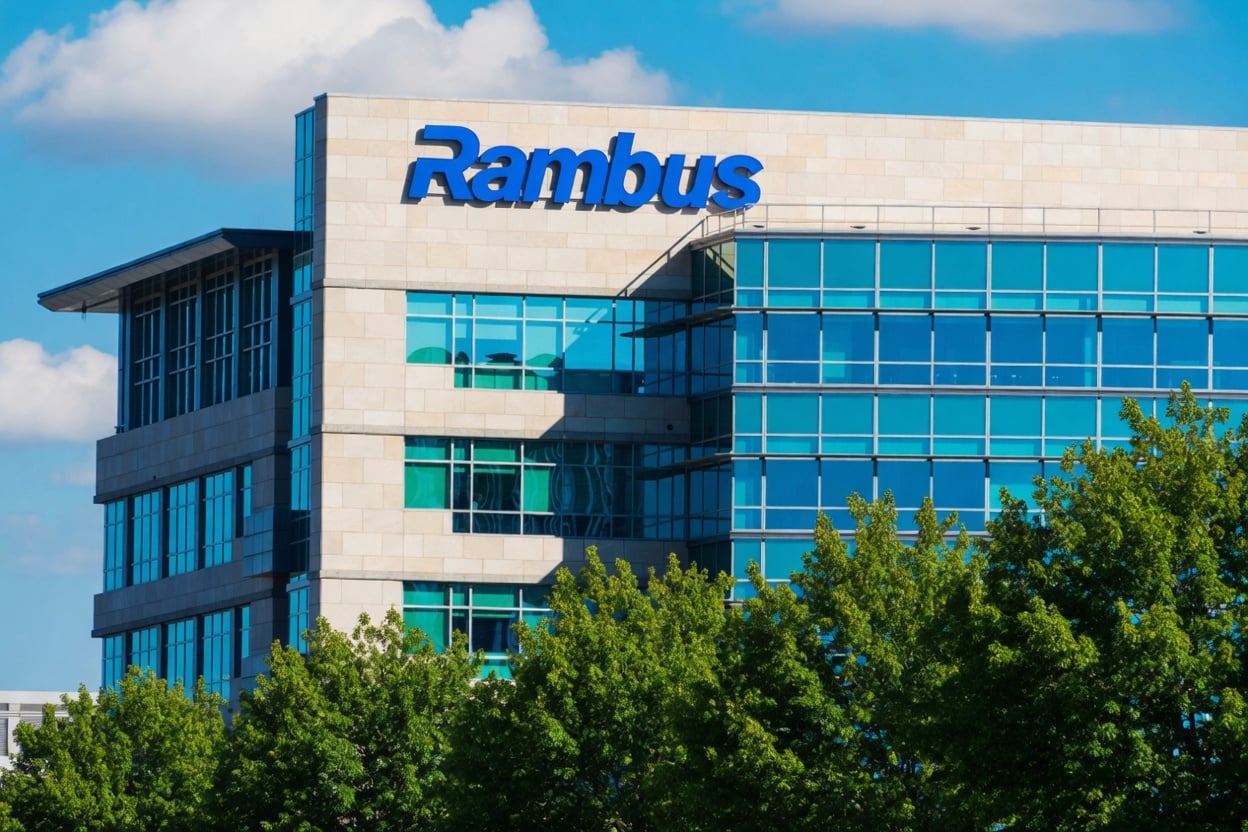
Rambus experienced a turbulent Tuesday morning. Shares plummeted roughly 18% during premarket hours, dropping to approximately $115.99 following the release of first quarter figures that technically delivered — yet missed the elevated benchmark Wall Street had established.
The semiconductor company’s shares had rocketed 64% higher over the preceding month, creating extraordinarily high expectations heading into the quarterly report. When the numbers arrived roughly matching projections instead of crushing them, shareholders headed for the exits.
Adjusted earnings per share for Q1 registered at $0.63, edging past the consensus forecast of $0.61 by a mere two cents. Quarterly revenue totaled $180.19 million, narrowly exceeding the $179.94 million Street projection. Under normal circumstances, these would represent solid results. Following a 64% monthly surge, traders demanded exceptional performance.
The company’s second quarter outlook added to investor disappointment. Management projected Q2 revenue ranging from $190M to $208M, centering around $199M — marginally above analyst expectations. The broad guidance range contributed additional uncertainty.

Wall Street Divided on Path Forward
Robert W. Baird responded swiftly, cutting RMBS from Outperform to Neutral while establishing a $120 price objective. This target suggests approximately 15% downside from pre-decline trading levels. Analyst Tristan Gerra cited DRAM supply constraints and decelerating product expansion as justification for increased caution.
William Blair adopted a contrarian view. Analyst Sebastien Naji retained his Outperform recommendation, characterizing the selloff as a short-term overreaction. He emphasized “multiple upcoming catalysts” and the company’s positioning within AI CPU demand and memory constraint markets as compelling reasons for optimism.
Jefferies and Rosenblatt both preserved Buy recommendations. Rosenblatt maintains a $130 price objective for the shares. Susquehanna, conversely, reduced its target from $100 to $90 while maintaining a Neutral position.
The consensus analyst price target stands at $105.71, with the overall rating at Moderate Buy based on one Strong Buy, five Buy, and four Hold recommendations.
William Blair emphasized one notable factor: Rambus projects CPU server shipments will expand by low double-digit percentages this year — beneath numerous industry projections. Given Rambus’s revenue correlation with CPU shipments, Naji anticipates potential for this baseline forecast to strengthen throughout the year.
Executive Stock Sales Under Scrutiny
The market’s earnings response isn’t the sole development attracting attention. Throughout the most recent quarter, company insiders divested 61,123 RMBS shares valued at approximately $6.3 million.
Chief Executive Luc Seraphin sold 39,914 shares in early March at an average price of $98.63, trimming his holdings by 10.76%. Chief Financial Officer Desmond Lynch disposed of 4,273 shares in late February at $101.53. Current insider ownership represents roughly 0.75% of outstanding shares.
Institutional investors, meanwhile, control 88.54% of the company. Vanguard Group leads institutional holders with 12.7 million shares, trailed by T. Rowe Price and Invesco, which expanded its position by 70.6% during Q4.
RMBS started Tuesday’s session at $141.34 before the dramatic decline commenced. The stock’s 52-week trading range spans from $46.57 to $161.80, with current market capitalization hovering around $15.29 billion.
The company’s SOCAMM2 AI memory interface technology represents a significant potential catalyst that Wall Street observers continue monitoring for adoption signals and revenue contribution expectations in the latter half of the year.
Get 3 Free Stock Ebooks
Discover top-performing stocks in AI, Crypto, and Technology with expert analysis.
- Top 10 AI Stocks - Leading AI companies
- Top 10 Crypto Stocks - Blockchain leaders
- Top 10 Tech Stocks - Tech giants



