


Online gambling has always moved in cycles. New technology arrives, a few platforms figure out how to use it before everyone else, and the market reorganizes around whoever got there first. Daily fantasy sports did that for FanDuel. Cryptocurrency may be doing it now for platforms like ZunaBet. Putting these two side by side is not just a product comparison — it is a snapshot of where the industry has been and where a growing number of players want it to go.
FanDuel: Built on Fantasy, Powered by Regulation
FanDuel’s origin story starts in 2009 with daily fantasy sports. When US federal law opened the door to legal sports betting in 2018, FanDuel was perfectly positioned to walk through it. Backed by Flutter Entertainment, one of the largest gambling corporations globally, it rapidly became one of the top sportsbooks in America.
The sportsbook remains the centerpiece. FanDuel covers major US leagues and international sports with sharp odds and what many consider the smoothest mobile betting app on the market. An online casino product exists in select states, featuring slots, table games, and limited live dealer options. It is a competent casino but clearly secondary to the betting operation.
All transactions flow through conventional payment methods — bank transfers, cards, PayPal, Venmo, and similar services. Deposits typically process quickly. Withdrawals are another matter, with processing times that can stretch from hours to several business days depending on the chosen method and the player’s bank.
New user promotions lean toward sportsbook incentives like bonus bets or protected first wagers. Casino bonuses are available but tend to be modest by industry standards. The rewards program converts wagering into points redeemable for bonus bets and credits, operating within Flutter’s broader loyalty framework. It is a system that rewards spending without particularly rewarding attention or engagement.
FanDuel excels as a regulated American sportsbook. That is its strength and, increasingly, its limitation. The product works extremely well for one specific type of player in one specific market. Beyond that, the edges start to show.

ZunaBet: No Legacy, No Limitations
ZunaBet arrived in 2026 built by Strathvale Group Ltd, licensed in Anjouan, and assembled by a team with over two decades of combined gambling industry experience. It had no prior product to evolve from and no existing infrastructure to work around. That clean slate shows in every part of the platform.
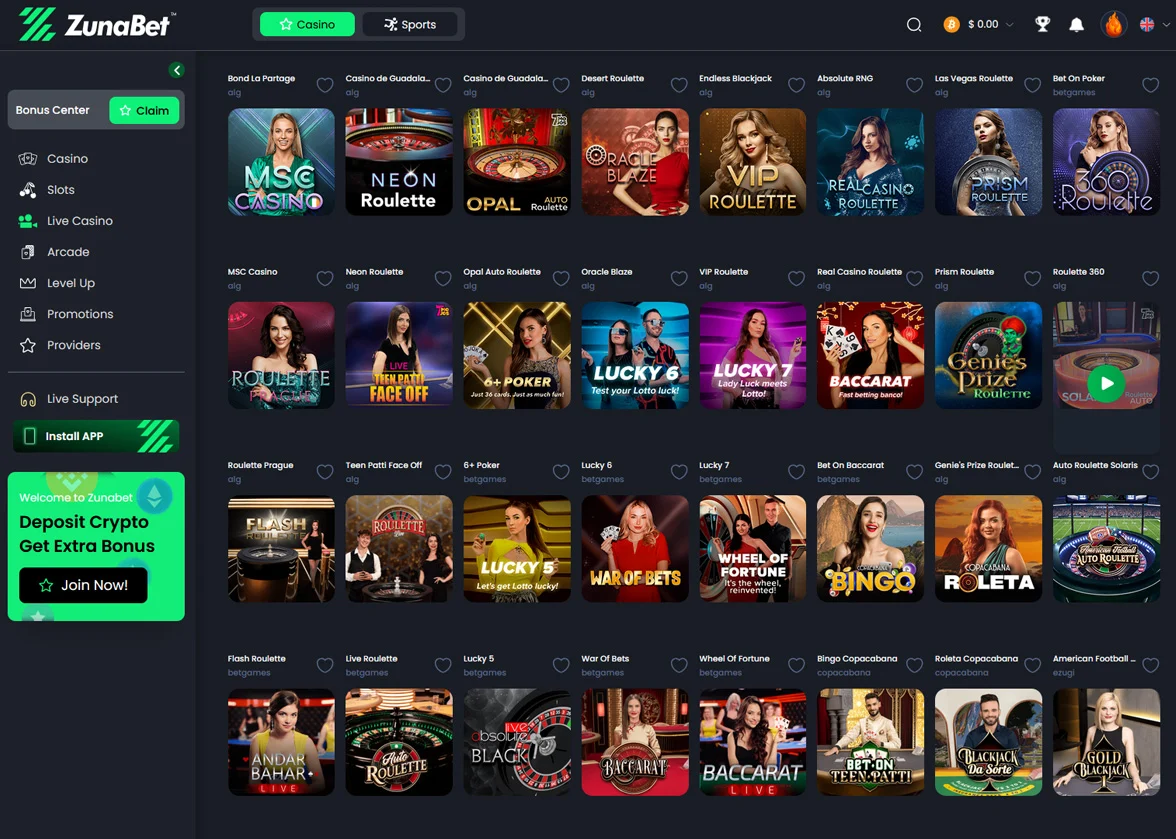
The game library alone tells you this is a different kind of operation. ZunaBet offers over 11,000 titles from 63 providers. Pragmatic Play, Evolution, Hacksaw Gaming, Yggdrasil, BGaming, and scores of other studios contribute to a catalog that spans slots, RNG table games, and live dealer rooms. FanDuel’s casino product, where it is available, carries a small fraction of that number. For players who care about having a deep and varied game selection, ZunaBet is operating on an entirely different scale.
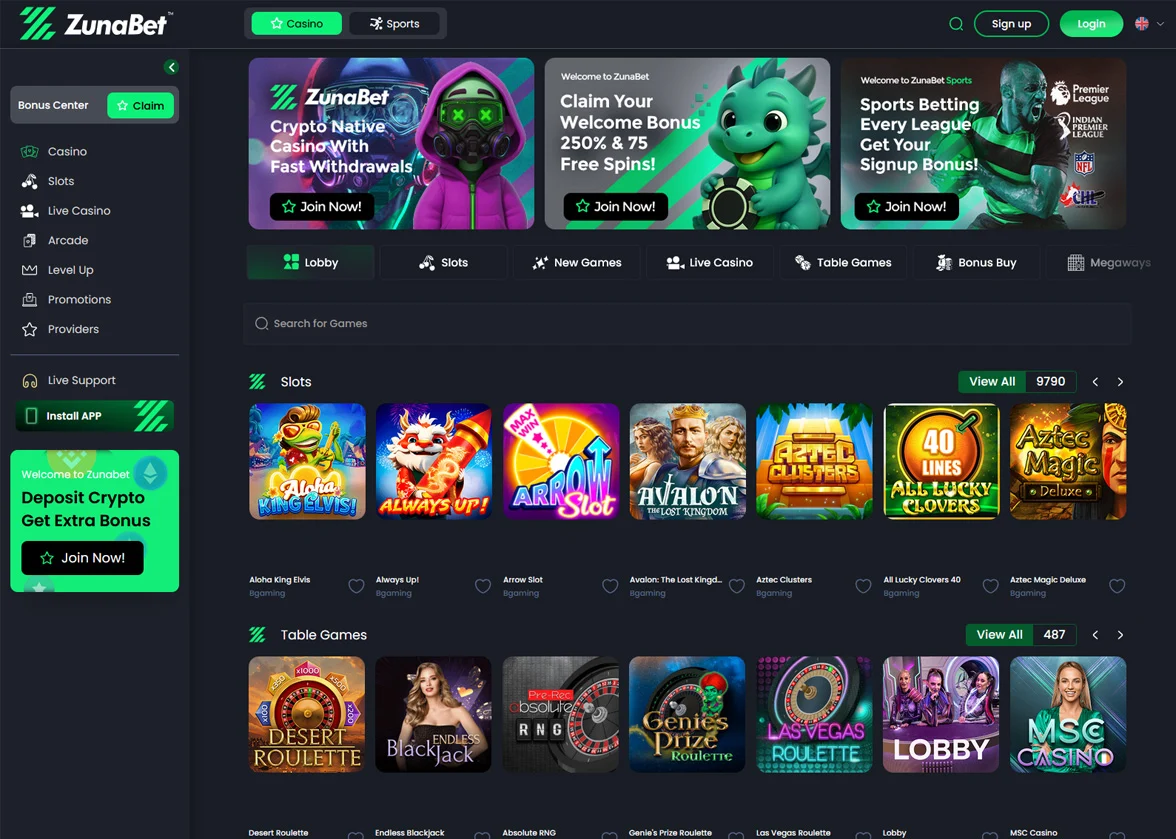
The sportsbook matches that ambition. Football, basketball, tennis, NHL, combat sports, and virtual sports all get full coverage. Esports receives dedicated treatment with markets across CS2, Dota 2, League of Legends, and Valorant. FanDuel has deeper ties to US sports betting culture and league partnerships, but ZunaBet offers wider global reach and an esports product that traditional operators have struggled to develop with the same level of seriousness.
Payment infrastructure is where the philosophical gap between these two platforms is widest. FanDuel depends entirely on banks and payment processors. ZunaBet was built on crypto. It accepts more than 20 cryptocurrencies — BTC, ETH, USDT across several blockchains, SOL, DOGE, ADA, XRP, and a long list beyond that. Transactions carry no platform fees. Withdrawals clear quickly. There is no bank sitting in the middle adding time and cost to every movement of funds.
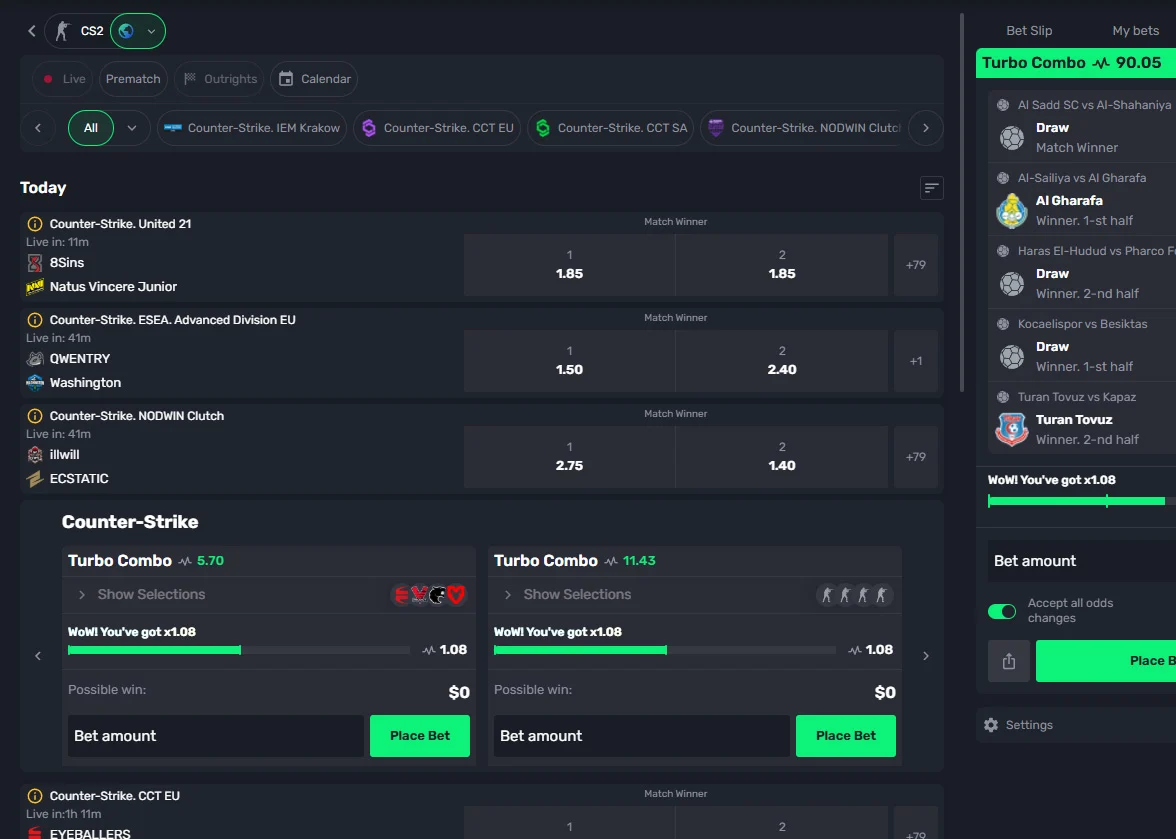
The introductory offer at ZunaBet goes up to $5,000 in matched deposits plus 75 free spins over three deposits. That works out to a 100% match up to $2,000 with 25 spins on deposit one, a 50% match up to $1,500 with 25 spins on deposit two, and a 100% match up to $1,500 with 25 spins on deposit three. Put that next to FanDuel’s typical new player offers and the gap in casino bonus value is substantial.
ZunaBet delivers all of this through a dark-themed HTML5 interface with fast load times, responsive design, and native apps for iOS, Android, Windows, and MacOS. Live chat support runs 24 hours a day, every day.
Rewards That Actually Reward
Loyalty programs reveal what a platform thinks about its regular players. FanDuel’s system is transactional. Play, accumulate points, redeem them for bonus bets or credits. Status tiers exist within the Flutter ecosystem but primarily benefit high-volume sportsbook bettors. The program does its job in a mechanical sense without creating any real emotional connection between the player and the platform.
ZunaBet designed its loyalty system to feel like something worth paying attention to. Built around a dragon evolution concept with a mascot character called Zuno, it moves players through six tiers — Squire, Warden, Champion, Divine, Knight, and Ultimate. Rakeback starts at 1% at the bottom and climbs steadily to 20% at the peak. Each tier unlocks additional rewards including free spins packages that reach up to 1,000, VIP club access, and double wheel spins.
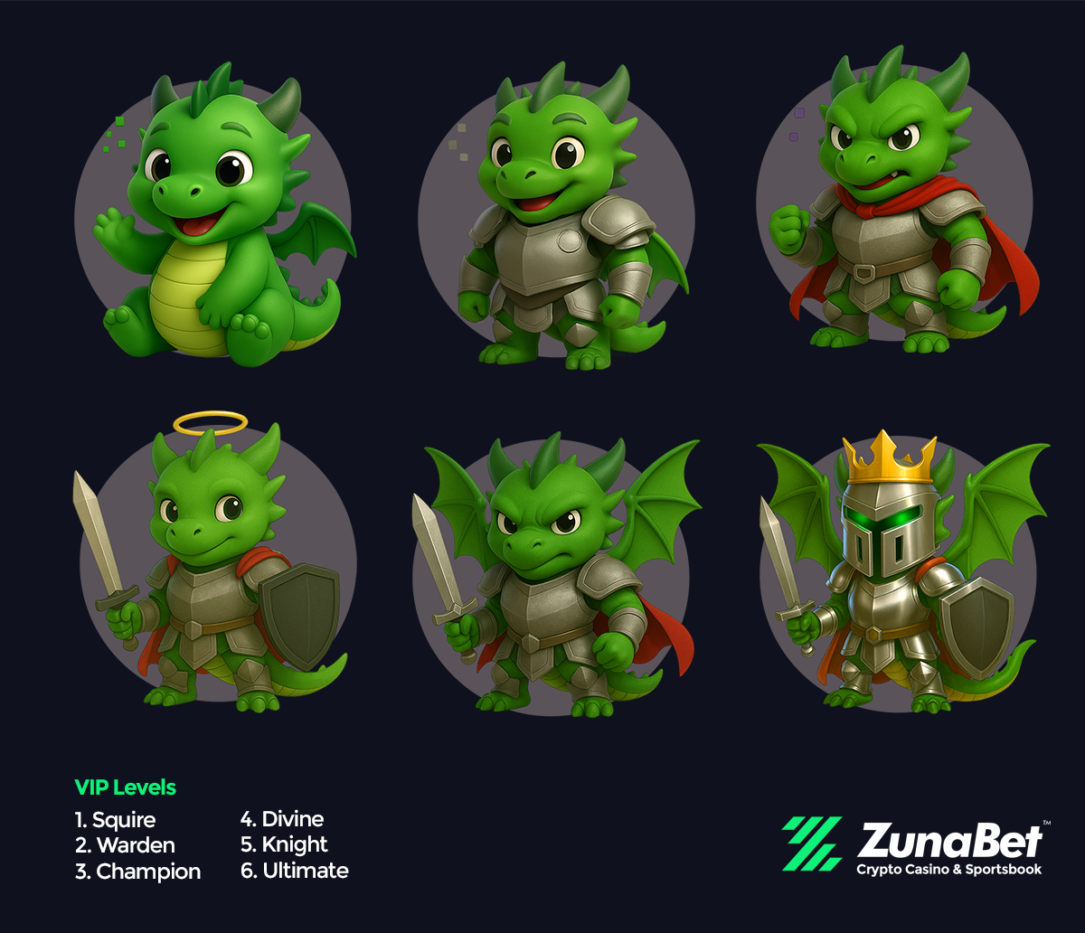
The gamified framework changes how the program feels to use. There are clear goals to chase, visible progress markers, and genuine anticipation around reaching the next level. It borrows from the kind of reward psychology that video games have perfected over decades — and applies it to a context where most operators are still handing out generic points. For players who want their loyalty to be acknowledged in a way that feels personal and engaging rather than purely mathematical, ZunaBet’s system is a clear step forward.
Money Moves Differently on These Two Platforms
The way money enters and leaves a gambling platform matters more than most players realize until they experience the difference firsthand.
On FanDuel, deposits go through banks and payment processors. Those institutions have their own timelines, their own fee structures, and their own rules. A withdrawal request submitted on Friday evening might not arrive in a player’s account until the middle of the following week. Credit card deposits may carry cash advance fees from the issuing bank. PayPal and Venmo add another layer of intermediary processing. None of this is FanDuel’s fault specifically — it is how traditional payment infrastructure works. But it is a friction point that every player on the platform encounters.
On ZunaBet, a player sends crypto from their wallet and it arrives. They request a withdrawal and it processes. No bank holds. No processor delays. No conversion fees. No third party deciding when the player gets access to their own money. For someone used to moving crypto in their daily financial life, this is simply how transactions should work. The fact that traditional gambling platforms cannot match this experience is a structural disadvantage that no amount of app design or marketing can overcome.
A Generational Split in Player Expectations
This comparison is ultimately about more than two platforms. It reflects a divide in what different groups of players expect from online gambling.
One group is comfortable with the traditional model. They have bank accounts linked to their betting apps, they accept that withdrawals take time, and they choose platforms based on brand familiarity and regulatory standing. FanDuel serves this group well and will likely continue to do so.
Another group is growing rapidly. These are players who hold cryptocurrency, who have grown up with gaming progression systems, who expect instant transactions, and who evaluate platforms based on what they actually offer rather than how long they have been around. They want massive game libraries, not curated selections. They want rakeback, not opaque points systems. They want their money to move at the speed of the blockchain, not at the speed of a bank’s processing department.
ZunaBet was built specifically for this second group. Every design decision — from the 11,000-game library to the 20+ supported coins to the dragon evolution loyalty program to the zero transaction fees — reflects an understanding of what these players value and a willingness to deliver it without compromise.
Reading the Direction
FanDuel is secure in its position. Flutter’s resources, US market licenses, and brand recognition ensure it will remain a major player in regulated sports betting for years to come. Nothing about ZunaBet’s emergence changes that.
What ZunaBet’s emergence does signal is that the edges of the gambling market are moving in a direction that traditional operators are not set up to follow easily. Crypto payments, enormous game catalogs, gamified loyalty systems, serious esports coverage, and a platform experience designed for digital-native users — these are not gimmicks. They are the features that a growing segment of the market now considers baseline.
ZunaBet is a new platform and it carries the inherent uncertainty that comes with that. But it launched with a product that does not look like a starting point. It looks like a finished answer to a question the industry has been slowly asking for years — what does online gambling look like when you build it for the players who are arriving now instead of the ones who arrived a decade ago?
The market may not be shifting all at once. But when you look at what ZunaBet has assembled compared to what even the biggest traditional operators provide, it is hard to argue the ground is not moving.
Disclaimer: This is a Press Release provided by a third party who is responsible for the content. Please conduct your own research before taking any action based on the content.
Get 3 Free Stock Ebooks
Discover top-performing stocks in AI, Crypto, and Technology with expert analysis.
- Top 10 AI Stocks - Leading AI companies
- Top 10 Crypto Stocks - Blockchain leaders
- Top 10 Tech Stocks - Tech giants



