



TLDR
- American military forces destroyed all defensive military installations on Kharg Island, Iran’s primary oil export facility responsible for approximately 90% of shipments
- President Trump deliberately avoided targeting the island’s petroleum terminals while cautioning they remain potential targets if Iran continues Strait of Hormuz blockade
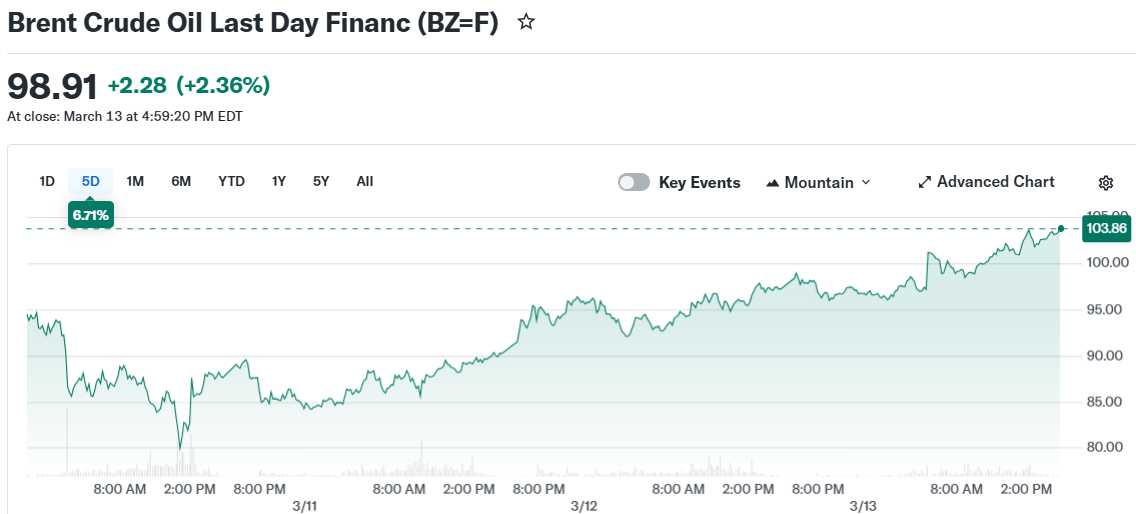
- Brent crude prices surged back above the $100 per barrel threshold in the aftermath of the military operation
- Vessel traffic navigating the Strait of Hormuz has plummeted from a typical 84 tankers daily to under 10 ships
- Operation Epic Fury has resulted in 13 American military personnel fatalities; Saudi Arabia-based refueling aircraft sustained damage
On Friday, President Trump disclosed that American military forces successfully eliminated all Iranian military facilities located on Kharg Island, Tehran’s principal petroleum export terminal.
The President shared the development via Truth Social, explaining that U.S. Central Command executed the operation to neutralize Iran’s defensive military positions on the strategic island. Trump emphasized his decision to preserve the oil export facilities intact “for reasons of decency,” though he issued a stern warning that this restraint hinges on Iran permitting unimpeded navigation through the Strait of Hormuz.
Tehran issued a swift counter-warning, stating that any attacks on its energy sector would trigger immediate retaliatory strikes against the energy infrastructure of nations supporting American operations.
VP JD Vance disclosed that Iran’s newly appointed supreme leader, Mojtaba Khamenei, sustained injuries during the military strikes. “We don’t know exactly how bad,” Vance stated.
Operation Epic Fury has claimed the lives of thirteen American service personnel thus far.
At Saudi Arabia’s Prince Sultan air base, five U.S. Air Force tanker aircraft were struck and sustained damage while on the ground. Two Pentagon officials verified the incident, confirming no casualties resulted from the attack.

The Department of Defense is deploying a Marine expeditionary unit along with additional naval assets to the Middle East theater. Trump also announced plans for the U.S. Navy to commence escort operations for oil tankers navigating through the Strait of Hormuz in the near future.
Oil Prices and Supply Disruptions
Brent crude has been hovering around the $100 per barrel mark. The Kharg Island military operation pushed prices decisively above this psychological threshold.
The critical Strait of Hormuz waterway has experienced severe disruption since early March. Tanker transits have collapsed from the 2026 baseline average of 84 vessels per day to fewer than 10, based on ACLED tracking data.
Kharg Island serves as the export point for approximately 90% of Iranian crude oil shipments. Energy analysts at SEB had previously identified significant global supply vulnerability if the island’s export infrastructure were compromised, projecting potential price spikes far exceeding current conflict-driven levels.
The International Energy Agency orchestrated an unprecedented coordinated release of 400 million barrels from global strategic petroleum reserves to mitigate market pressure and stabilize energy prices.
Federal Reserve and Inflation Concerns
Financial analysts at ING suggest the Federal Reserve may be compelled to maintain elevated interest rates for an extended period. The primary concern centers on surging energy costs driving inflation metrics further from the Fed’s 2% policy target.
The Persian Gulf crisis has triggered price increases for fertilizer and petrochemical feedstocks, creating ripple effects throughout consumer price indices.
Market participants are closely monitoring for potential retaliatory actions from Iran’s Revolutionary Guard Corps. The Pentagon’s deployment of a Marine expeditionary unit to the region indicates preparations for potential escalation scenarios.
Oil prices remain elevated above $100 per barrel while daily vessel traffic through the Strait of Hormuz continues at fewer than 10 tankers according to the most recent available data.
Get 3 Free Stock Ebooks
Discover top-performing stocks in AI, Crypto, and Technology with expert analysis.
- Top 10 AI Stocks - Leading AI companies
- Top 10 Crypto Stocks - Blockchain leaders
- Top 10 Tech Stocks - Tech giants



