


Key Takeaways
- Historical data shows NVDA has delivered 3-month post-GTC outperformance versus the SOX index ranging from 12% to 45%, prompting Wells Fargo’s bullish stance
- BofA maintains Buy rating with $300 target, highlighting NVDA’s attractive valuation at approximately 17x forward price-to-earnings ratio
- The chip giant is anticipated to showcase its next-generation co-packaged optic switch technology along with Feynman GPU and Kyber NVL576 rack developments
- The emergence of agentic AI is creating unprecedented CPU demand — Nvidia’s Vera CPU has entered production and is operating in Meta’s infrastructure, with broader deployment scheduled for 2027
- Industry-wide CPU supply constraints are intensifying, with major chipmakers reporting lead times extending to six months and price increases exceeding 10%
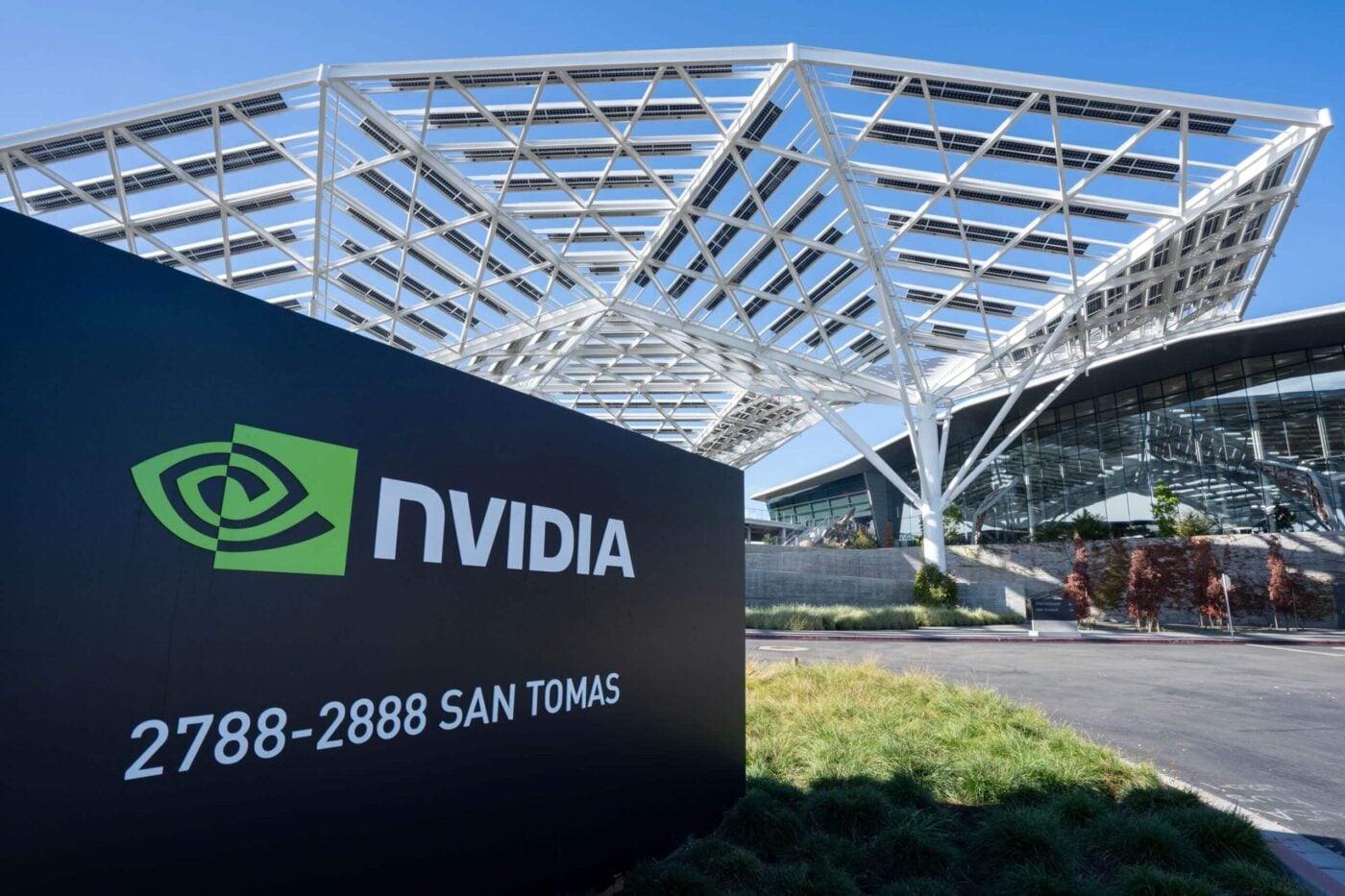
As Nvidia (NVDA) approaches its highly anticipated GTC conference scheduled for March 16–19 in San Jose, California, market analysts are positioning themselves for what could prove to be a significant market-moving event for both the company and the wider chip industry.
Aaron Rakers and his team at Wells Fargo have declared themselves “NVDA buyers ahead of the event.” Their bullish position is supported by historical performance data showing the stock typically outperforms the SOX semiconductor index by approximately 30% in the three-month period following GTC conferences, with outperformance ranging between +12% and +45%.
Meanwhile, Vivek Arya from Bank of America has reaffirmed his Buy recommendation alongside a $300 price objective. Arya highlights that shares are currently valued at approximately 17x forward earnings — representing a historically attractive entry point — especially considering the successful Blackwell product launch that has driven an estimated $500 billion in aggregate revenue.
CEO Jensen Huang is scheduled to present his keynote presentation Monday at 2 p.m. ET, followed by his moderation of an industry discussion panel Wednesday afternoon. Major technology leaders participating in main stage presentations include OpenAI, Google DeepMind, Meta, Microsoft, and Tesla.

From a product development perspective, the semiconductor leader is anticipated to demonstrate its second-generation co-packaged optic switch incorporating Taiwan Semiconductor’s advanced co-packaged optic capabilities. Mass manufacturing isn’t projected to accelerate until 2027, when production could reach approximately 80,000 units. Additional announcements may cover the Feynman GPU series and Kyber NVL576 rack architecture.
Wells Fargo analysts anticipate Nvidia may revise its pipeline projections upward, potentially elevating its cumulative revenue forecast from $500 billion to beyond $600 billion through 2026. Rakers also questioned whether the company will adjust its projection of $3–$4 trillion in annual worldwide AI infrastructure expenditure by 2030.
The CPU Renaissance Accelerates
While GPUs capture headlines, a significant transformation is occurring beneath the surface. Agentic AI — autonomous AI systems that coordinate complex workflows across multiple agents — demands computational resources distinct from conventional AI inference workloads. This evolution is creating unprecedented demand for central processing units.
Dion Harris, Nvidia’s AI infrastructure division head, explained to CNBC that “CPUs are becoming the bottleneck in terms of growing out this AI and agentic workflow.” The company’s Vera CPU has reached production status and is currently operational within Meta data centers following a multi-year partnership revealed in February. Nvidia intends to broaden this deployment throughout 2027.
Thousands of independent Nvidia CPU units are currently functioning at the Texas Advanced Computing Center alongside Los Alamos National Lab. Bank of America forecasts the CPU market could expand dramatically from $27 billion in 2025 to $60 billion by decade’s end.
During GTC, Nvidia is anticipated to display a CPU-exclusive rack configuration on the exhibition floor — demonstrating the company’s serious commitment to standalone CPU solutions.
Industry-Wide Supply Constraints Intensify
The overall CPU marketplace faces mounting pressure. Both AMD and Intel have alerted customers about supply limitations, with fulfillment timelines extending up to six months and pricing climbing more than 10%, Reuters reports.
Forrest Norrod, AMD’s data center division leader, told CNBC that demand acceleration throughout the previous six to nine months has been “unprecedented.” Intel indicated inventory will reach its lowest point this quarter, though the manufacturer anticipates supply conditions improving during Q2 2026.
Presently, Nvidia reports it hasn’t experienced substantial CPU delivery disruptions. Harris explained the company’s supply chain has successfully accommodated demand, partially because most CPU shipments occur as components of complete rack-scale systems bundled with GPUs.
Mercury Research data shows Nvidia captured a 6.2% share of the server CPU marketplace in Q4 2025, trailing Intel at 60% and AMD at 24.3%. Additional companies that may experience stock movement based on GTC revelations include AMD, Taiwan Semiconductor, Broadcom (AVGO), Intel, and Marvell (MRVL).
Get 3 Free Stock Ebooks
Discover top-performing stocks in AI, Crypto, and Technology with expert analysis.
- Top 10 AI Stocks - Leading AI companies
- Top 10 Crypto Stocks - Blockchain leaders
- Top 10 Tech Stocks - Tech giants



