


Quick Overview
- Nvidia commits $2 billion in equity investment to accelerate Nebius Group’s AI infrastructure development
- The company aims to expand operational data center capacity from 170 MW to between 800 MW and 1 GW by year-end 2026
- Nebius’s autonomous division, Avride, maintains a commercial agreement with Uber for self-driving taxis and robotic delivery services
- Avride’s robotic delivery operations expanded 178% annually in Q1 2026, crossing the 500,000 delivery milestone
- First quarter 2026 AI infrastructure revenue reached $390 million, representing 841% annual growth
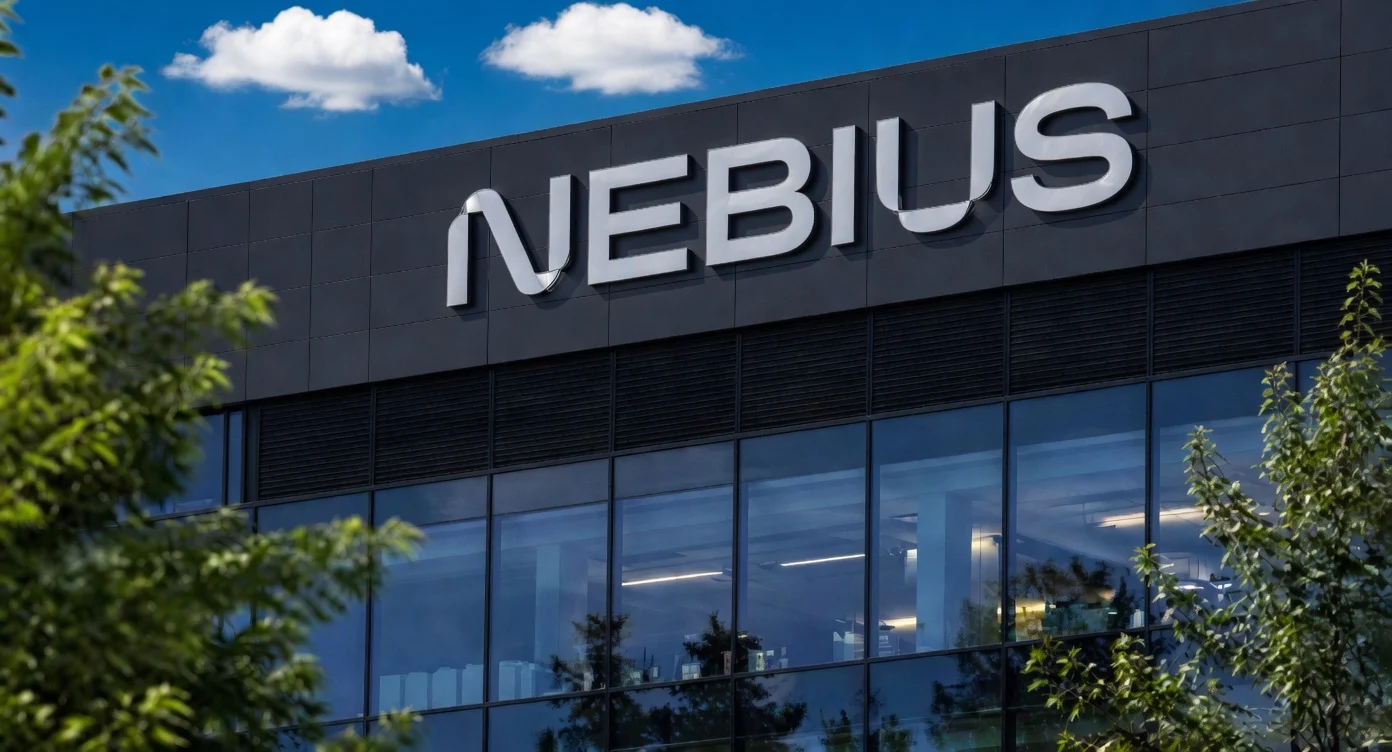
Nebius Group (NBIS) has secured a substantial $2 billion commitment from Nvidia. The semiconductor giant is making a strategic equity stake to accelerate Nebius’s buildout of AI-focused data infrastructure and manufacturing facilities.
At the time of this report, NBIS shares were changing hands near $286.69, reflecting a gain of more than 2% following the announcement. The equity has climbed from its 52-week floor of $43.89 to a peak of $298.80.
Nvidia is doing more than simply providing chips and equipment. The company is deploying capital directly into Nebius, indicating a partnership that extends beyond standard vendor arrangements. Nebius has already secured multi-year agreements with Microsoft and Meta to utilize the expanded infrastructure.
As 2025 concluded, Nebius operated 170 megawatts of live data center infrastructure. The roadmap calls for reaching 800 MW to 1 GW by the close of 2026, supported by over 4 GW of committed capacity in the pipeline.

This aggressive expansion requires significant funding. Nebius has projected capital spending between $20 billion and $25 billion throughout 2026. Challenges related to energy procurement, regulatory approvals, and financial returns remain substantial.
The financial performance supports the growth narrative. First quarter 2026 AI cloud operations generated $390 million in revenue, marking an 841% increase compared to the prior year. Overall quarterly revenue totaled $399 million, with the balance of $9 million contributed by Avride and education technology platform TripleTen.
Avride Pursues Autonomous Taxi and Delivery Opportunities
The autonomous mobility division of Nebius, Avride, has received backing from Uber and is focused on two segments: self-driving taxi services and sidewalk-based delivery robotics. Last year, Uber and Nebius jointly invested $375 million into Avride.
The delivery robot segment is showing strong momentum. During Q1 2026, Avride completed 174,000 robotic deliveries, representing a 178% year-over-year increase, and has now surpassed 500,000 cumulative deliveries since operations began in April 2025. Uber Eats has integrated Avride’s robots for final-mile logistics.
Avride continues to broaden its footprint across additional urban areas and university environments. According to Fortune Business Insights, the automated delivery robot sector is projected to expand from $686 million in 2025 to $7.6 billion by 2034.
The robotaxi initiative faces greater complexity. Avride’s autonomous vehicles were reported in 16 collisions across Dallas and Austin during the first quarter of 2026 and are currently subject to federal review. While not uncommon in this emerging sector — Alphabet’s Waymo recorded 69 incidents in the same metropolitan areas between July 2025 and March 2026 — these events introduce regulatory headwinds.
Index Addition and Analyst Projections
Nebius recently joined the Nasdaq-100 index, broadening its exposure to institutional capital and index-tracking investment vehicles.
Wall Street analysts project revenue will climb to $21.3 billion by the conclusion of 2028. Applying a 9.5x price-to-sales valuation multiple, consistent with broader U.S. technology sector benchmarks, suggests a potential market capitalization near $202 billion — approximately triple its present value.
The stock currently commands a 79x sales multiple, reflecting aggressive growth expectations but offering minimal buffer for operational shortfalls.
Upcoming corporate disclosures will focus on data center construction schedules, energy supply agreements, and potential modifications to partnerships with Microsoft, Meta, and Uber.
Get 3 Free Stock Ebooks
Discover top-performing stocks in AI, Crypto, and Technology with expert analysis.
- Top 10 AI Stocks - Leading AI companies
- Top 10 Crypto Stocks - Blockchain leaders
- Top 10 Tech Stocks - Tech giants



