


Key Takeaways
- Nasdaq submitted an SEC application for binary options contracts linked to the Nasdaq-100 index, with pricing ranging from $0.01 to $1.00
- These “Outcome Related Options” function similarly to contracts on prediction platforms such as Polymarket and Kalshi
- February trading volume across Kalshi and Polymarket reached $18.4 billion, marking the sixth consecutive monthly record
- Competing exchanges like Cboe and CME are pursuing similar prediction-based financial products
- SEC Chairman Paul Atkins identified prediction markets as a significant regulatory concern, highlighting potential jurisdictional questions between SEC and CFTC
Nasdaq Pursues Binary Options Launch on Nasdaq-100 (NDX) Amid Surge in Prediction Market Activity
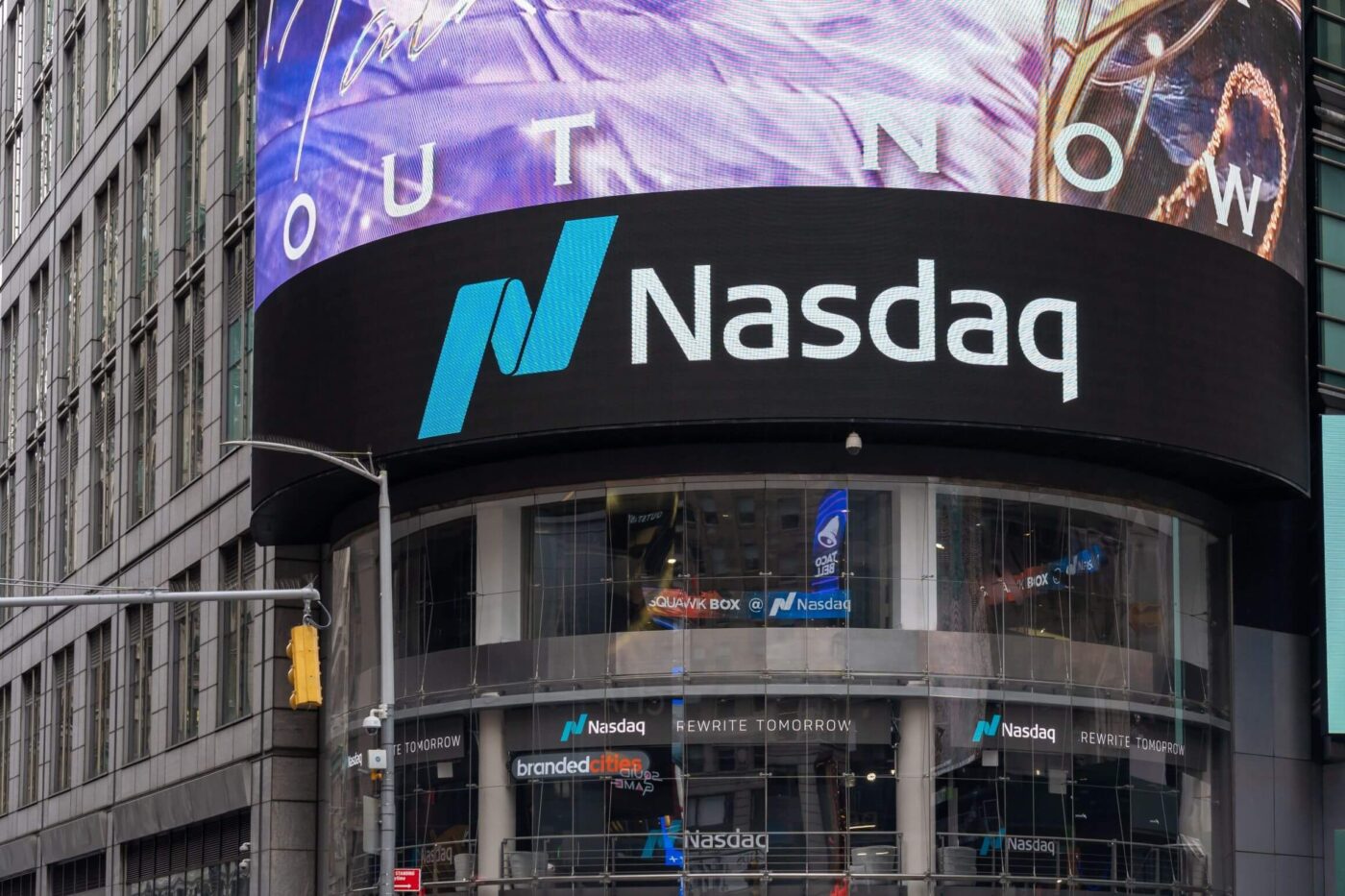
Nasdaq has submitted an application to the United States Securities and Exchange Commission requesting authorization to introduce binary options contracts based on the Nasdaq-100 index.
The application came from Nasdaq MRX, an options trading platform operated by Nasdaq, which was submitted on Monday this week.
These contracts carry the designation “Outcome Related Options.” Trading prices fall within a $0.01 to $1.00 range, with successful predictions paying out $1 while incorrect outcomes result in total loss.
The instruments would track both the Nasdaq-100 Index alongside the Nasdaq-100 Micro index. Unlike some prediction markets, these contracts would exclude non-financial events including sporting competitions or political races.
This structure bears striking resemblance to mechanisms employed by prediction trading platforms such as Polymarket and Kalshi, both of which have experienced explosive expansion in recent periods.

Trading Volumes Reach Unprecedented Levels
The combined trading volume for Kalshi and Polymarket climbed to $18.4 billion during February, representing the sixth straight month of record-breaking activity. The previous high was established in January at slightly above $17 billion.
Nasdaq has additionally requested listing authorization for these contracts across two supplementary exchanges under its control — Nasdaq NOM and Nasdaq PHLX — both employing alternative pricing structures that can compensate market makers for providing liquidity.
Nasdaq MRX, the venue where the original application was lodged, operates using a priority-based execution system without liquidity provision incentives.
Should regulators grant approval, these instruments would receive classification as securities options under SEC jurisdiction. This regulatory framework would distinguish them from comparable event-driven contracts, which generally operate under Commodity Futures Trading Commission authority.
SEC Chairman Paul Atkins recently characterized prediction markets as a “huge issue,” noting the unclear regulatory boundaries between the SEC and CFTC regarding their supervision.
Competition Intensifies Among Trading Venues
Cboe Global Markets announced it is considering reintroducing “all-or-nothing” binary options connected to financial indicators.
CME Group is broadening cryptocurrency derivatives offerings and has established a partnership with FanDuel enabling wagers on non-financial markets.
Digital asset investment firm Bitwise submitted documentation last month seeking approval for “PredictionShares” ETFs connected to the 2028 United States presidential race. GraniteShares and Roundhill filed comparable applications in February.
Cryptocurrency exchanges are entering the space as well. Coinbase and Crypto.com are incorporating prediction market functionality within their existing platforms.
The Intercontinental Exchange has similarly committed capital to the prediction market sector or announced intentions to develop proprietary products.
Nasdaq’s application would introduce fixed-return, event-based trading mechanisms directly into the exchange-listed equity index options marketplace for the first time.
The submission arrives during a period of heightened regulatory scrutiny. SEC Chairman Atkins delivered his remarks regarding the industry earlier this month.
Get 3 Free Stock Ebooks
Discover top-performing stocks in AI, Crypto, and Technology with expert analysis.
- Top 10 AI Stocks - Leading AI companies
- Top 10 Crypto Stocks - Blockchain leaders
- Top 10 Tech Stocks - Tech giants



