



TLDR
- Strategy’s Michael Saylor dismisses quantum computing as a Bitcoin threat for at least 10+ years
- Saylor labels quantum concerns as “FUD,” drawing parallels to previous unsuccessful Bitcoin critiques
- Vitalik Buterin of Ethereum takes a more conservative stance, suggesting cryptographic vulnerabilities could emerge by 2028
- Bitcoin fell beneath $65,000 amid concerns over Trump administration tariff policies, unrelated to quantum threats
- Strategy reaches milestone with 100th Bitcoin acquisition, accumulating 717,722 BTC valued at approximately $54.56 billion
Strategy’s executive chairman Michael Saylor has stated that quantum computing presents no immediate danger to Bitcoin’s security. During an appearance on Natalie Brunell’s Coin Stories podcast, Saylor emphasized that consensus within the cybersecurity industry places any legitimate quantum threat beyond a ten-year horizon.
Characterizing present quantum concerns as “FUD,” Saylor drew comparisons to previous Bitcoin controversies—including debates over block size, Chinese mining restrictions, and environmental consumption arguments—all of which failed to undermine the network.
Saylor emphasized that a quantum computing breakthrough would create universal vulnerability across the digital landscape. Financial institutions, internet systems, artificial intelligence platforms, and cryptocurrency networks would all require simultaneous security upgrades.
“You’ll see it coming. We’ll all see it coming,” Saylor stated. He emphasized Bitcoin’s adaptive architecture, noting that nodes, hardware components, and wallet software can all be updated as needed.
According to Saylor, the cryptocurrency sector would probably be among the first to identify and address any emerging quantum threat, given the robust security protocols already protecting digital assets.
Not Everyone Agrees
Ethereum co-creator Vitalik Buterin holds a more cautious perspective. He has referenced projections indicating a 20% probability that quantum computers powerful enough to compromise existing cryptographic systems could emerge before 2030.
Buterin has cautioned that elliptic curve cryptography, the foundation securing both Ethereum and Bitcoin, might become vulnerable prior to the 2028 United States presidential election. He advocates for transitioning to quantum-resistant frameworks within a four-year timeframe.

The Ethereum Foundation has already taken proactive measures. Post-quantum preparedness was incorporated into its 2026 security strategy, and a specialized Post-Quantum team was established in January.
CryptoQuant’s CEO Ki Young Ju has similarly raised concerns that quantum computing capabilities could jeopardize millions of Bitcoin. He emphasized the importance of addressing this risk through early dialogue, regardless of its immediacy.
On-chain analyst Willy Woo suggested that quantum vulnerabilities could diminish Bitcoin’s competitive advantage over gold, arguing that markets should begin factoring in the potential arrival of “Q Day.”
Bitcoin Price Falls on Tariff Fears
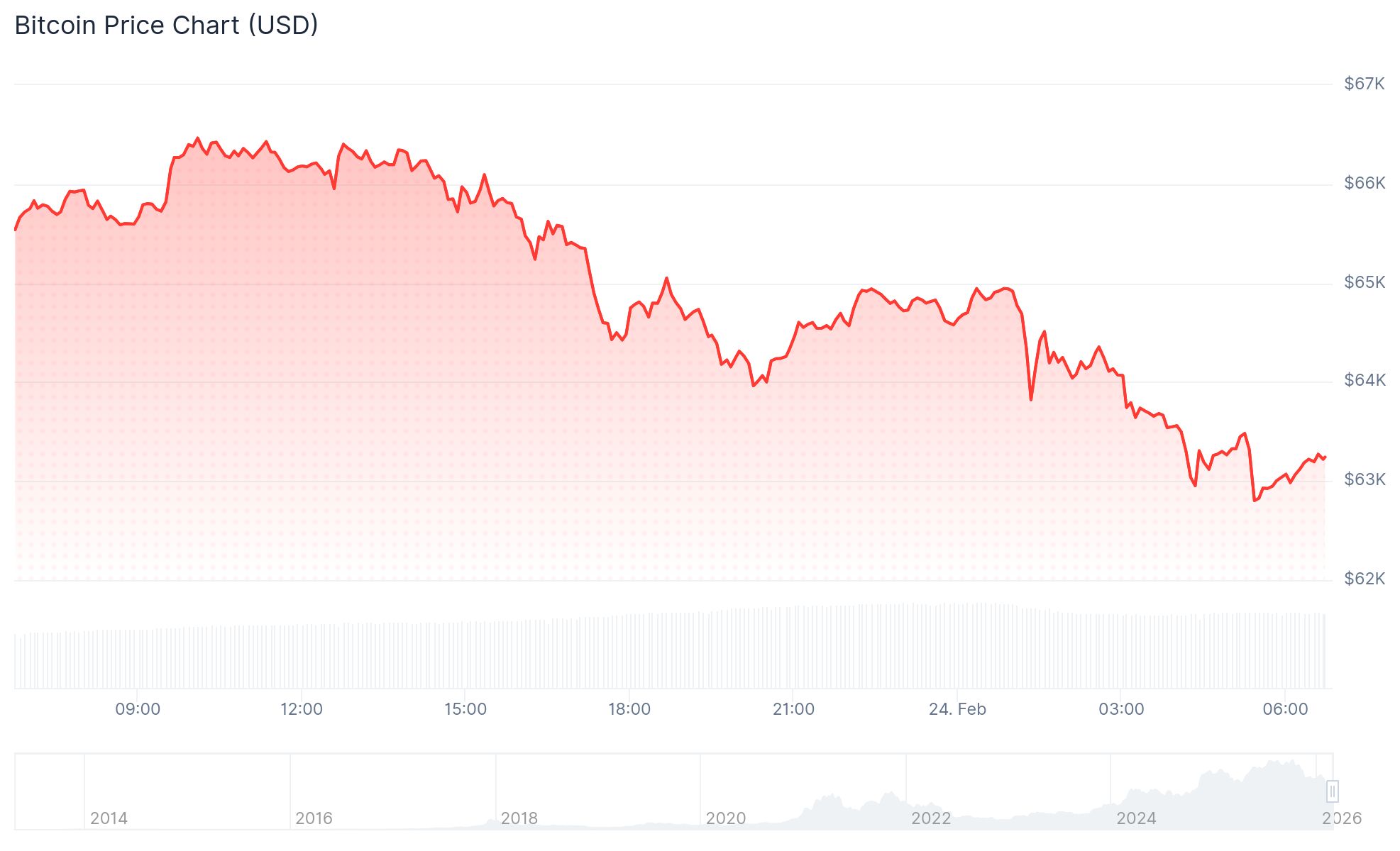
Bitcoin declined below $65,000, experiencing nearly a 5% decrease over 24 hours and reaching its lowest point since early February. The downturn followed President Trump’s announcement of additional tariff measures, driving the fear and greed index into extreme fear levels.
Saylor attributed Bitcoin’s price limitations to a separate challenge: restricted access to banking credit facilities. He noted that most Bitcoin holders cannot leverage their assets for loans through regulated financial institutions, unlike traditional equity investors.
He suggested that rehypothecation practices in cryptocurrency lending markets may contribute to downward price pressure, while the migration of derivatives trading to regulated exchanges has helped moderate extreme volatility.
Strategy marked a significant milestone last week by completing its 100th Bitcoin acquisition, purchasing 592 BTC for approximately $39.8 million. The company’s holdings now total 717,722 BTC, accumulated through investments totaling roughly $54.56 billion at an average acquisition price of $67,286 per coin.
Get 3 Free Stock Ebooks
Discover top-performing stocks in AI, Crypto, and Technology with expert analysis.
- Top 10 AI Stocks - Leading AI companies
- Top 10 Crypto Stocks - Blockchain leaders
- Top 10 Tech Stocks - Tech giants



