



Key Highlights
- The MEGA token went live following the successful deployment of 10 ecosystem applications that achieved the initial KPI benchmark
- Trading commenced simultaneously across Binance, KuCoin, Bitget, Coinbase, Bybit, and additional platforms
- MegaETH paid zero tokens to exchanges as listing compensation — an unusual achievement for Layer 2 projects
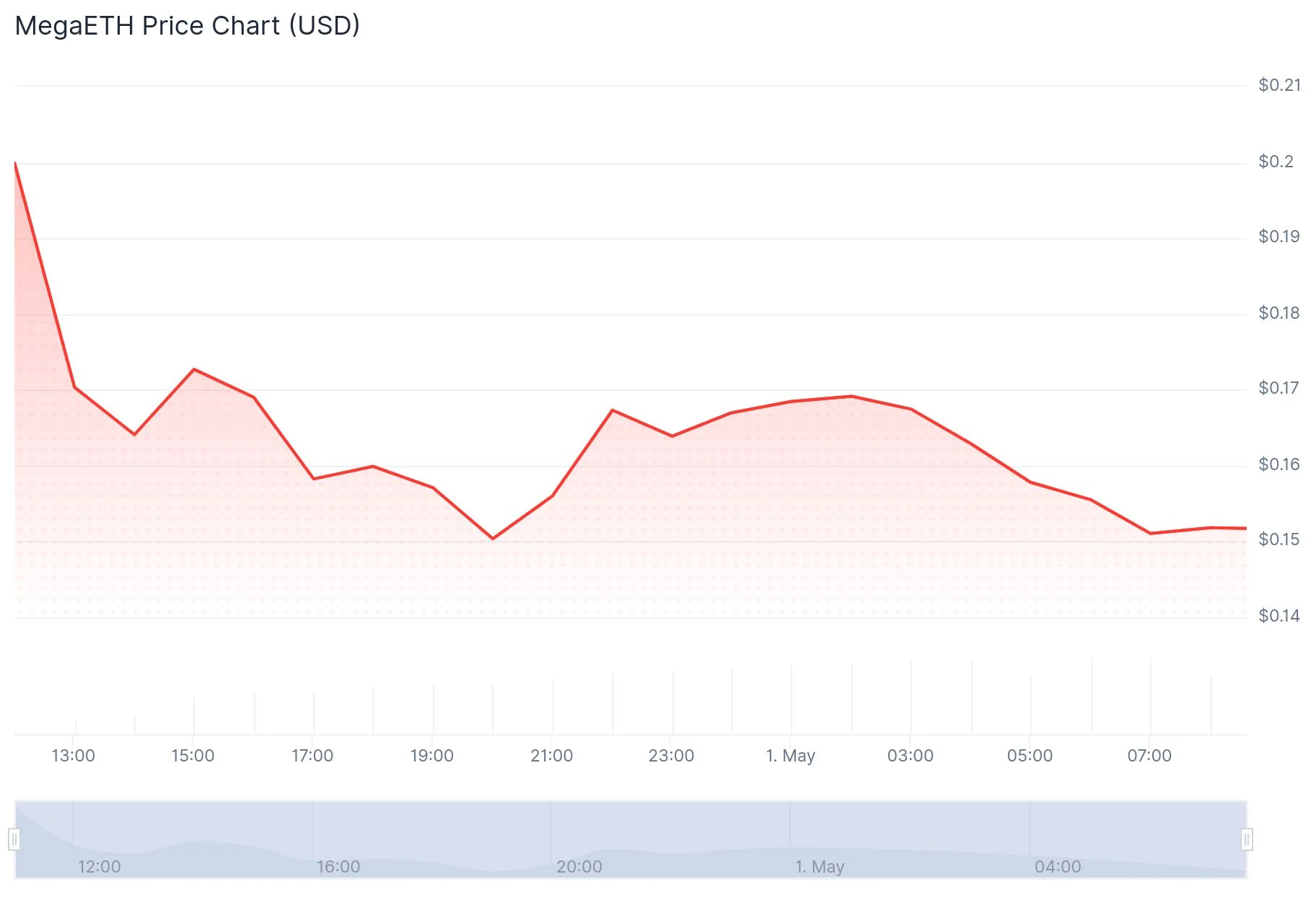
- The token’s fully diluted valuation hit approximately $1.7 billion in its initial trading hours
- USDM stablecoin circulation expanded from $63 million to beyond $300 million throughout the launch phase
On April 30, 2026, MegaETH officially launched its MEGA token following a week-long countdown and the successful completion of its inaugural onchain achievement benchmark.
The token deployment was activated once 10 applications within the “Mega Mafia” ecosystem became operational and surpassed the project’s designated key performance indicator (KPI) target. The development team had pledged to delay the token launch until demonstrable network engagement was established.
Trading commenced on Binance at 11:00 UTC, featuring spot trading pairs such as MEGA/USDC and MEGA/USDT. KuCoin and Bitget simultaneously enabled trading. Additional platforms including Coinbase, Bybit, Upbit, Bithumb, OKX, and MEXC incorporated MEGA on the same launch date.
Regulatory compliance measures restrict deposits and trading activities for users located in the United States, Canada, and the Netherlands.
Zero Exchange Listing Fees Strategy
The most notable aspect of the launch was MegaETH’s unprecedented zero-payment listing approach. Earlier in 2026, the project made a public declaration that it would not distribute MEGA tokens to any trading platform as listing compensation, liquidity incentives, or marketing airdrops.

Despite this stance, every leading exchange proceeded with listing. Simon Dedic, CEO of Blockhead Capital, remarked on the development: “Honestly, I wouldn’t have expected them to bend the knee and list it for free, so kudos to Binance here. Imagine being such a sought-after project that every major CEX lists you without receiving a single token.”
Crypto analyst DeFi Ignas noted that Binance’s decision to list MEGA aligned with the platform’s publicly stated commitment to supporting projects with substantial community backing.
Community observers characterized the simultaneous multi-exchange availability as a “royal flush” achievement for a Layer 2 token debut.
Tokenomics and Initial Pricing
MEGA features a capped maximum supply of 10 billion tokens. Notably, 53.3% of the entire supply is allocated to performance-driven staking rewards instead of traditional time-locked vesting arrangements.
Following the Binance listing, MEGA traded at approximately $0.16 during initial hours. This valuation established the circulating market capitalization at roughly $190 million, with the fully diluted valuation approaching $1.7 billion. Data indicated that 50% of airdrop recipients retained their tokens on launch day.
Participants from the initial coin offering experienced unrealized profits of approximately 2x, including those with 12-month token locks.
USDM Stablecoin Expansion and Ecosystem Engagement
MegaETH’s proprietary stablecoin USDM, created in partnership with Ethena, experienced substantial expansion preceding the token debut. Circulation increased from approximately $62.9 million one week prior to surpassing $300 million during the launch window.
The MegaETH Foundation announced its intention to utilize USDM-generated revenue for MEGA token acquisitions, creating a direct connection between stablecoin usage and token buy pressure.
Co-founder Namik Muduroglu characterized the launch timeline as “very intense.”
One security incident emerged where a participant lost approximately $31,920 in USDC. Community analysis suggested the loss resulted from compromised wallet permissions or phishing attacks rather than protocol vulnerabilities.
Get 3 Free Stock Ebooks
Discover top-performing stocks in AI, Crypto, and Technology with expert analysis.
- Top 10 AI Stocks - Leading AI companies
- Top 10 Crypto Stocks - Blockchain leaders
- Top 10 Tech Stocks - Tech giants



