



Key Takeaways
- Spot Bitcoin ETFs in the United States experienced an unprecedented 10-day withdrawal period, shedding $2.97 billion from May 15 through May 29
- Bitcoin dropped 4.6% across the week to reach $73,397, with similar declines across Ethereum, Solana, and Tron
- Equity markets reached unprecedented peaks fueled by Nvidia’s expansion into laptops and SoftBank’s strategic AI investments
- Crude oil prices surged beyond $93 per barrel following diplomatic gridlock with Iran and ongoing Strait of Hormuz disruptions
- Hyperliquid’s HYPE token bucked the trend with an 18.7% weekly gain, supported by consistent ETF inflows since its May 12 debut
Digital currencies faced significant headwinds throughout the previous week as spot Bitcoin exchange-traded funds in America logged their most extended withdrawal period ever documented. Simultaneously, traditional equity indexes climbed to unprecedented territory, powered by artificial intelligence sector enthusiasm.
The technology-heavy Nasdaq Composite jumped over 8% throughout May. The benchmark S&P 500 advanced approximately 5% during the same timeframe, while the Dow Jones Industrial Average climbed close to 3%. Contract trading extended gains into the weekend, with Nasdaq 100 futures advancing 0.4%.
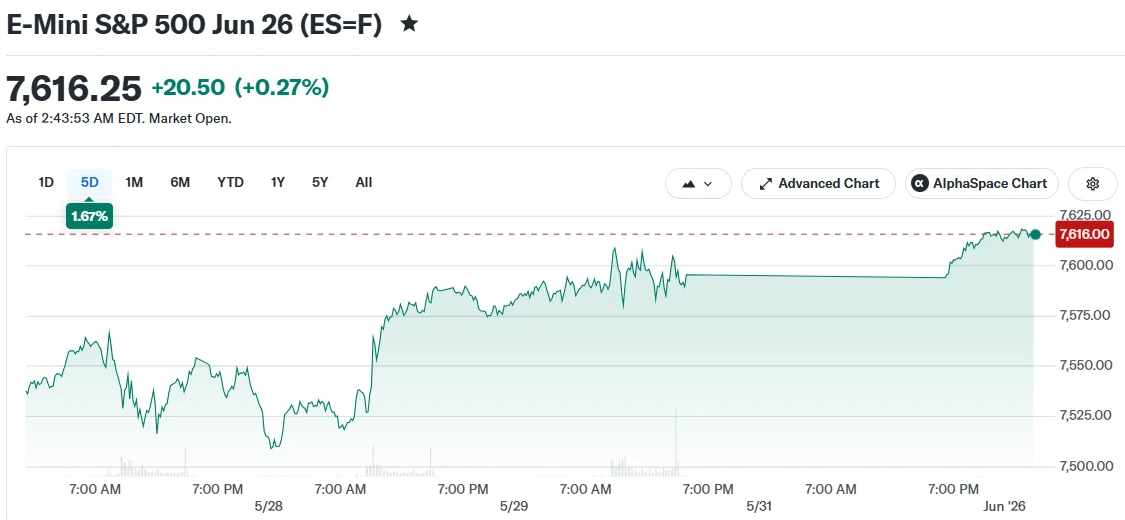
Nvidia revealed plans to compete directly in the Windows laptop sector, challenging established players Intel and AMD. This announcement contributed to futures market strength. SoftBank’s shares surged as much as 11% based on its strategic positions in OpenAI and Arm, positioning the company to potentially become Japan’s highest-valued publicly traded enterprise.
The MSCI All Country World Index advanced 0.2% during Monday trading. Asian stock markets climbed 1.1% to reach historic peaks, with technology-focused indexes across South Korea, Taiwan, and Japan all establishing new benchmarks.
Historic Capital Flight From Bitcoin ETFs
American spot Bitcoin exchange-traded funds registered their tenth consecutive withdrawal session on Friday, May 29. Collectively, $2.97 billion exited these investment vehicles during the May 15-29 window, surpassing the previous consecutive outflow record of eight sessions established earlier in 2025.

The most substantial single-session exodus occurred on May 27, when investors withdrew $733 million. This marked the largest one-day withdrawal since January.
Aggregate net assets held by U.S. spot Bitcoin ETFs contracted from $104.29 billion on May 15 to $94.17 billion by week’s end. Ether-focused ETFs are experiencing an even more prolonged 14-session withdrawal pattern, hemorrhaging approximately $2.6 billion throughout the identical timeframe.
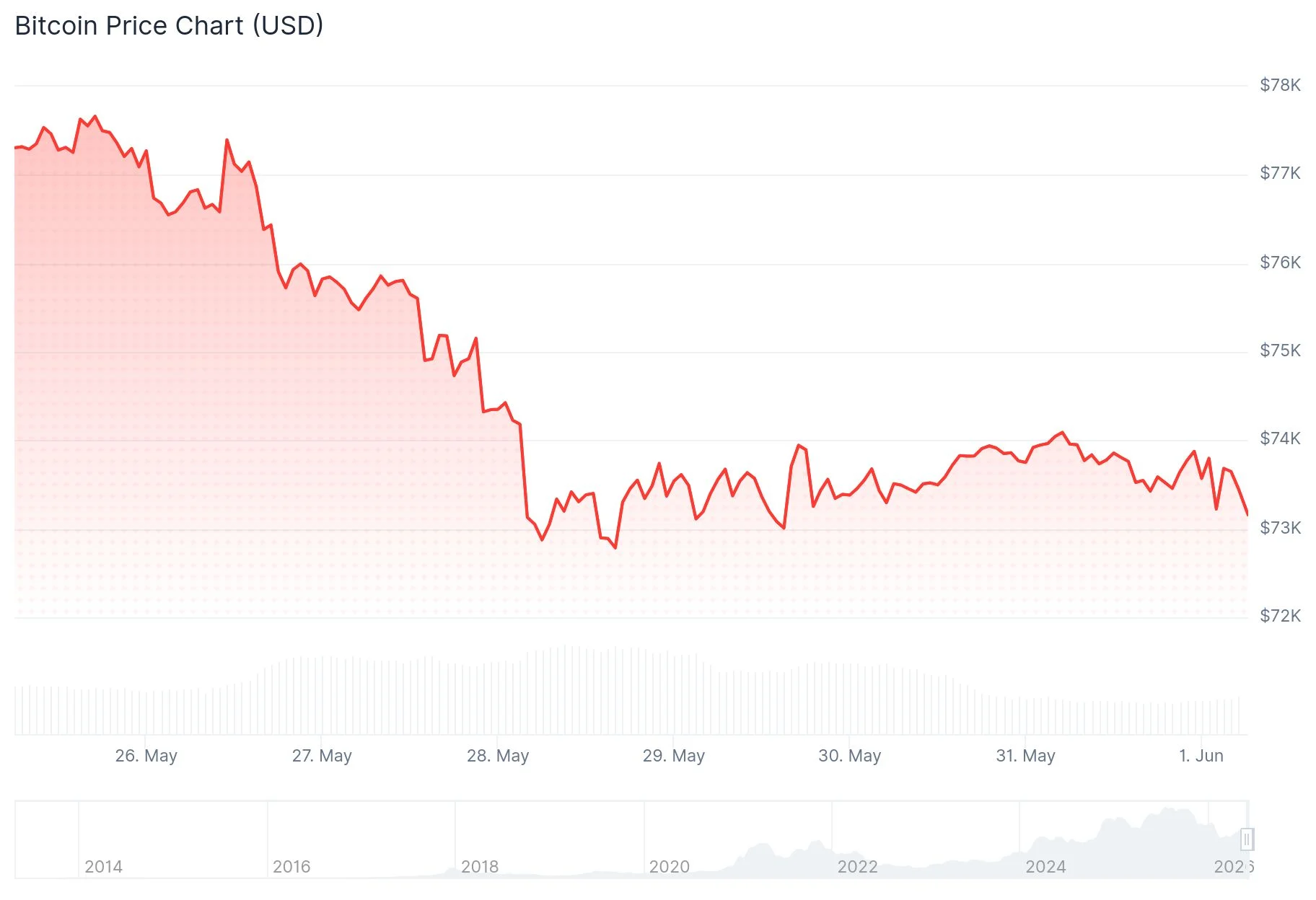
Bitcoin declined 4.6% during the seven-day period to settle at $73,397. Ethereum experienced an identical 4.6% retreat to $1,996. Solana contracted 3.7% to $81.89, with Tron posting matching losses of 3.7%. Dogecoin edged down 1.6%.
Energy Markets Rally as Iranian Negotiations Falter
Oil prices advanced as diplomatic initiatives to restore Strait of Hormuz operations yielded minimal results. Brent crude pushed above the $93 per barrel threshold. West Texas Intermediate increased 1.8% to approach $89 per barrel during Sunday trading.
President Trump indicated he would convene with advisers to reach a “final determination” regarding Iranian strategy, simultaneously demanding immediate restoration of Strait of Hormuz shipping lanes. Notwithstanding the weekend rebound, WTI registered its steepest monthly contraction since April 2025, dropping nearly 17% throughout May.
The diplomatic impasse with Iran and corresponding energy price increases eliminated a prospective macroeconomic catalyst that cryptocurrency markets had been anticipating.
The singular positive development within digital assets came from Hyperliquid’s HYPE token. It surged 18.7% during the seven-day stretch to reach $73.17. The American spot HYPE ETF, which commenced trading on May 12, has registered capital inflows throughout every trading session since inception, driving aggregate net assets beyond $122 million by Friday’s close.
Market participants will now shift focus toward Friday’s nonfarm payrolls release, which may influence Federal Reserve monetary policy expectations for upcoming months.
Get 3 Free Stock Ebooks
Discover top-performing stocks in AI, Crypto, and Technology with expert analysis.
- Top 10 AI Stocks - Leading AI companies
- Top 10 Crypto Stocks - Blockchain leaders
- Top 10 Tech Stocks - Tech giants



