



TLDR
Maritime equity prices advanced following Strait of Hormuz passage interruptions
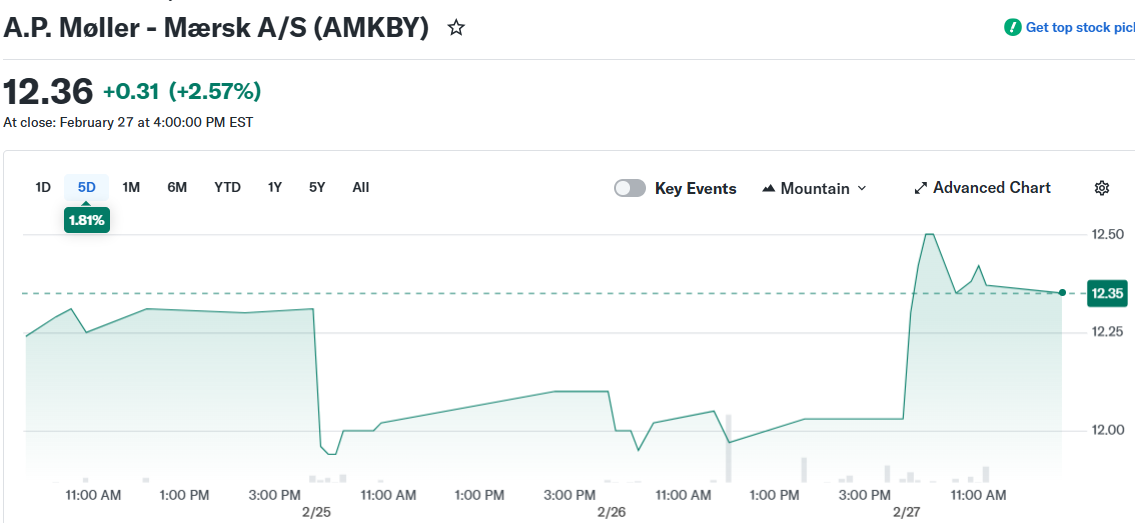
Maersk and Hapag-Lloyd equity values increased over 4%
Leading ocean carriers halted service lanes through the waterway
Crude oil and natural gas markets rallied with shipping equities
Industry experts suggest effects will primarily influence regional container traffic
Maritime sector equities rallied Monday following disruptions near the Strait of Hormuz that compelled leading ocean carriers to redirect operations. Stock prices for container line operators and tanker companies advanced as market participants responded to constrained vessel capacity and climbing energy costs.
European maritime firms paced early session advances as route modification announcements proliferated throughout the industry. Major container shipping stocks appreciated more than 4% during opening trades as markets absorbed supply chain adjustments.
Multiple shipping operators paused vessel movements through the Strait of Hormuz citing security considerations. Companies confirmed they were redirecting ships from the waterway pending further developments.
Maersk, Hapag-Lloyd, and CMA CGM initiated service rerouting via African waters to bypass compromised corridors. These operational modifications decreased accessible capacity along certain international shipping arteries.
Energy commodity markets similarly posted gains following the interruptions. Brent crude and U.S. oil futures advanced beyond 7%, while natural gas values climbed more than 4%.

Maritime Corridors Reconfigured Across Critical Passages
Ocean carriers modified routing patterns amid mounting regional tensions and documented incidents in the area. The Strait of Hormuz serves as a critical passage for worldwide energy transport and area commerce.
Certain operators additionally redirected ships from the Suez Canal and adjacent waterways. Route modification activity constrained vessel availability across multiple international corridors.
Financial analysts indicated constrained capacity might bolster ocean freight pricing near-term. Logistics firms and tanker enterprises similarly registered equity appreciation as transportation stocks climbed.
Scandinavian tanker operators and automotive carriers recorded advances together with container line stocks. The wider transportation sector mirrored rising energy valuations and shipping requirements.
Dubai’s Jebel Ali terminal processed approximately 15.5 million TEU during 2024, accounting for roughly 8% of worldwide container throughput. Despite its substantial scale, the facility operates outside the primary Asia-Europe container trade lane.
Industry Experts Evaluate Market Ramifications
Market analysts indicated Hormuz interruptions carry significance but remain predominantly regional for containerized cargo movements. In contrast, Suez Canal disturbances typically generate broader worldwide consequences for container infrastructure.
Prior to the Red Sea disruption, the Suez Canal accommodated approximately 22% of worldwide container movement. Present interruptions near Hormuz are anticipated to influence area shipping configurations more immediately.
Several financial institutions retained measured perspectives regarding container shipping market fundamentals. Excess vessel capacity in the segment continues pressuring ocean freight rate projections despite temporary interruptions.
Projections indicate container fleet expansion may exceed cargo demand through 2026. Industry analysts noted capacity increases remain a primary consideration affecting pricing trajectories.
Maritime and logistics sector equities sustained gains in morning trading as carriers proceeded with vessel redirection and tracked developments surrounding the Strait of Hormuz. Markets continue observing whether ship traffic returns to customary patterns throughout the region.
Get 3 Free Stock Ebooks
Discover top-performing stocks in AI, Crypto, and Technology with expert analysis.
- Top 10 AI Stocks - Leading AI companies
- Top 10 Crypto Stocks - Blockchain leaders
- Top 10 Tech Stocks - Tech giants



