


Key Takeaways
- Jake Claver believes XRP can advance through existing regulatory frameworks rather than waiting for the CLARITY Act.
- Current guidance from U.S. agencies provides sufficient structure for crypto market development, according to Claver.
- The SEC v. Ripple case resolution has strengthened investor confidence in XRP’s market position.
- Institutional adoption and interest in XRP Ledger technology continue expanding toward 2026.
- XRP’s trajectory hinges on practical implementation, market adoption, and infrastructure development over legislative changes.
Jake Claver expressed his view that XRP can move forward without waiting for new legislative approval. According to Claver, the regulatory environment already provides adequate support for cryptocurrency market development. He shared his perspective during a conversation on the Good Evening Crypto podcast.
Regulatory Framework Already Supports XRP Growth
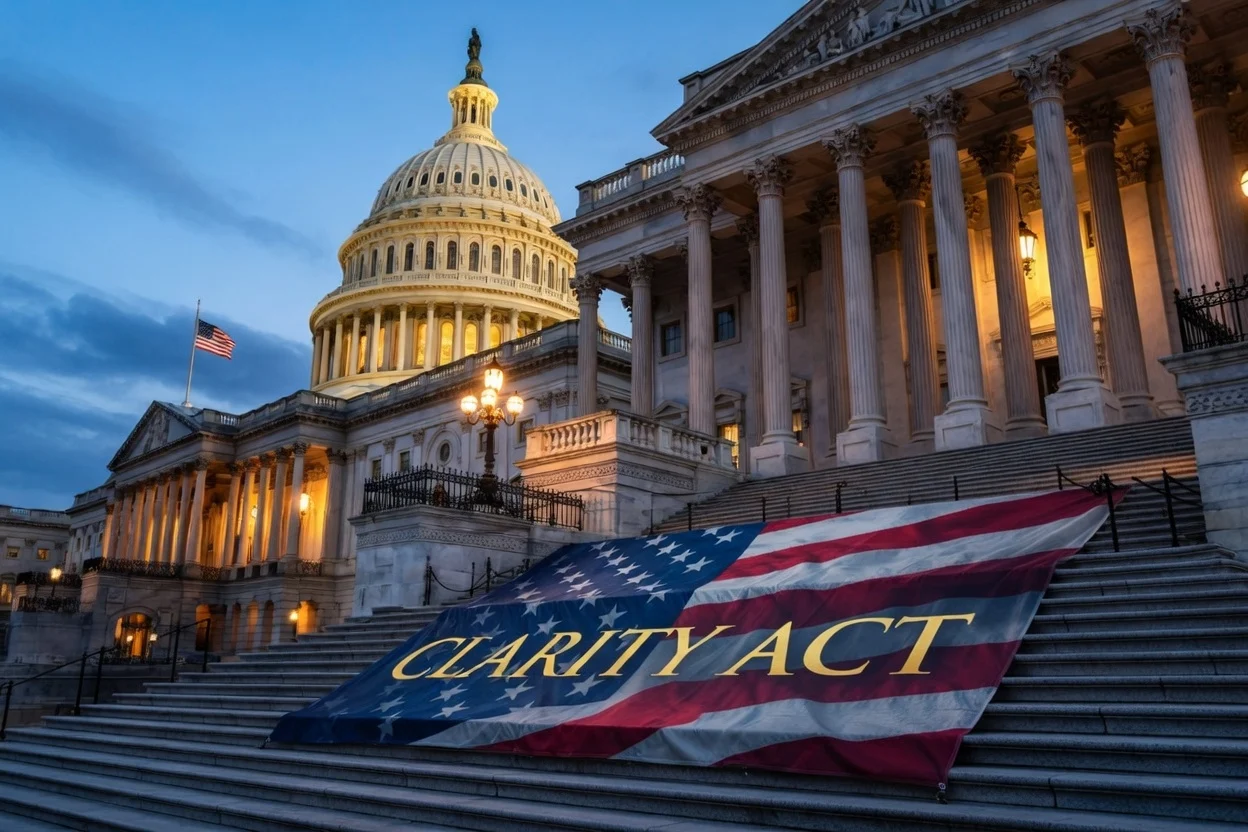
Claver responded to speculation that the CLARITY Act represents a critical catalyst for XRP’s future price movement. He dismissed this notion, explaining that regulatory agencies have already established workable guidelines through their ongoing activities. “Regulatory clarity is already emerging through agency action,” Claver noted, emphasizing that practical execution holds greater importance than additional legislation.
He referenced frameworks connected to the GENIUS Act along with recent regulatory oversight initiatives. According to Claver, both the SEC and CFTC actively define digital asset policy through official communications and enforcement decisions. These developments diminish the necessity for Congress to enact the CLARITY Act, he argued.
Claver observed that XRP trades around $1.40 with a 1.63% increase over 24 hours. He noted a 6.63% monthly gain despite a 36% yearly decline. Market performance relies more heavily on real-world application and user adoption than on legislative developments, he contended.
According to Claver, regulatory bodies already categorize XRP within existing commodity and securities structures. These agencies continue refining digital asset classifications through official guidance documents. He urged market stakeholders to prioritize compliance readiness and infrastructure preparation.

Post-Litigation Confidence and Growing Institutional Interest
Claver highlighted how the conclusion of SEC v. Ripple strengthened market confidence surrounding XRP. The removal of prolonged legal ambiguity opened pathways for fresh capital allocation into the asset. “With that case resolved, investors are reassessing XRP’s role in the market,” Claver observed.
He pointed to heightened participation from Bitcoin-focused investors attending the Bitcoin Conference 2026. Ripple significantly increased its conference footprint while connecting with diverse cryptocurrency market participants. Conference attendees demonstrated growing receptiveness toward XRP and its broader ecosystem, according to his observations.
Claver referenced statements from Ripple’s leadership team regarding institutional expansion plans for 2026. Representatives from major financial institutions including Nasdaq and the New York Stock Exchange participated in discussions about tokenization and distributed ledger integration. These conversations encompassed payment infrastructure and settlement mechanism innovation.
He emphasized that XRP Ledger development continues advancing alongside institutional partnership efforts. Financial institutions actively investigate blockchain applications for international payment processing and digital asset tokenization. Claver concluded that XRP’s present momentum stems from regulatory framework maturation, institutional engagement, and continuous infrastructure enhancement.
Get 3 Free Stock Ebooks
Discover top-performing stocks in AI, Crypto, and Technology with expert analysis.
- Top 10 AI Stocks - Leading AI companies
- Top 10 Crypto Stocks - Blockchain leaders
- Top 10 Tech Stocks - Tech giants



