



Key Takeaways
- Bullion recovered from session lows following news of diplomatic negotiations between the US and Iran
- Washington, Tehran, and regional intermediaries are exploring a 45-day pause in hostilities
- President Trump established a Tuesday 8 p.m. ET ultimatum for Iran regarding Strait of Hormuz access
- Robust employment figures diminished market expectations for Federal Reserve rate reductions, weighing on gold
- Bullion has declined approximately 12% since hostilities escalated in late February
Precious metals markets found stability on Monday following initial declines, buoyed by emerging reports that Washington, Tehran, and regional intermediaries are working toward a 45-day ceasefire arrangement.
Spot bullion was trading near $4,655 per ounce at last check, recovering from an earlier session drop of as much as 1.6%. Futures contracts advanced 0.6% to reach $4,709 per ounce.
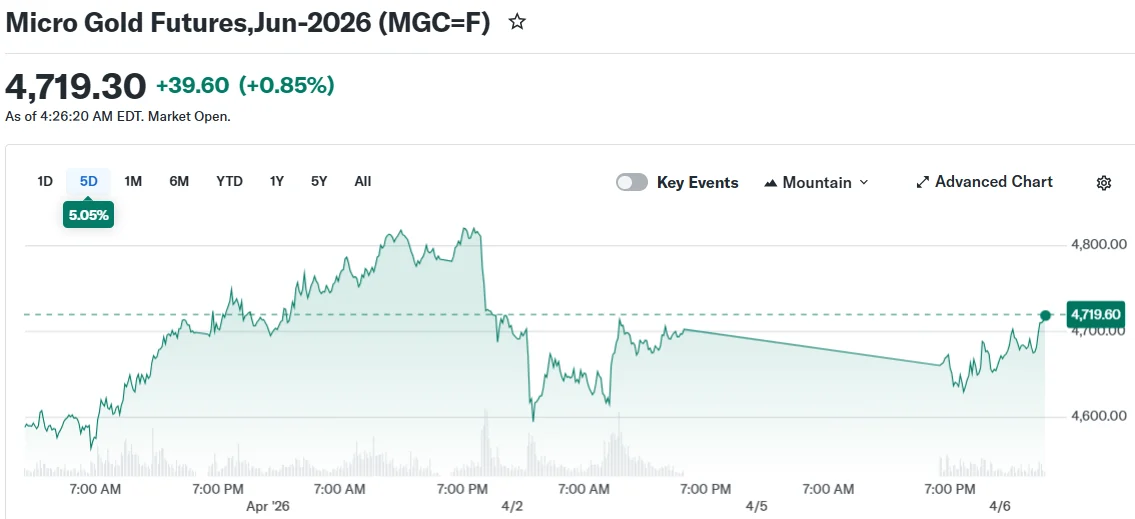
Axios broke the ceasefire story, citing multiple individuals with direct knowledge of the ongoing discussions. Such an agreement could potentially restore access to the Strait of Hormuz, the critical maritime passage responsible for transporting approximately 20% of the world’s oil supply.
The strategic waterway has remained effectively blocked since the Iran conflict erupted in late February. This disruption has catapulted crude prices upward, with oil more than doubling in value year-to-date.
During the weekend, President Trump issued a warning via Truth Social, threatening strikes against Iranian civilian infrastructure—including electrical facilities and transportation networks—should tanker passage fail to resume by Tuesday evening.

Trump had initially imposed a 10-day ultimatum on March 26 for Iran to reopen the Hormuz passage. That deadline was scheduled to lapse Monday evening.
While diplomatic developments provided some relief, precious metals continued facing headwinds from additional market forces.
Robust Employment Numbers Challenge Rate Reduction Outlook
March nonfarm payroll figures exceeded analyst projections, registering the strongest reading since late 2024. This employment strength diminished expectations that the Federal Reserve would pursue aggressive interest rate cuts.
Gold traditionally thrives in low-rate environments, as the non-yielding asset becomes more attractive relative to interest-bearing investments. With monetary easing appearing less imminent, the precious metal confronts a more challenging backdrop.
Economic analysts are projecting a 1% monthly surge in the consumer price index for March, representing the largest single-month advance since 2022. Elevated energy costs stemming from the Hormuz blockade are a primary contributor to this anticipated inflation spike.
Bullion has surrendered roughly 12% of its value since the conflict commenced, as inflation anxieties pushed back the timeline for potential rate cuts.
Turbulent Trading Since Conflict Escalation
The yellow metal rallied more than 4% during the previous week before surrendering portions of those gains Thursday, snapping a four-session winning streak.
“Market participants are reducing exposure to preserve capital,” observed Robert Gottlieb, formerly a precious metals trader with JPMorgan Chase.
Charu Chanana, chief investment strategist at Saxo Markets, highlighted that the 200-day moving average provided technical support, suggesting the month-end bounce might signal waning selling pressure.
However, she cautioned that the outlook remains “not yet fully clear,” with inflationary pressures and broader market volatility continuing to cloud gold’s near-term trajectory.
Silver retreated 1.1% to $72.19 per ounce. Platinum posted losses, while palladium advanced. The US Dollar Index traded largely unchanged during the session.
Spot gold was quoted at $4,682 per ounce during early US trading hours Monday.
Get 3 Free Stock Ebooks
Discover top-performing stocks in AI, Crypto, and Technology with expert analysis.
- Top 10 AI Stocks - Leading AI companies
- Top 10 Crypto Stocks - Blockchain leaders
- Top 10 Tech Stocks - Tech giants



