



Key Takeaways
- Precious metal declined approximately 1–1.5% Thursday, settling near $4,441–$4,476 per ounce
- Contradictory statements from Washington and Tehran regarding diplomatic negotiations are creating market volatility
- Crude oil has surged past the $100 threshold as the Strait of Hormuz remains largely inaccessible
- Traders now assign virtually no probability to a Federal Reserve interest rate reduction in 2024, with 38% anticipating a hike before year’s end
- The appreciating U.S. dollar is dampening gold demand by increasing costs for international purchasers
Bullion markets experienced a downturn Thursday following a brief two-day rally, as investors digested conflicting narratives from U.S. and Iranian officials regarding the status of potential peace negotiations.
Spot gold retreated approximately 1.5% to settle near $4,441 per ounce. Futures contracts for U.S. gold declined roughly 2.5% to reach $4,457.
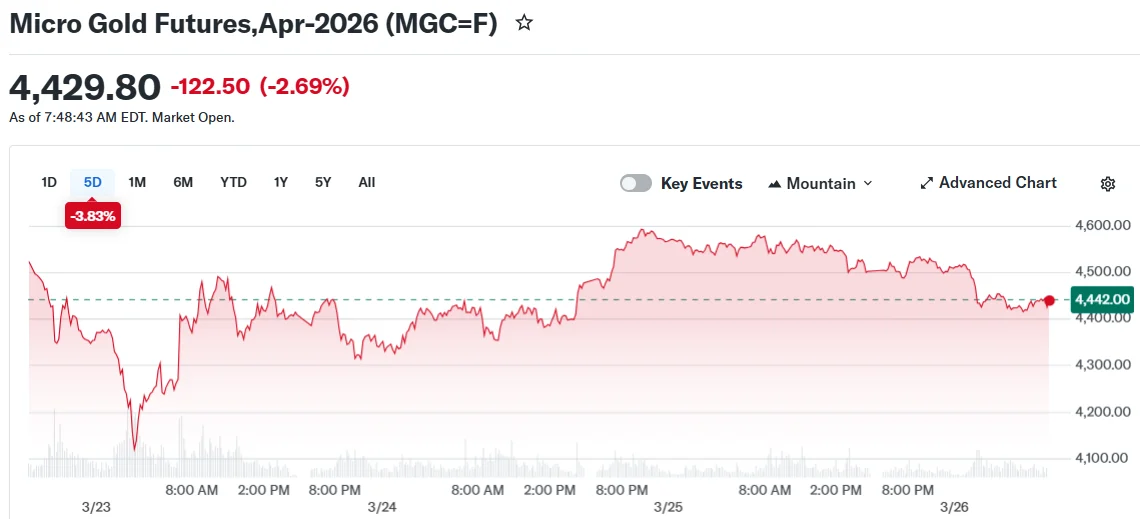
The precious metal had recovered above the $4,500 threshold earlier in the week following a steep pullback, buoyed by dollar weakness and tentative optimism surrounding potential diplomatic breakthroughs.
President Donald Trump characterized Iran as desperate for an agreement, asserting that the nation had been “obliterated” in military confrontations. He further described Iranian negotiators’ behavior as “very different and strange.”
Iran’s foreign ministry countered these claims, confirming the country was examining a U.S. proposal while emphasizing it had no plans to engage in official negotiations aimed at ending hostilities.
Market observers note that gold has entered a consolidation phase. “For the immediate future, gold is confined within an established trading range,” explained Max Baecker, President of American Hartford Gold. “Breaking convincingly above the mid-$4,500 level is necessary to change market sentiment.”
Kyle Rodda from Capital.com indicated that short-term price action will be headline-dependent. “The most significant movements are likely to occur early next week when there’s greater clarity on whether the U.S. will initiate a ground offensive in Iran.”
Crude Exceeds $100 as Key Shipping Lane Remains Blocked
Brent crude rose above the $100 per barrel mark Thursday. The Strait of Hormuz, a critical chokepoint transporting approximately 20% of global oil and liquefied natural gas supplies, has been essentially impassable since U.S.-Israeli military operations against Iran commenced.

Crude had peaked near $120 earlier this month before moderating slightly. Current levels remain substantially elevated compared to pre-conflict pricing.
Escalating oil costs drive up logistics and production expenses, contributing to inflationary pressures. This development reduces the likelihood of central bank monetary easing, which typically weighs on gold since the asset generates no income.
Interest Rate Cut Prospects Evaporate
Prior to the outbreak of conflict, market participants had anticipated at least two Federal Reserve rate reductions during the current year. This consensus has undergone a complete reversal.
Data from CME Group’s FedWatch tool indicates virtually zero probability of a rate cut materializing in 2024. Approximately 38% of market participants are now positioning for a rate increase by December. Roughly 93% anticipate the Fed will maintain current rates at its April policy meeting.
The U.S. dollar has also gained strength as capital flows into haven assets. Dollar appreciation makes gold costlier for non-U.S. buyers, typically suppressing international demand.
Trump reiterated Thursday morning that Iran should pursue diplomatic arrangements with Washington and repeated assertions that Tehran’s military capabilities have been eliminated.
Get 3 Free Stock Ebooks
Discover top-performing stocks in AI, Crypto, and Technology with expert analysis.
- Top 10 AI Stocks - Leading AI companies
- Top 10 Crypto Stocks - Blockchain leaders
- Top 10 Tech Stocks - Tech giants



