


TLDR
- Precious metal declined more than 1% Monday following renewed U.S.-Iran hostilities and dollar appreciation
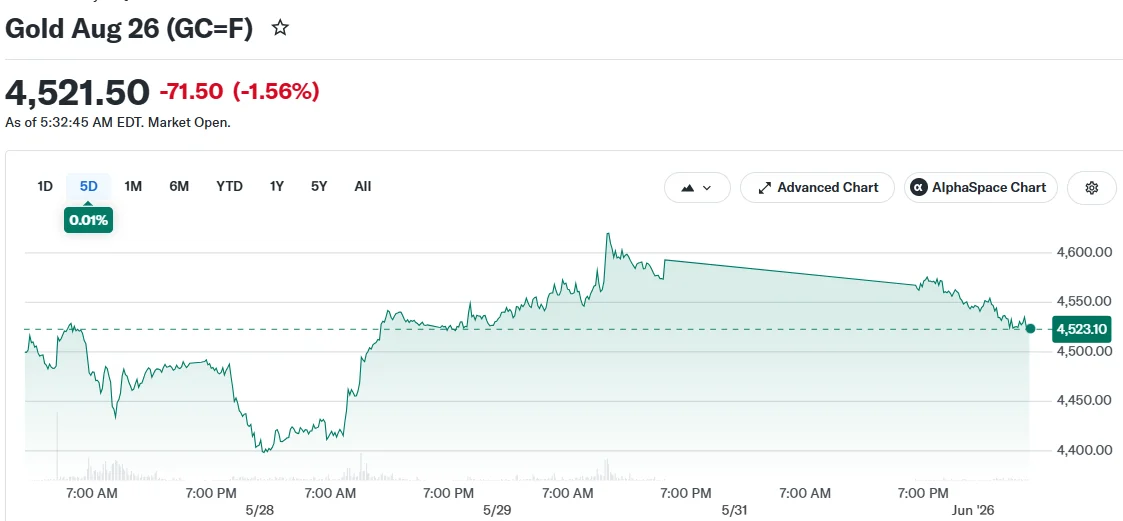
- Benchmark gold retreated 0.8% to $4,501.54/oz while U.S. futures slipped 1.3% to $4,532.22
- Crude oil jumped over 3%, fueling concerns about inflation and potential Fed rate increases
- Dollar index climbed 0.1%, reducing gold’s appeal for international purchasers
- Market participants await Federal Reserve commentary and employment figures for monetary policy clues
The precious metal experienced significant selling pressure Monday following weekend military confrontations between the United States and Iran that cast doubt on potential ceasefire negotiations.
Benchmark gold retreated 0.8% to $4,501.54 per ounce during morning trade. U.S. Gold Futures slipped 1.3% to $4,532.22.
Pentagon officials confirmed strikes against Iranian air-defense installations and drone facilities following Tehran’s alleged downing of an American unmanned aircraft. Iran responded by launching attacks on a military installation hosting U.S. personnel. Regional defense systems successfully intercepted incoming missiles and drones throughout the confrontations.
Gold concluded the previous week modestly higher after diplomatic channels indicated both nations were exploring ceasefire prolongation and the potential restoration of maritime traffic through the strategically vital Strait of Hormuz.
Optimism evaporated following the weekend’s military actions. Critical sticking points remain unaddressed, and any eventual settlement requires authorization from President Donald Trump.

Energy Prices Surge, Complicating Fed Calculus
Oil prices advanced more than 3% Monday as military tensions reignited. The energy spike intensified worries about sustained elevated costs that could fuel inflationary pressures.
Persistent inflation might compel the Federal Reserve to adopt a more hawkish stance, potentially raising borrowing costs instead of implementing anticipated reductions. Prior to the conflict escalation, financial markets had priced in accommodative policy adjustments.
Elevated interest rates typically diminish gold’s attractiveness since the non-yielding asset becomes less competitive against income-generating alternatives. Investors often reallocate capital toward instruments offering returns when monetary policy tightens.
The dollar index appreciated 0.1% during Asian market hours. Greenback strength undermines gold’s competitiveness for international buyers, creating additional headwinds for pricing.
Saxo Bank strategists noted the market faces difficulty reconciling energy-driven inflationary forces against structural factors traditionally favoring gold, including central bank accumulation, sovereign debt anxieties, and global reserve diversification movements.
Industrial and Precious Metals Display Divergent Performance
Not all precious commodities experienced Monday’s selloff. Silver advanced 0.5% to $75.69 per ounce. Platinum climbed 1.1% to $1,940.95 per ounce.
Copper contracts on the London Metal Exchange gained 0.3% to $13,663.33 per ton. U.S. Copper Futures similarly increased 0.3% to $6.44 per pound.
Israel simultaneously expanded military operations deeper into southern Lebanese territory as confrontations with Iranian-supported Hezbollah forces escalated, compounding regional instability.
Market observers are closely monitoring forthcoming statements from Federal Reserve policymakers. Employment statistics scheduled for release could provide crucial insights regarding the central bank’s interest rate trajectory.
Gold touched a two-month nadir last week before staging a partial rebound. The metal’s immediate direction hinges largely on ceasefire negotiation progress and Federal Reserve messaging in coming sessions.
Get 3 Free Stock Ebooks
Discover top-performing stocks in AI, Crypto, and Technology with expert analysis.
- Top 10 AI Stocks - Leading AI companies
- Top 10 Crypto Stocks - Blockchain leaders
- Top 10 Tech Stocks - Tech giants



