


Key Takeaways
- Bullion prices fell 0.5–0.6% on Tuesday, hovering around $4,540–$4,544 per ounce
- Elevated Treasury yields and dollar strength are creating downward pressure on precious metals
- President Trump delayed planned military action against Iran following requests from Gulf nations for diplomatic efforts
- Bullion has declined approximately 14% since the onset of the Iran crisis
- Goldman Sachs continues to forecast gold reaching $5,400 per ounce by year-end
Precious metals retreated on Tuesday as investors assessed conflicting developments surrounding the US-Iran standoff. Spot gold decreased 0.6% to approximately $4,540 per ounce during morning trade. Meanwhile, gold futures contracts slipped 0.3% to settle at $4,543.62 per ounce.
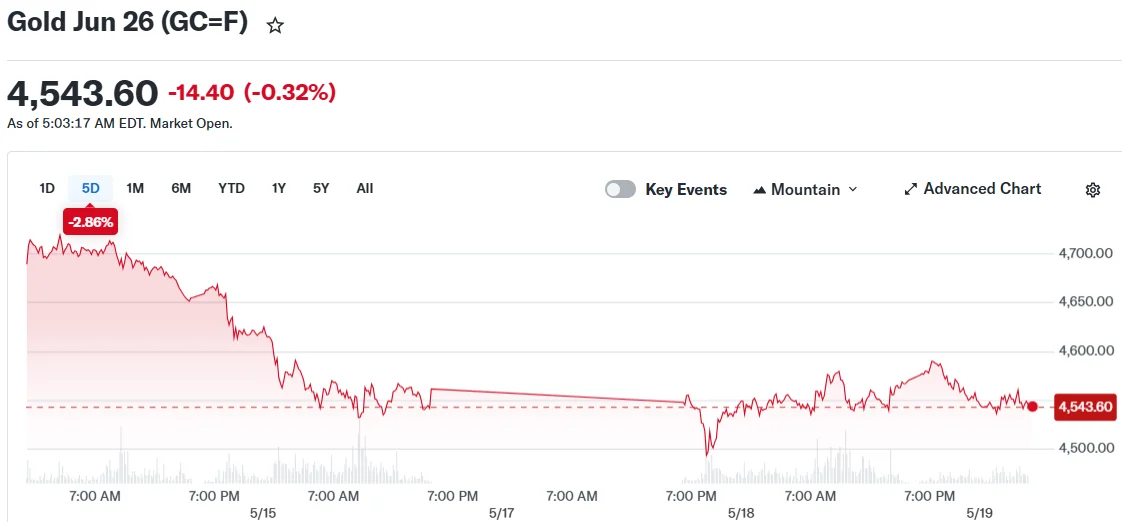
The pullback followed a modest Monday recovery when bargain hunters entered the market after bullion touched its lowest level in two-and-a-half months.
President Trump revealed Monday that he had greenlit additional military operations targeting Iran but opted to postpone them. Regional powers including Qatar, Saudi Arabia, and the United Arab Emirates requested additional time to explore peaceful solutions through diplomatic channels.
Market participants responded with measured caution to these developments. Although oil prices retreated following Trump’s statements, lingering doubts about achieving a permanent settlement maintained investor anxiety.
Interest Rate Environment Compounds Gold Weakness
Treasury yields hovered close to multi-year peaks on Tuesday. High yields diminish gold’s attractiveness since the metal generates no income for holders.

The US dollar climbed 0.2%, making bullion costlier for international buyers utilizing alternative currencies. These combined factors intensified selling pressure on the commodity.
International bond markets experienced significant selling activity in recent sessions. US 10-year yields decreased 0.6% Monday evening after Trump’s announcements, providing temporary market relief.
Japanese 10-year bond yields also retreated modestly from 29-year high levels. The bond market turbulence stemmed from inflation anxieties connected to the Iran military situation.
The ongoing conflict has created supply chain disruptions through the Strait of Hormuz, a critical passage for worldwide petroleum shipments. Despite Tuesday’s softening, oil prices remain elevated, sustaining inflation worries.
Bullion Down Nearly 14% Since Conflict Eruption
Gold has surrendered approximately 14% of its value since the Iran crisis commenced. The precious metal has oscillated within a constrained range recently as traders weigh inflation risks against potential interest rate reductions.
Vasu Menon, a strategist at Oversea-Chinese Banking Corp, indicated that Middle Eastern developments, crude oil valuations, and bond yields could continue applying short-term pressure on gold prices. However, he maintains that gold retains value as protection against worldwide uncertainties.
Goldman Sachs reaffirmed its $5,400 per ounce year-end price projection for gold. The financial institution pointed to anticipated robust central bank purchasing activity as justification for its optimistic outlook.
Silver experienced steeper losses on Tuesday, dropping 2.2% to $76.05 per ounce. Platinum and palladium similarly moved into negative territory.
President Trump has consistently alternated between threatening military intervention against Iran and stepping back, generating market volatility. Investors are monitoring closely for definitive indications regarding whether diplomatic efforts will prevail or hostilities will escalate.
Get 3 Free Stock Ebooks
Discover top-performing stocks in AI, Crypto, and Technology with expert analysis.
- Top 10 AI Stocks - Leading AI companies
- Top 10 Crypto Stocks - Blockchain leaders
- Top 10 Tech Stocks - Tech giants



