



TLDR
- The precious metal plunged approximately 5% on Tuesday before staging a 2% recovery on Wednesday as bargain hunters entered the market
- Dollar strength, climbing roughly 1.5% over the week, is limiting the yellow metal’s rebound potential
- Geopolitical tensions between the US and Iran are fueling safe-haven appetite while simultaneously elevating crude oil valuations
- Elevated crude prices are intensifying inflation concerns, dampening prospects for Federal Reserve monetary easing
- Market participants now assign 80% probability to more than one rate reduction in 2025, a decline from expectations of two cuts just days earlier
The precious metal experienced significant volatility this week, plummeting on Tuesday before staging a notable recovery during Wednesday’s trading session as market participants balanced geopolitical risk against currency headwinds.
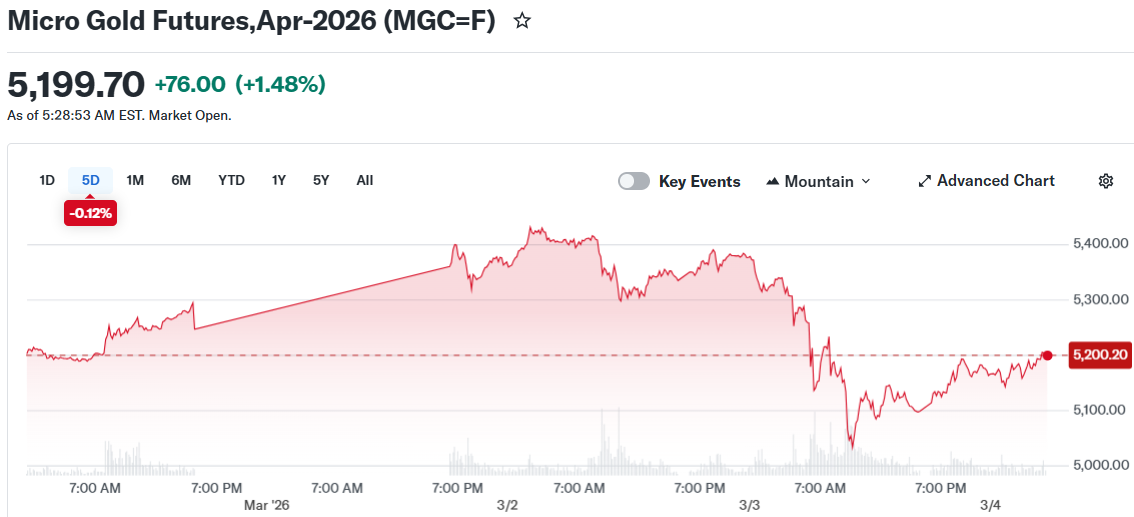
Spot gold advanced 1.6% to reach $5,171.89 per ounce during late morning European trading hours. This marked a substantial reversal from the previous session’s 4.5% decline, representing one of the most significant single-day retreats in recent trading history.
The yellow metal reached a record peak exceeding $5,595 per ounce in the final days of January. Year-to-date performance shows gains approaching 20%.
Tuesday’s market pressure originated from a substantial rally in the US Dollar Index, which surged approximately 1.5% across two trading sessions to touch six-week peaks. Dollar appreciation makes gold less attractive for international buyers holding alternative currencies.
Portfolio rebalancing also contributed to selling pressure, as certain market participants liquidated precious metal holdings to offset losses elsewhere in their investment positions.

Silver experienced an even more dramatic swing, declining over 8% Tuesday before rebounding 4.1% to $85.38 during Wednesday trading. Platinum witnessed a 10% drop followed by a 2.8% recovery to $2,148.50 per ounce.
Iran Conflict Drives Safe-Haven Demand
The military confrontation involving the US and Israel against Iran has entered its fifth day. According to Israel’s Kan News, Israeli forces conducted additional strikes on Tehran Tuesday and targeted a facility in Qom where religious leaders were reportedly convening to select a replacement for Supreme Leader Ayatollah Ali Khamenei. Iran’s semi-official Mehr news agency acknowledged the strike but maintained the structure was unoccupied during the attack.
The escalating military situation has created significant turbulence across global financial markets and continues to heighten investor anxiety. Concerns regarding expanded regional conflict are mounting as Tehran has issued warnings of retaliation following American military operations against Iranian-affiliated installations.
Maritime traffic through the strategically vital Strait of Hormuz, which facilitates approximately 20% of worldwide global oil and natural gas transportation, has decreased dramatically. President Trump announced the United States would furnish naval protection and insurance coverage for petroleum tankers navigating the critical waterway, though maritime industry representatives characterize the measure as an incomplete solution.
Rising Oil Prices Complicate Rate Cut Expectations
Escalating crude oil valuations are amplifying inflation forecasts. This development is reducing the likelihood that monetary authorities, including the Federal Reserve, will implement interest rate reductions in the near term.
Market pricing currently reflects 80% probability of more than one quarter-percentage-point Fed rate decrease this year. Just last Friday, financial markets had fully incorporated expectations for two rate cuts.
Elevated interest rate environments present challenges for gold investment since the commodity generates no yield.
According to CFTC data, institutional investors’ net long exposure in gold has decreased since late January to approach decade-low levels. Market analysts suggest this reduced positioning could establish a floor limiting further downside movement.
In China, official purchasing managers’ index readings indicated manufacturing sector contraction, while privately conducted surveys demonstrated above-forecast expansion, revealing contradictory indicators from the world’s second-largest economy.
Get 3 Free Stock Ebooks
Discover top-performing stocks in AI, Crypto, and Technology with expert analysis.
- Top 10 AI Stocks - Leading AI companies
- Top 10 Crypto Stocks - Blockchain leaders
- Top 10 Tech Stocks - Tech giants



