



Key Takeaways
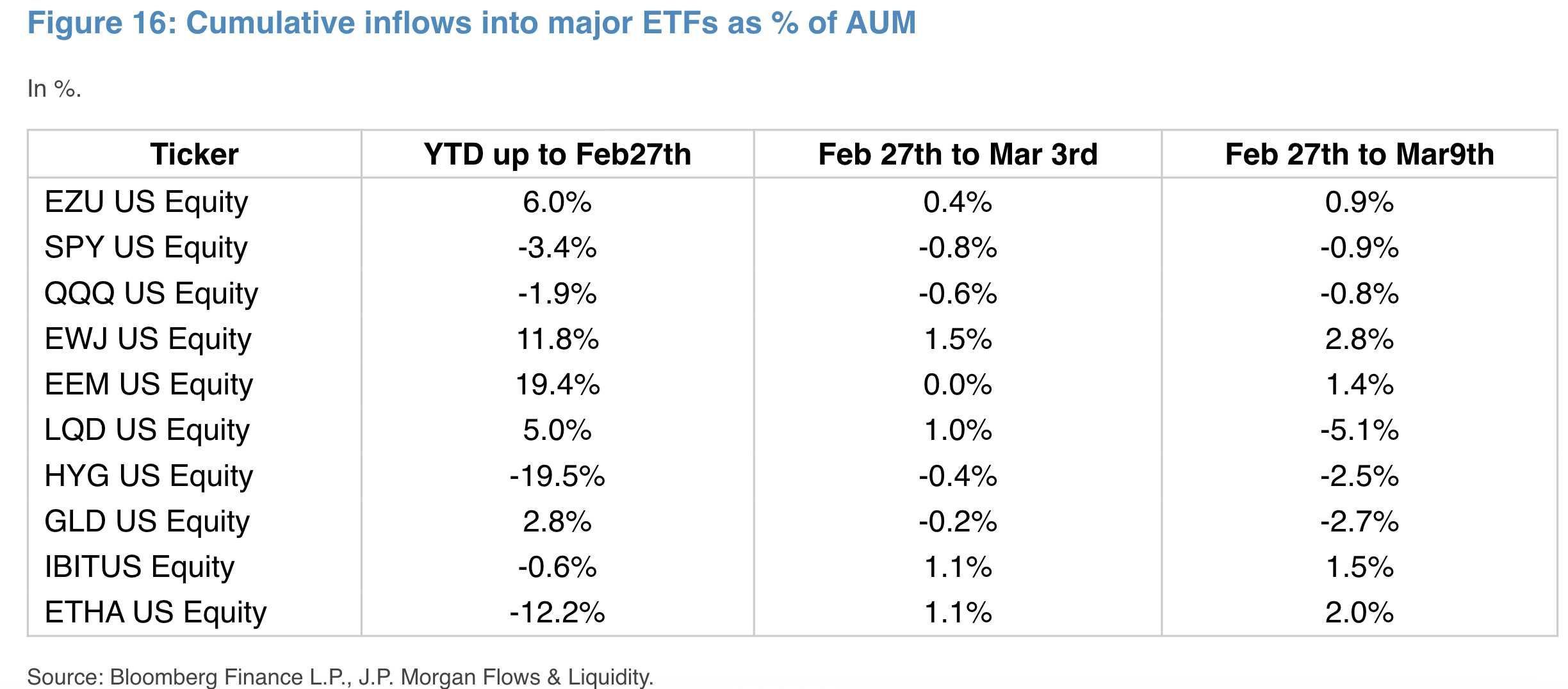
- Gold ETF outflows reached 2.7% of total assets while Bitcoin ETF inflows climbed 1.5% since Middle East conflict escalation
- GLD, the top gold ETF, experienced a $3 billion single-day exodus on March 6—the largest withdrawal in 24 months
- Bitcoin ETFs recorded $906 million in net deposits over 30 days ending March 11, a reversal from the previous month’s $1.9 billion withdrawal
- JPMorgan research indicates Bitcoin’s price fluctuations are stabilizing as institutional participation increases
- Historical patterns show Bitcoin gains an average 54% in the year following US midterm elections
A dramatic capital migration has unfolded since tensions with Iran intensified late last month, with investors abandoning gold-focused funds in favor of Bitcoin investment vehicles at rates that have caught Wall Street analysts off guard.
SPDR Gold Shares (GLD), the market’s leading physical gold ETF, has experienced withdrawals totaling approximately 2.7% of its managed assets. Simultaneously, BlackRock’s iShares Bitcoin Trust (IBIT), the dominant spot Bitcoin ETF, has registered deposits equivalent to roughly 1.5% of its asset base during the identical timeframe. These figures originate from JPMorgan research spearheaded by managing director Nikolaos Panigirtzoglou.
The March 6 trading session saw GLD suffer a staggering $3 billion outflow in just one day. This withdrawal dwarfs any comparable single-day exit recorded across the preceding 24-month window by over 200%, as documented by The Kobeissi Letter.
Bitcoin ETFs presented a contrasting narrative. Net inflow metrics for the 30-day period ending March 11 reached $906 million, a stark improvement from the $1.9 billion in outflows measured just one month prior. Bitcoin ETF holdings measured in native cryptocurrency units also demonstrated recovery, climbing to a positive balance of 12,909 BTC following a previous period that showed a deficit of 34,197 BTC.
This asset class divergence effectively erased the year-to-date lead that gold ETFs maintained over Bitcoin ETFs before the Iran situation intensified.

Wall Street’s Positioning Shows Dramatic Reversal
JPMorgan’s research team observed that the timespan from October through early 2026 featured capital rotation away from Bitcoin toward gold, especially pronounced among individual investors. Throughout this interval, IBIT registered withdrawals while GLD captured substantial deposits.
However, the recent transformation extends well beyond simple ETF movement patterns. Short positions in IBIT expanded during recent months while short interest targeting GLD contracted. Researchers interpreted this as evidence that hedge funds and institutional market participants diminished their Bitcoin holdings while favoring gold during that earlier phase.
The put-to-call ratio for IBIT options also climbed above GLD’s equivalent metric and maintained that elevation since November, representing the first extended duration where Bitcoin ETF derivatives exhibited stronger appetite for downside hedging compared to gold ETF options.
Despite the previous period of hesitation, Bitcoin ETFs continue to surpass gold ETFs in aggregate cumulative deposits since 2024. IBIT’s total inflows from inception approximately double those recorded by GLD across the matching period.
Bitcoin Price Swings Show Stabilization Signs
JPMorgan’s analytical team also highlighted that Bitcoin’s volatility characteristics are exhibiting compression signals. They credit this phenomenon to enhanced institutional participation and strengthening market depth.
MN Capital founder and analyst Michaël van de Poppe identified a bullish divergence pattern in the Bitcoin-to-gold ratio when examining the relative strength index on daily timeframes. The ratio recently touched a support zone near the 12-13 level, an area that previously functioned as resistance during 2017 before transitioning to support throughout 2022 and 2023.
Implied volatility derived from GLD options has climbed more steeply than IBIT equivalents in recent months, indicating market participants anticipated more pronounced price movements in gold.
Binance Research characterized the present market conditions as presenting “opportunity within risk” for Bitcoin, observing that BTC has tracked macro-oriented assets including oil and US equities since the Iran conflict commenced.
Bitcoin ETF transaction volume from US-based spot funds has expanded lately. Nevertheless, American spot ETFs still represent merely 9% of aggregate Bitcoin spot trading volume, substantially below the 30-40% ETF proportion observed in US stock markets.
Historical analysis reveals that the 12-month periods following US midterm elections have never yielded negative returns for the S&P 500 since 1939, producing average gains of 19%. Bitcoin has delivered an average 54% advance across all three post-midterm year periods in its trading history.
JPMorgan analysts confirmed their long-range Bitcoin valuation target of $266,000, derived from a volatility-normalized comparison framework against gold.
Get 3 Free Stock Ebooks
Discover top-performing stocks in AI, Crypto, and Technology with expert analysis.
- Top 10 AI Stocks - Leading AI companies
- Top 10 Crypto Stocks - Blockchain leaders
- Top 10 Tech Stocks - Tech giants



