


Key Takeaways
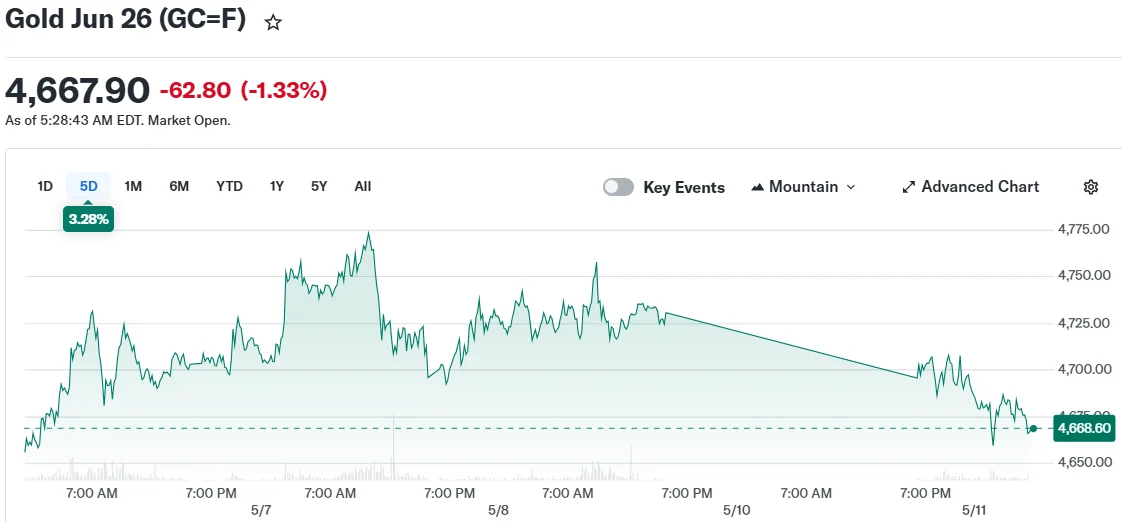
- The precious metal declined 1% to approximately $4,669 per ounce during Monday’s Asian session
- President Trump dismissed Iran’s recent peace offer, labeling it “totally unacceptable”
- Crude oil prices jumped nearly 5% with the Strait of Hormuz still blocked
- An appreciating U.S. dollar and elevated interest rate projections weighed on the yellow metal
- Trump plans to meet with Chinese President Xi Jinping this week for discussions on Iran, commerce, and energy matters
The yellow metal retreated approximately 1% during Monday’s Asian trading hours, surrendering some of the previous week’s gains that exceeded 2%. The decline followed President Donald Trump’s rejection of Tehran’s most recent response to Washington’s peace initiative.
Trump characterized Iran’s counteroffer as “totally unacceptable.” According to reporting from the Wall Street Journal, Tehran declined to dismantle its nuclear infrastructure or halt uranium enrichment activities for two decades.
Iran’s proposal included a phased reopening of the Strait of Hormuz and termination of hostilities. The nation also consented to diluting portions of its highly enriched uranium while transferring the remainder to a third-party nation. However, these concessions proved insufficient for the White House.
Spot gold declined to $4,669.82 per ounce in early Monday trading. American gold futures similarly retreated, slipping to $4,678.31.
The Strait of Hormuz continues to be impassable. This critical waterway represents one of the planet’s most vital crude oil transportation corridors. Its ongoing blockage propelled crude prices upward by almost 5% in early market activity.

The Connection Between Oil Rallies and Gold Weakness
Escalating oil prices amplify broader inflationary pressures. When inflation appears poised to remain elevated, monetary authorities typically maintain higher borrowing costs.
This dynamic hurts gold’s appeal. Since the precious metal generates no yield, it loses attractiveness when rates remain elevated and market participants can secure better returns from alternative investments.
MUFG’s Soojin Kim noted that markets are currently pricing in higher interest rates to address inflation risks connected to surging energy costs. This development is exerting downward pressure on the precious metal.
Robust American employment figures released last week intensified this pressure. The payroll report exceeded forecasts, reinforcing expectations that the Federal Reserve will maintain restrictive monetary policy for an extended period.
The U.S. Dollar Index climbed 0.2% during Asian trading. A strengthening greenback also pressures gold downward, as it increases the metal’s cost for international buyers using alternative currencies.
Looking Forward
Market participants are now focusing on forthcoming U.S. inflation reports. Any unexpected readings in these figures could alter Federal Reserve policy expectations.
Trump will travel to China later this week for discussions with President Xi Jinping. The agenda encompasses Iran, trade relations, and worldwide energy security concerns.
Silver advanced 0.2% to $80.51 per ounce. Platinum decreased 1.4% to $2,030.04 per ounce.
Copper displayed mixed performance. London benchmark copper futures climbed 0.3% to $13,608.33 per ton, while American copper futures advanced 0.4% to $6.32 per pound.
Gold had rallied last week on expectations of a U.S.-Iran diplomatic breakthrough. Those expectations have now dissipated, but inflation concerns and interest rate projections have emerged as the dominant factors driving the metal lower.
Get 3 Free Stock Ebooks
Discover top-performing stocks in AI, Crypto, and Technology with expert analysis.
- Top 10 AI Stocks - Leading AI companies
- Top 10 Crypto Stocks - Blockchain leaders
- Top 10 Tech Stocks - Tech giants



