



TLDR
- Gold futures declined 0.4%, settling at $4,666.70 per troy ounce amid geopolitical uncertainty
- President Trump issued an 8 p.m. ET Tuesday ultimatum to Iran regarding Strait of Hormuz reopening
- Approximately one-fifth of the world’s oil supply transits through the strategic waterway
- People’s Bank of China extended its gold purchasing streak to 17 consecutive months, now holding 74.38 million troy ounces
- Dollar index stands at 100.03, climbing approximately 0.8% monthly, weighing on gold valuations
Gold markets displayed divergent price action on Tuesday across different trading venues. New York futures contracts retreated 0.4%, landing at $4,666.70 per troy ounce, whereas spot gold climbed 0.8% to reach $4,685.54 per ounce during early trading hours. Meanwhile, June delivery gold futures advanced 0.6%, touching $4,710.84 per ounce.
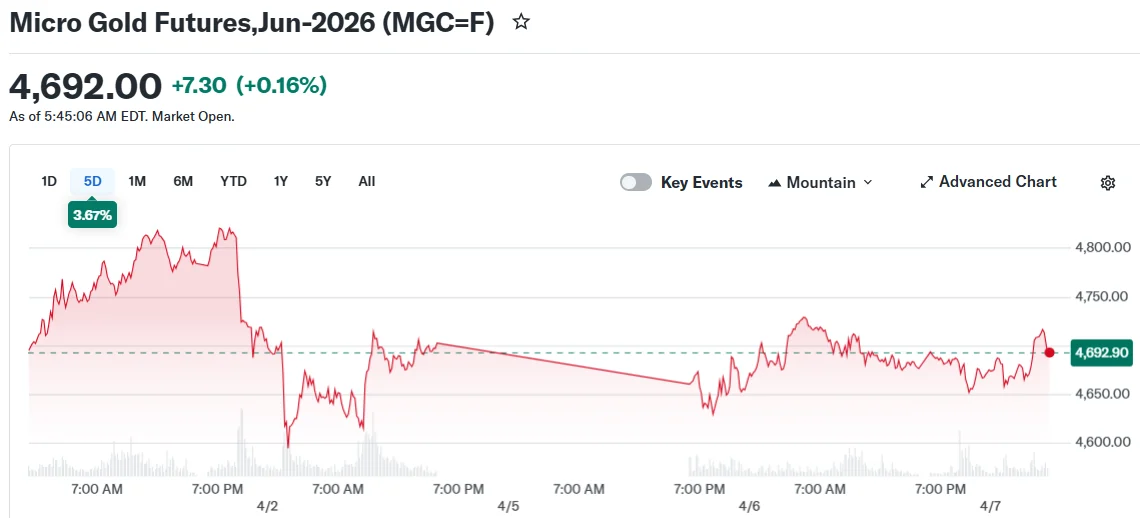
The contradictory market movements unfold as market participants monitor President Donald Trump’s ultimatum directed at Iran concerning the Strait of Hormuz. The president established an 8 p.m. ET Tuesday deadline for Iran to reach an agreement or confront military action targeting its energy sector.
Trump declared intentions to demolish “every bridge” and “power plant” throughout Iran should the deadline expire without resolution. He further cautioned that Iran would require “100 years to rebuild” following potential U.S. military operations.
The Strait of Hormuz represents a critical artery for global energy transport. Roughly 20% of worldwide petroleum flows through this strategic passage located along Iran’s southern coastline.
Tehran has requested a comprehensive agreement encompassing sanctions removal, security assurances, and financial compensation for incurred damages. Intelligence suggests the current administration remains unlikely to accommodate these conditions.

Trump acknowledged diplomatic possibilities remain viable, stating conflict resolution could still materialize. The confrontation originated from coordinated U.S. and Israeli military operations against Iran during late February.
Crude Markets and Currency Fluctuations Create Headwinds
Brent crude maintained positions above $110 per barrel as the deadline neared. Elevated oil prices amplify inflation concerns, potentially compelling central banks to sustain higher interest rate policies extended periods.
This dynamic significantly impacts gold. Since the precious metal generates no yield, it typically loses attractiveness when rate expectations remain elevated. ANZ analysts observed Trump’s warnings “impacted risk appetite” while boosting the U.S. dollar alongside Treasury yields.
The U.S. dollar index registered 100.03, despite experiencing a 0.2% Tuesday decline. Throughout the preceding month, the greenback appreciated roughly 0.8%. During this identical timeframe, spot gold plummeted over 8%.
Dollar appreciation increases gold costs for international buyers utilizing alternative currencies, potentially dampening global demand.
Chinese Central Bank Maintains Gold Accumulation
Support for gold emerged from Chinese purchasing activity. The People’s Bank of China expanded its gold reserves for an unprecedented 17th consecutive month. Total holdings reached 74.38 million fine troy ounces by March’s conclusion, advancing from February’s 74.22 million.
Persistent central bank acquisitions represent a reliable demand foundation for precious metals.
As Tuesday morning progressed, markets remained tense anticipating the 8 p.m. ET deadline and potential Iranian reactions.
Get 3 Free Stock Ebooks
Discover top-performing stocks in AI, Crypto, and Technology with expert analysis.
- Top 10 AI Stocks - Leading AI companies
- Top 10 Crypto Stocks - Blockchain leaders
- Top 10 Tech Stocks - Tech giants



