


Key Highlights
- GE Aerospace and Palantir Technologies have broadened their collaboration in military aviation through a multi-year agreement
- The expanded initiative focuses on enhancing aircraft availability for the U.S. Air Force through AI-driven solutions
- Initial collaboration began in early 2024 focusing on the J85 engine used in T-38 trainer aircraft
- Palantir’s AI infrastructure now extends throughout GE Aerospace’s manufacturing operations, encompassing MRO activities, supply networks, and engine manufacturing
- Wall Street remains optimistic with Bernstein setting a $405 target and Morgan Stanley projecting $425 for GE shares
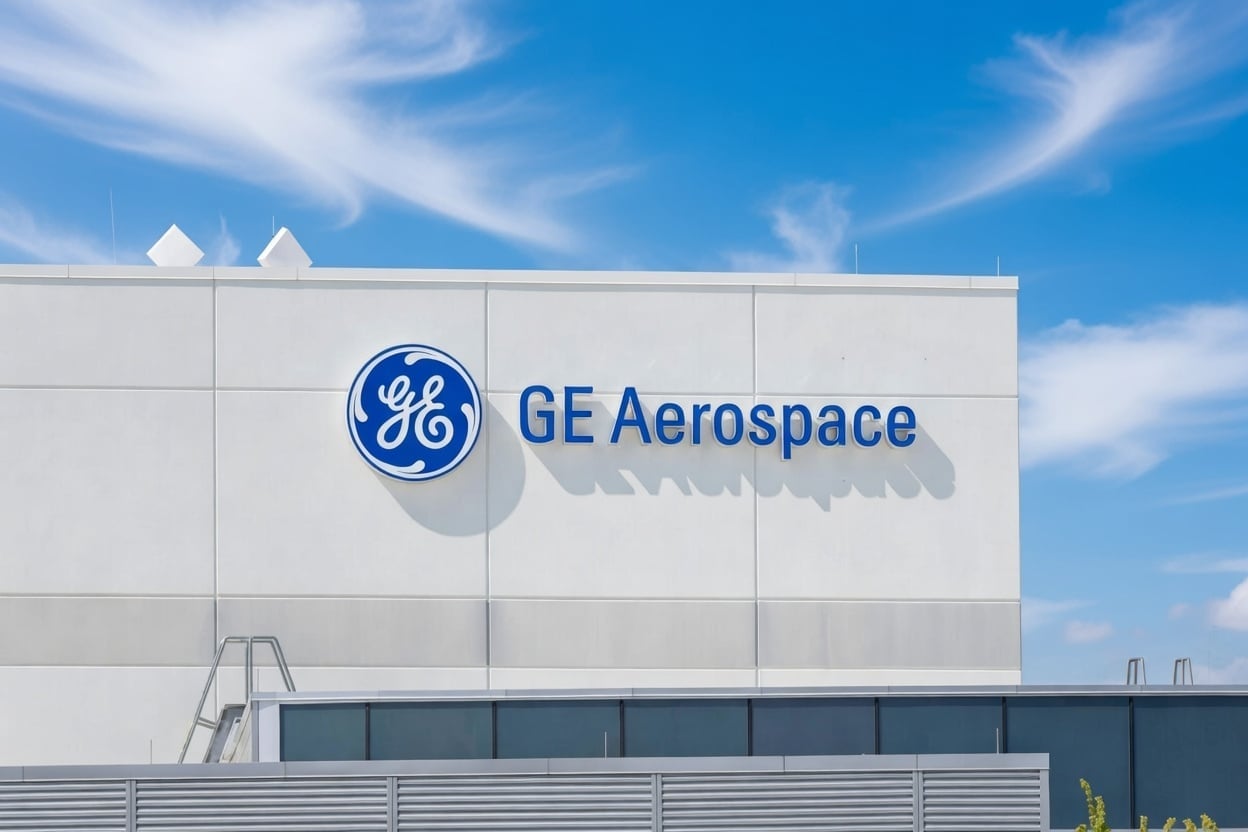
GE Aerospace (GE) and Palantir Technologies (PLTR) are deepening their strategic alliance to integrate artificial intelligence more extensively into American military aviation infrastructure. The collaboration is designed to maximize aircraft operational availability while eliminating time-consuming manual processes that hinder defense readiness.
The initial collaboration between these industry leaders launched in early 2024, beginning with a focused initiative around the J85 powerplant that powers the Air Force’s T-38 training aircraft. This foundational project delivered improved insights into component requirements and inventory challenges for both GE Aerospace and military planners.
The partnership has since evolved significantly. Palantir’s AI Platform is now operational across multiple supply chain operations at GE Aerospace — spanning procurement, distribution, inventory management, maintenance operations, repair workflows, and customer support functions.
The strategic objective is clear: anticipate component failures ahead of occurrence, eliminate supply chain bottlenecks, and establish seamless information flow from operational units back to manufacturing sources.

“By integrating data across the enterprise and applying AI to predict demand and identify constraints earlier, our collaboration with Palantir is helping our customers keep more aircraft available so airmen get the training required to execute on their mission,” said Amy Gowder, president and CEO of Defense and Systems at GE Aerospace.
Mike Gallagher, Head of Defense at Palantir, reinforced this vision, emphasizing the importance of consolidating data to sustain aircraft readiness and training capabilities.
The enhanced agreement now encompasses GE Aerospace’s complete manufacturing ecosystem — including sustainment activities, maintenance and overhaul facilities, and new powerplant production lines.
GE Aerospace oversees an extensive installed base of approximately 50,000 commercial aviation engines and 30,000 military powerplants, supported by a global workforce of around 57,000 professionals. This massive operational footprint stands to gain substantially from enhanced data intelligence.
Automation Eliminates Manual Workflows
A primary objective of the Palantir system is enabling GE’s personnel to concentrate on complex challenges rather than routine tasks. Intelligent automation manages the repetitive, manual activities — the type of work that creates operational delays and extends resolution timelines.
This represents a meaningful transformation in defense manufacturing operations, delivering practical value beyond technological headlines.
Wall Street Maintains Bullish Outlook
GE Aerospace continues attracting favorable attention from financial analysts independent of this partnership announcement. Bernstein SocGen Group elevated its price objective on GE to $405 with an Outperform designation, highlighting anticipated expansion in widebody aircraft services and engine maintenance volumes.
Morgan Stanley launched coverage with an Overweight recommendation and $425 target price, emphasizing GE’s strategic position within aerospace and defense markets.
The corporation also announced a quarterly dividend distribution of $0.47 per share, scheduled for payment in April 2026.
In related developments, GE Aerospace was awarded a $12.4 million contract from Kratos Defense & Security Solutions for engine design work supporting the U.S. Air Force.
Additionally, the company revealed plans for a $300 million capital investment in Singapore spanning the next five years, concentrating on engine maintenance capabilities utilizing advanced automation and artificial intelligence — supported by the Singapore Economic Development Board.
Get 3 Free Stock Ebooks
Discover top-performing stocks in AI, Crypto, and Technology with expert analysis.
- Top 10 AI Stocks - Leading AI companies
- Top 10 Crypto Stocks - Blockchain leaders
- Top 10 Tech Stocks - Tech giants



