


Quick Summary
- A preliminary framework between the U.S. and Iran to conclude hostilities is approaching completion, according to President Trump.
- The agreement aims to restore access through the Strait of Hormuz, a critical passage for approximately 20% of worldwide petroleum shipments.
- Negotiators have between one and two months to finalize outstanding matters.
- Tehran’s atomic energy program continues to be the primary obstacle to a comprehensive settlement.
- Global crude markets had begun declining earlier this week following initial speculation about diplomatic progress.
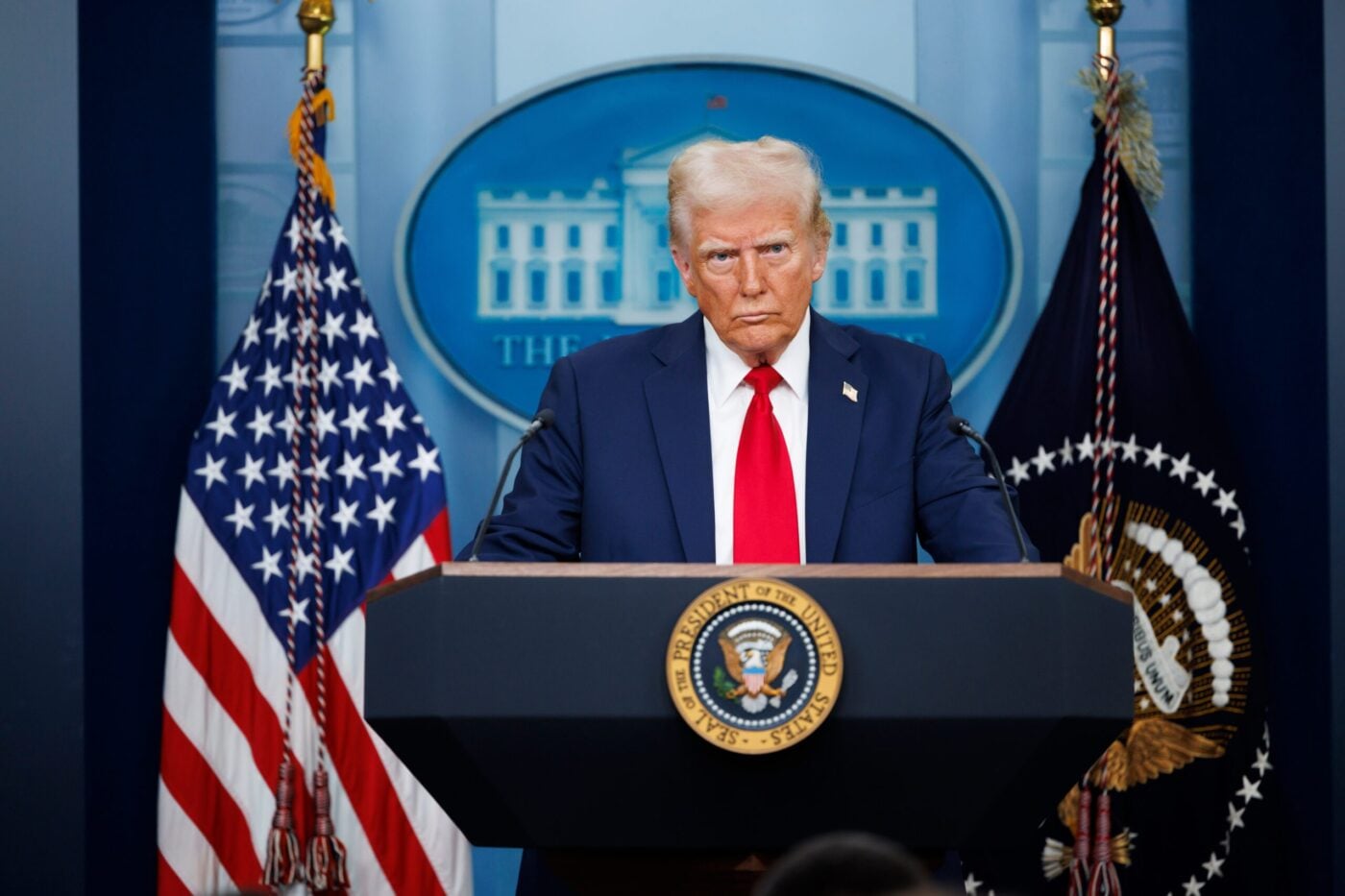
President Trump disclosed on Saturday that a preliminary accord with Iran is on the brink of completion, establishing the foundation for comprehensive peace negotiations. This arrangement would restore navigation through the Strait of Hormuz, a vital maritime corridor that handles approximately twenty percent of global petroleum transport.
The President delivered this update via Truth Social, indicating that the framework had been “substantially completed” through discussions involving the United States, Iran, and multiple intermediary countries. Complete details are expected to be disclosed in the coming days.
The strategic waterway has remained blocked since Iranian authorities closed it following coordinated U.S. and Israeli military operations that resulted in the death of Iran’s long-serving leader Ali Khamenei during the final days of February. This shutdown has created significant disruptions across international energy markets and intensified a wider economic downturn.
Brent crude contracts settled Friday just beyond the $100-per-barrel threshold, while the U.S. WTI benchmark concluded the trading week above $96. Oil prices had already experienced a decline on Thursday as preliminary information about a possible cessation of hostilities began emerging.
Diplomatic Developments Leading to Agreement
On Saturday, Trump conducted discussions with heads of state from Saudi Arabia, the United Arab Emirates, Qatar, Pakistan, Turkey, Egypt, Jordan, and Bahrain. These conversations preceded his communication with Israeli Prime Minister Benjamin Netanyahu, who has traditionally maintained opposition to diplomatic initiatives involving Iran.
Esmail Baghaei, Iran’s foreign ministry spokesperson, acknowledged that both nations were in the “concluding phase” of preparing a memorandum of understanding. He characterized the 30-to-60-day timeframe for reaching a definitive agreement as appropriate.

According to the proposed terms, Iran would provisionally restore passage through the Strait of Hormuz and eliminate transit charges during the negotiation period. Correspondingly, Washington would withdraw its maritime blockade surrounding Iranian harbors. Tehran is additionally pursuing the rapid release of roughly $100 billion in frozen financial resources currently held internationally under American sanctions.
Pakistan along with several Arab states have advocated for extending the present ceasefire by six weeks to provide additional time for diplomatic discussions.
Atomic Energy Program Continues as Major Obstacle
The preliminary framework leaves unaddressed the fundamental disagreement regarding Iran’s nuclear capabilities. The United States seeks a comprehensive agreement incorporating a two-decade moratorium on Iranian nuclear operations and Tehran’s commitment to transfer its inventory of highly enriched uranium to American custody.
Iran has refused both demands. Supreme Leader Mojtaba Khamenei declared publicly earlier this week that enriched uranium materials cannot be removed from Iranian territory. Officials in Tehran have maintained that nuclear matters should be negotiated during subsequent discussions, concurrent with comprehensive sanctions elimination.
Baghaei informed state-controlled media: “At this stage, our entire focus is on ending the war.”
Additional unresolved matters include Iran’s ballistic projectile capabilities and its financial backing of regional armed organizations—both representing priorities for Israel and Washington’s Middle Eastern allies.
Iran’s semi-official Fars News agency contested Trump’s characterization, asserting that any arrangement would preserve Iranian authority over navigation routes, scheduling, and passage authorization through the Strait of Hormuz.
The military confrontation has not formally concluded. American military personnel and equipment continue to be deployed in Israel, and hostilities could restart should negotiations fail.
Certain Republican legislators, including Senator Lindsey Graham, have openly encouraged Trump to resume military operations rather than pursue diplomatic accommodation.
This framework represents the most recent chapter in an extended series of exchanges between Washington and Tehran that has alternated between near-agreements and warnings of renewed military engagement.
Get 3 Free Stock Ebooks
Discover top-performing stocks in AI, Crypto, and Technology with expert analysis.
- Top 10 AI Stocks - Leading AI companies
- Top 10 Crypto Stocks - Blockchain leaders
- Top 10 Tech Stocks - Tech giants



