


Key Takeaways
- FedEx delivers fiscal Q4 results Tuesday after market close — marking its debut as a standalone parcel operation following the June 1 separation of FedEx Freight (FDXF).
- Wall Street consensus points to EPS of approximately $5.92 and revenue near $24.01 billion, reflecting roughly 8% annual growth.
- Option traders are positioning for a possible move of around 7% either way through week’s end.
- FDX has surged over 40% this year; a 7% rally would propel shares past $352 into uncharted territory.
- Critical areas to monitor: remaining overhead expenses after the split, pricing dynamics, and cost reductions from Network 2.0 initiatives.
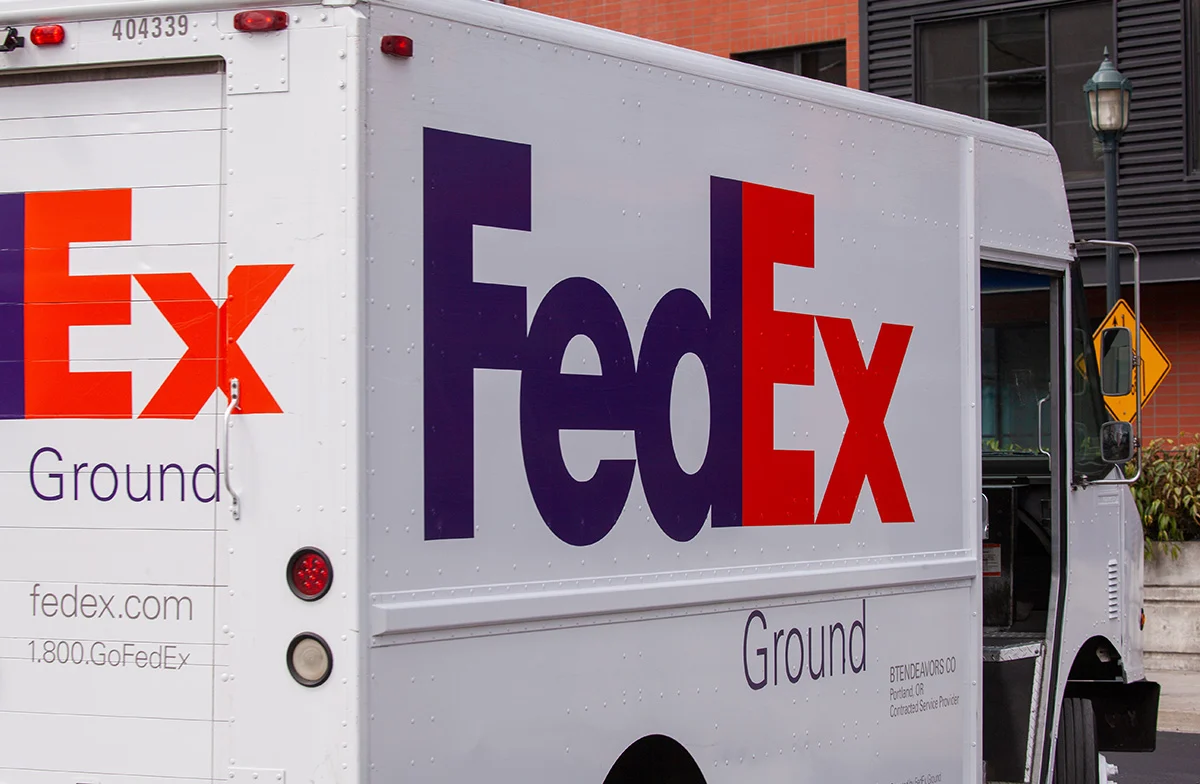
FedEx (FDX) enters Tuesday’s earnings announcement operating under a transformed business model. Following the June 1 separation of FedEx Freight (FDXF), the company now stands as a focused parcel and express shipping enterprise. Market participants are eager to assess whether this streamlined structure can enhance operational performance.
Shares have demonstrated remarkable momentum. FDX has climbed more than 40% since January, hovering near $328–$330 ahead of the quarterly announcement. Options market indicators suggest potential volatility of approximately 7% through Friday’s close. An upward 7% swing would propel shares beyond $352 — establishing a fresh all-time peak. Conversely, a 7% decline would pull the stock under $309.
The analyst community maintains an optimistic outlook. Among 10 analysts monitored by Visible Alpha, nine maintain buy recommendations for FDX with one neutral rating. Their average price objective hovers around $410, suggesting approximately 25% appreciation potential from present levels. A broader consensus of 28 analysts establishes a mean target of $345.73.
Street projections call for adjusted earnings per share between $5.90–$5.92 alongside revenue approaching $24.0 billion, translating to year-over-year revenue expansion of roughly 8%. This represents improvement from the March quarter’s $5.25 EPS figure, which exceeded the $4.11 consensus estimate by 27.74%.

Overhead Expenses Under Scrutiny
The most pressing concern surrounding Tuesday’s disclosure centers on expenses previously allocated to freight operations. Now that FedEx Freight functions as an independent entity, market observers seek clarity on how much of these “stranded costs” persist on FedEx’s balance sheet — and management’s timeline for eliminating them.
Bank of America recently adjusted its FedEx price objective downward to $376 from $440, acknowledging the Freight separation impact, while emphasizing that investor focus will concentrate on additional cost-cutting opportunities.
Adding to leadership uncertainty, FedEx currently lacks a permanent Chief Financial Officer. John Dietrich departed his role earlier this month, and stakeholders anticipate updates regarding the succession process.
Network 2.0 and Rate Strategy
Beyond expense management, attention turns to FedEx’s ongoing Network 2.0 transformation — a comprehensive initiative merging air and ground infrastructure. With the business now simplified following the spin-off, analysts seek evidence that operational efficiencies are accelerating.
Regarding pricing strategy, industry watchers characterize the parcel landscape as exhibiting stark contrasts. Budget shipping services face heightened competition, whereas premium offerings demonstrate stronger rate discipline. Leadership commentary on yield patterns and shipment composition will provide crucial insight into margin sustainability prospects.
EPS projections have advanced 1.33% during the trailing 60-day period, while revenue forecasts increased 0.84% across the same timeframe — representing modest yet favorable momentum.
This quarterly report also represents the final disclosure under FedEx’s fiscal May calendar structure. The organization is transitioning to calendar-year reporting, potentially triggering short-term analytical adjustments as Wall Street recalibrates financial models.
FedEx Freight (FDXF) will announce its standalone earnings Thursday.
Get 3 Free Stock Ebooks
Discover top-performing stocks in AI, Crypto, and Technology with expert analysis.
- Top 10 AI Stocks - Leading AI companies
- Top 10 Crypto Stocks - Blockchain leaders
- Top 10 Tech Stocks - Tech giants



