


Key Takeaways
- Dogecoin operates without a maximum supply limit, introducing approximately 5 billion new tokens annually
- 21Shares launched a Dogecoin ETF on Nasdaq in January 2026
- Tesla has integrated DOGE as an official payment method for select products
- Significant supply concentration exists among major wallet addresses and custody providers
- DOGE functions effectively for low-fee transactions but offers limited mechanisms for value accumulation
Since its 2013 creation, Dogecoin has maintained its position as one of cryptocurrency’s most widely recognized assets. Beginning as a satirical project, it has evolved into a digital currency with substantial trading volume, widespread exchange availability, and brand awareness that rivals many serious blockchain initiatives.
However, name recognition doesn’t automatically translate into sound investment fundamentals.
Dogecoin operates on a proof-of-work consensus mechanism utilizing Scrypt algorithm with approximately sixty-second block intervals. Each block generates a fixed reward of 10,000 DOGE. Contrary to Bitcoin’s capped supply model, there’s no maximum limit. Official project documentation confirms this results in a consistent yearly addition of 5 billion coins.
Given the current circulating supply of approximately 150 billion DOGE, this translates to annual inflation between 3.3% and 3.5%. While this percentage gradually decreases over time, the absolute issuance continues indefinitely.
Understanding the Perpetual Issuance Challenge
This continuous token creation represents the primary concern for anyone considering long-term positions. Constant new supply flowing into circulation means demand must continuously expand simply to maintain price equilibrium. DOGE advocates contend that predictable issuance promotes transactional use rather than speculative hoarding. Skeptics believe it fundamentally limits upside potential.

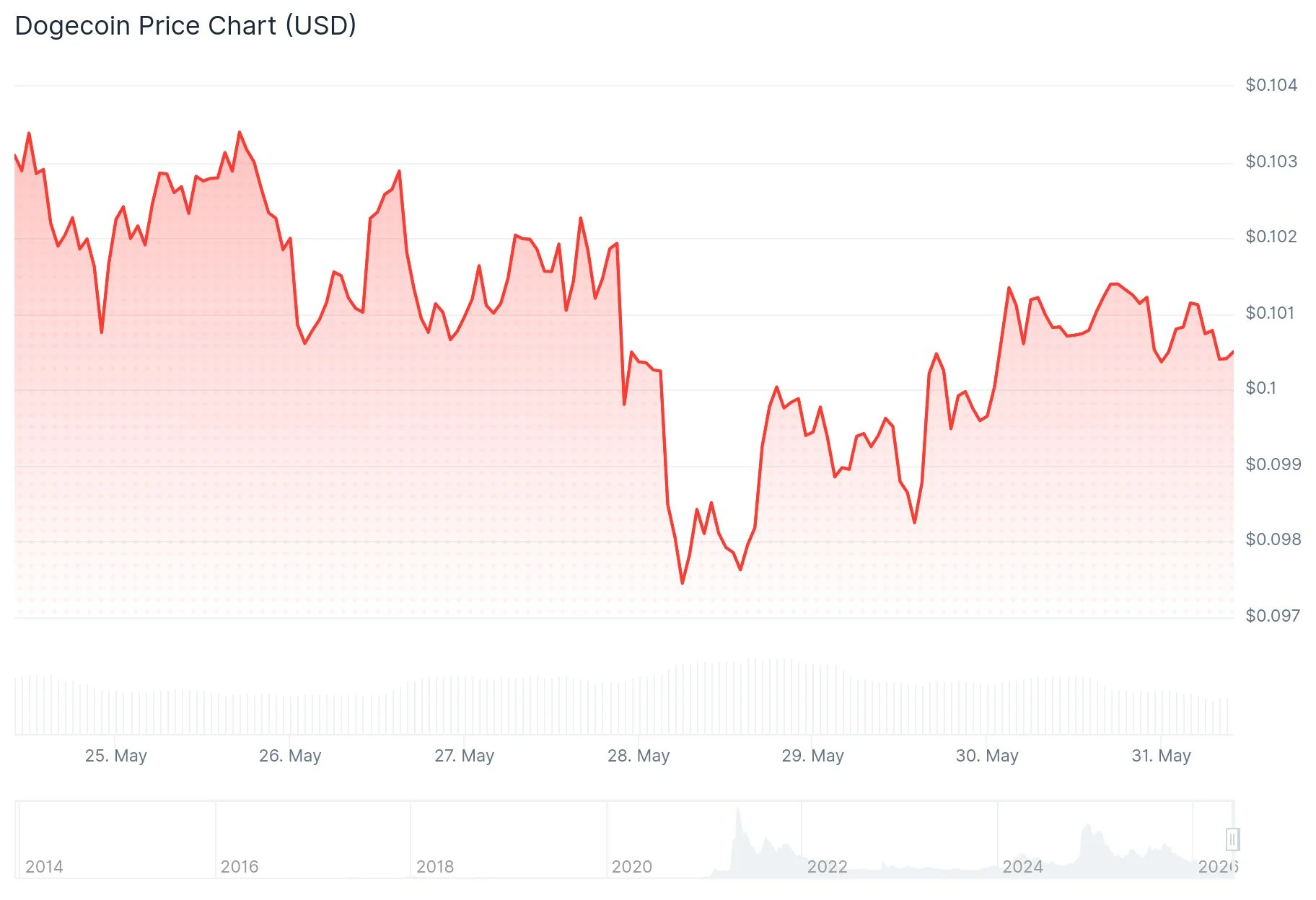
Current market capitalization sits around $15.5 billion according to CoinGecko data.
On the favorable side, transaction costs remain minimal. Standard miner fees default to 0.01 DOGE per kilobyte, supporting its positioning as a practical payment solution. The Dogecoin Foundation has developed infrastructure including GigaWallet and Libdogecoin to streamline merchant adoption.
Tesla’s official documentation verifies that the company accepts Dogecoin for qualifying transactions. While this represents genuine real-world utility, it doesn’t yet constitute widespread mainstream adoption.
Growing Traditional Finance Integration
January 2026 marked the debut of the 21Shares Dogecoin ETF on Nasdaq, confirmed through Nasdaq’s official circular and corresponding SEC documentation. This development provides conventional investors with regulated DOGE exposure via standard brokerage platforms, eliminating the need for direct cryptocurrency custody.
While this doesn’t alter Dogecoin’s core economics, it significantly expands the potential investor base.
Supply concentration presents another consideration. BitInfoCharts data reveals substantial holdings concentrated in large addresses. Though some represent exchange cold storage, this concentration exists and can contribute to volatility.
Unlike certain blockchain networks, DOGE lacks a DeFi ecosystem or application layer that generates fee revenue channeled back to token holders. Its value proposition centers on payment functionality, community engagement, and speculative trading activity.
The January 2026 Nasdaq listing of the 21Shares ETF represents the latest significant development influencing investor access to Dogecoin markets.
Get 3 Free Stock Ebooks
Discover top-performing stocks in AI, Crypto, and Technology with expert analysis.
- Top 10 AI Stocks - Leading AI companies
- Top 10 Crypto Stocks - Blockchain leaders
- Top 10 Tech Stocks - Tech giants



