


Key Takeaways
- With approximately 150 billion tokens circulating and a valuation near $14.2 billion, Dogecoin maintains a position among crypto’s largest assets by market capitalization
- Real-world payment functionality exists, including continued acceptance by Tesla for select merchandise transactions
- Daily network activity shows roughly 22,344 transactions processed over the past 24 hours, with nominal fees averaging just $0.038
- An unlimited supply model introduces approximately 5 billion new tokens annually, creating persistent inflationary pressure on existing holdings
- Concentration risk remains significant, with the top 100 wallets commanding approximately 66.39% of total token distribution
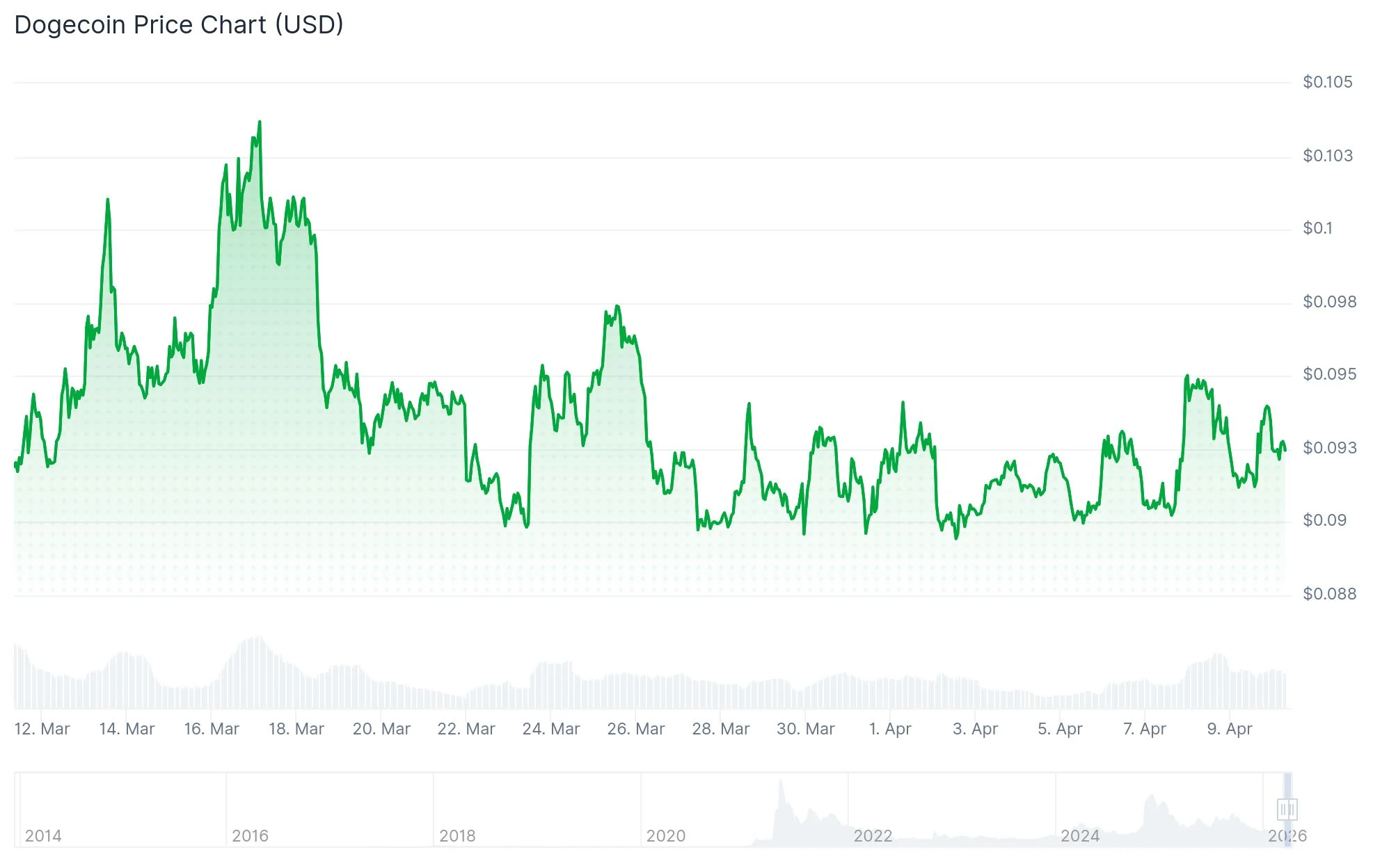
What began as a satirical cryptocurrency project in 2013 has evolved into one of the digital asset space’s most enduring brands. More than ten years after its creation, Dogecoin maintains substantial market presence, with CoinGecko data placing it among the top cryptocurrencies by valuation—approximately $14.2 billion across roughly 150 billion circulating tokens.
Name recognition drives liquidity in cryptocurrency markets. High liquidity provides staying power that often defies fundamental analysis predictions.
Built on Scrypt-based proof-of-work consensus, Dogecoin positions itself as a straightforward digital payment medium rather than a programmable blockchain platform. The Dogecoin Foundation’s development priorities emphasize merchant integration solutions such as GigaWallet, designed to streamline DOGE acceptance for businesses.
Tesla’s official payment documentation continues to recognize Dogecoin as valid payment for qualifying merchandise. This represents tangible commercial adoption that distinguishes it from purely speculative meme tokens.
On-Chain Transaction Metrics
BitInfoCharts data reveals approximately 22,344 transactions processed across the network during the most recent 24-hour period. Transaction costs remain minimal, with average fees around $0.038 and median costs near $0.007. Active address count exceeded 34,000 during this same timeframe.

These metrics demonstrate functional utility and cost efficiency. For a payment-focused cryptocurrency, these characteristics provide operational credibility.
Yet transaction volume doesn’t automatically translate to value appreciation. Dogecoin lacks the complex decentralized application infrastructure that generates substantial fee revenue on other networks. Most participants hold DOGE for speculation or brand association rather than protocol utility.
Inflationary Supply Dynamics
Unlike Bitcoin’s capped supply, Dogecoin implements unlimited token issuance. The protocol generates 10,000 DOGE per block, with blocks appearing approximately every sixty seconds. This mechanism introduces roughly 5 billion new tokens into circulation annually.
While this model incentivizes mining operations and sustains network security, it simultaneously dilutes existing holder positions. Sustained price appreciation requires demand growth that consistently exceeds the 5 billion annual supply increase.
As total supply expands, the percentage inflation rate gradually decreases, yet the absolute token addition remains constant—presenting a perpetual headwind for value accumulation.
Token distribution patterns introduce additional volatility concerns. BitInfoCharts analysis indicates the largest 100 addresses control approximately 66.39% of all DOGE, with the top 10 wallets holding roughly 44.44%. This concentration grants significant price influence to major custodial services and individual whale holders.
Investment Perspective
Dogecoin demonstrates remarkable durability, maintaining deep liquidity, universal recognition, minimal transaction costs, and multi-cycle survival. These characteristics place it distinctly above typical meme token projects. However, its investment thesis relies primarily on sustained brand relevance and speculative interest rather than robust economic mechanisms. A position in DOGE fundamentally represents confidence that its cultural significance will endure across future market cycles.
Get 3 Free Stock Ebooks
Discover top-performing stocks in AI, Crypto, and Technology with expert analysis.
- Top 10 AI Stocks - Leading AI companies
- Top 10 Crypto Stocks - Blockchain leaders
- Top 10 Tech Stocks - Tech giants



